LE Logo

The LUPUS EUROPE annual convention has just come to a close. Hosted in Milan by Lupus Italy on the occasion of their 30thanniversary, the convention was an inspiring event centred around the theme of “pain, fatigue and stress”, with Dr Chiara Tani as a key note speaker.

Benefitting from the Italian Lupus Clinic experience, we also covered other topics such as the treatment of women who wish to have children, the use of biologics, how specialised lupus Clinics operate, … Among those presenting, and working in one such clinic, was Fulvia Ceccarelli, a rheumatologist who is herself a lupus patient. It was certainly interesting to hear from someone who has experienced both sides of the doctor/patient relationship. We also took a closer look at the non-biological side of pain, fatigue and stress, with an excellent presentation by the president of the Belgian French Speaking association, Bernadette Van Leeuw. Davide Mazzoni, one of LUPUS EUROPE’s patient research partners, presented a new study which is looking at the possible effects of childhood trauma and the pathways into adulthood which can affect a person’s disease onset and progress. He then took us through the 2017 survey “AT HOME OR IN HOSPITAL?” on the preference for subcutaneous injection or intravenous infusion of biological therapy among Italian SLE patients.

Our Kick Lupus campaign had a wonderful boost with Jeanette Andersen taking us through the new exercise programme (soon to be released). Jeanette has herself made an incredible recovery from being unable to walk last year to jumping and running around this year following her back surgery. The programme has several levels and can be started even if unable to get out of bed.

The convention was also the opportunity to discuss the 2018-2023 strategic plan with our members. The plan, developed after extensive consultation with multiple stakeholders provides us with a clear path for the years ahead, in the pursuit of our vision of “A fulfilling life for all people with lupus in Europe until we have reached a world without lupus.” The Strategic plan discussions were concluded by the adoption of the new LUPUS EUROPE logo. Our many thanks go to Patrick and Sandra from setfire.to, the pro-bono sponsors who designed the logo for us and are now finalising our new website. They have clearly understood what LUPUS EUROPE Stands for: while retaining the symbolic lupus butterfly, it has a vibrant person at its core – just as we have our members and their members at the very heart of our work. We very much wanted a symbol of energy and hope, reflecting the already significantly better outlook for lupus patients today and all our hopes for the future.

This year, Kirsten Lerstrøm, LUPUS EUROPE chair, is stepping down. We cannot thank her enough for 10 years of devoted service and dogged determination to serve the cause of people living with lupus. She has encouraged us to keep the momentum and we look to the future with hope and determination. At the close of the convention, Jeanette Andersen was elected as the new Chair of LUPUS EUROPE, and Alain Cornet was appointed to the newly created position of General Secretary.

We are happy to present the 2018 board who we are sure will continue to serve the best interests of LUPUS EUROPE’s member organisations. From left to right: Katharine Wheeler (Vice-Chair & Secretary), Kirsi Myllys (Treasurer), Anne Charlet (Vice-Chair),  Jeanette Andersen (Chair), Annemarie Sluijmers (Skin) and Sara Badreh (Research & Youth).
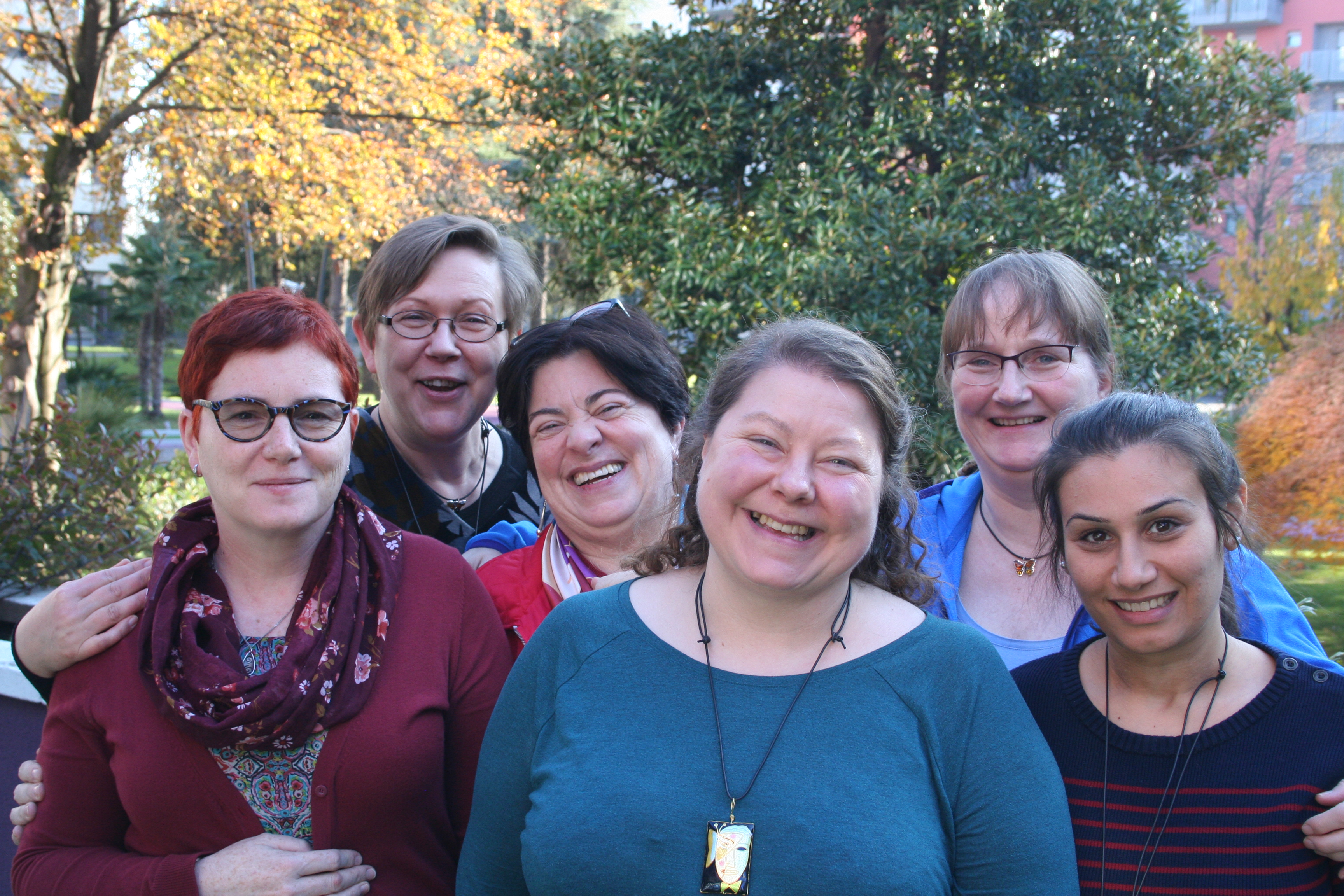
board pic 2017

These few lines are just a taster, from a very full convention. More news and a complete convention report will be on its way soon.


Live Facebook Feed

Comments Box SVG iconsUsed for the like, share, comment, and reaction icons

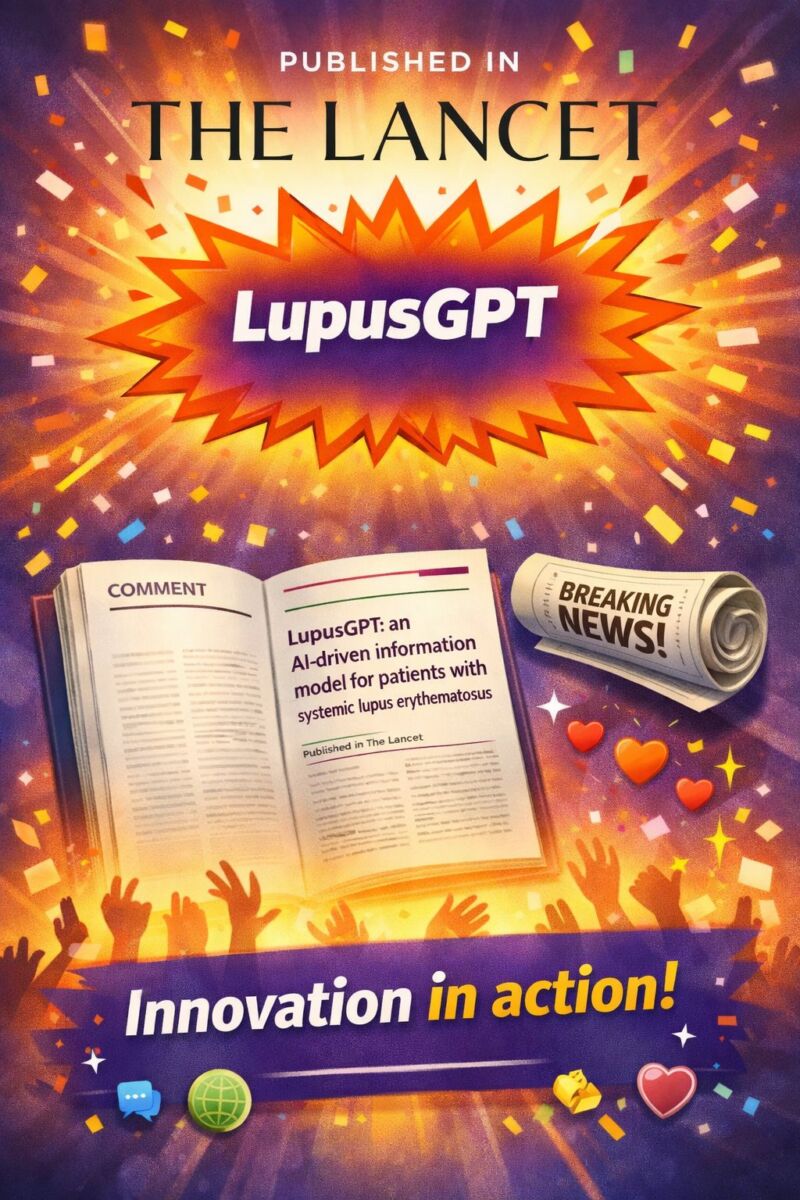
We are very proud to share that LupusGPT has now been published in The Lancet Rheumatology, one of the world’s leading medical journals in rheumatology.

For us, this is not only about a publication. It is about what LupusGPT stands for.

LupusGPT is free. It is patient-led. And it was built to help people living with lupus find reliable, accessible information in almost any language.

It began with a simple but important question: what could become possible if patients, clinicians, and digital experts truly worked together from the start?

That question was first opened up in a fishbowl discussion at the European Lupus Meeting 2024 on how the lupus community could get the best, but not the worst, out of AI. From there, LupusGPT was shaped through the care, intelligence, and effort of many people: volunteers, patient testers, clinicians testing across languages, people who gave feedback, and people already helping us share it with patients in clinics, organisations, and communities.

This publication matters because it shows that patient-led innovation belongs in the scientific world too. It shows that when patient voice is not added at the end, but built in from the start, something real can grow.

A heartfelt thank you to all authors: Zoe Karakikla-Mitsakou, Alain Cornet, Jeanette Andersen, Sarah Dyball, Cristiana Sieiro Santos, Daniel Guimarães de Oliveira, and Laurent Arnaud. Special thanks also to Daniel Guimarães de Oliveira for the thought, care, and belief he brought to this work, and to Professor Laurent Arnaud for his outstanding support, steadiness, and guidance.

And above all, thank you to everyone in the Lupus Europe community who keeps showing us why this matters.

LupusGPT. Free. Multilingual. Patient-led. And now part of the scientific record.

doi.org/10.1016/S2665-9913(25)00370-4

Read it for free now! You only need to register (registration is completely free and takes 1')
... See MoreSee Less

We are very proud to

🚨 Today is #WORDDAY2026! Which stands for WOrld Young Rheumatic Disease Day.

🌍 Through this global event, we can spread the word that children and young people get rheumatic diseases like lupus, too.

‼️ It is estimated that around 15-20% of #lupus patients are children, although it is rare that a child develops lupus before 5 years of age.

As with adult patients, the cause of lupus remains unknown, and there is a great choice of treatments to keep the disease under control.

🔴 On average, it takes nearly 6 years for people with lupus to be diagnosed. This delay in diagnosis, and therefore in treatment, can have an impact on the prognosis and quality of life of patients; this includes kids.

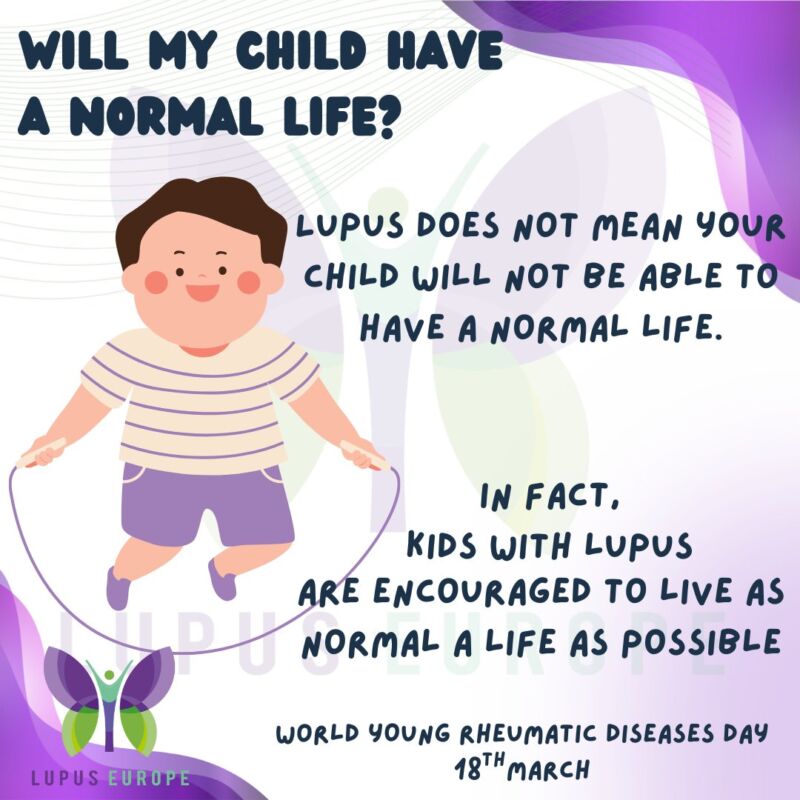
😰 The moment your child gets a diagnosis might be overwhelming for you. This feeling of overwhelm can and does go away with time and with access to the right information.

👉 Remember: it is impossible to learn everything about #lupus overnight! Your child's doctor is the best source of information.

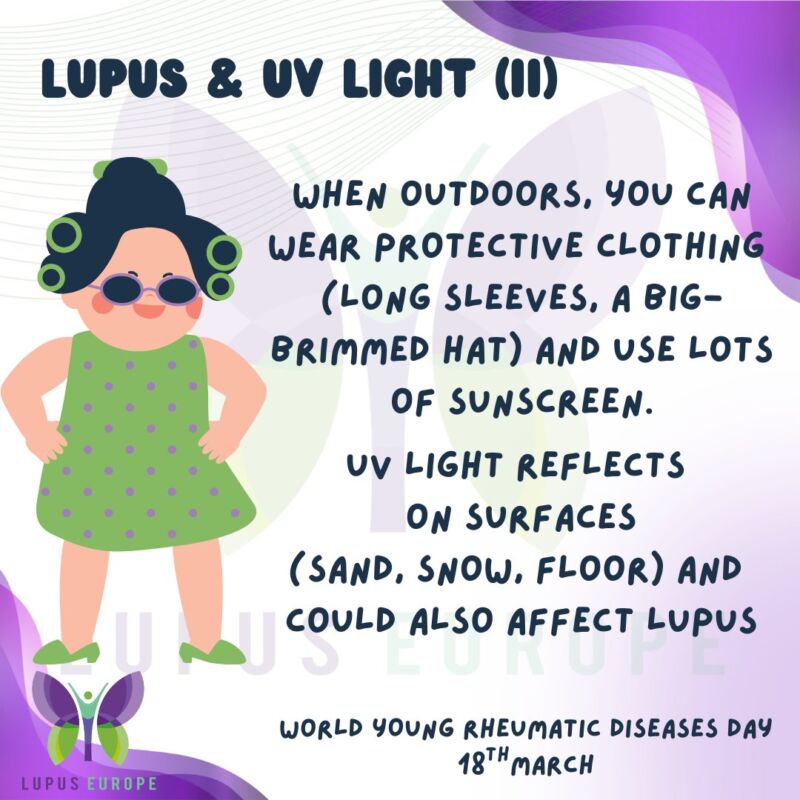
Apart from pharmacological treatment, other non-pharmacological measures can also help in lupus management.

📷 Take a look at the images we are sharing today to learn about these non-pharmacological measures and share them with your community to help us raise awareness.

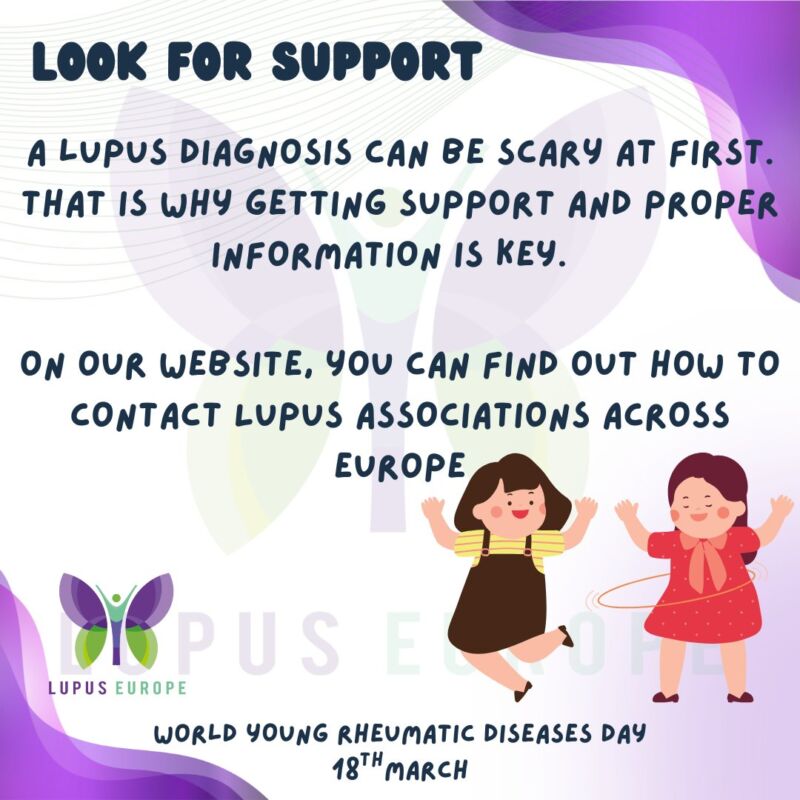
🐺 Lupus can seem scary at first. Remember that you are not alone and that you are going to do a great job!

Turn to your lupus association for support.

🤗 There are many organisations across Europe that can help you and your child cope with the disease.

More information on #SLE in children at #Lupus100: f.mtr.cool/oklkpqamyu

For more information on WORD Day, you can visit World Young Rheumatic Diseases Day - WORD Day
... See MoreSee Less

Image attachment
Image attachment
Image attachment
Image attachment
Image attachment

🔴 Tomorrow is #WORDDAY2026!

🦋 And we will be sharing tips and information on how #lupus can affect children.

Help us raise awareness, which is key for an early diagnosis & a quick referral to a specialised paediatric rheumatologist.

Share our posts and follow the World Young Rheumatic Diseases Day - WORD Day campaign.

More information on lupus in children at #Lupus100 (19 languages):

f.mtr.cool/hnfukbkwdf
... See MoreSee Less

🔴 Tomorrow is #WO

Watch this Lupus Europe Webinar on the European Lupus Meeting (ELM) 2026, As Viewed by Lupus Europe's PAN Members & Volunteers!

... See MoreSee Less

0 CommentsComment on Facebook

LUPUS EUROPE Uniting people with Lupus throughout Europe
Send