My name is Melina and I live in the easternmost, warmest, and sunniest part of Europe, the small island of Cyprus. I have lived with lupus for the last 21 years, most of my life, if you count that I am 37 years old. I have also made a dream come true and I want to share it with you. My dream was to run a 5km race wearing the jersey of the Cyprus League of People with Rheumatism (CYPLER) and to run for all people with rheumatic, musculoskeletal diseases. I also want to share with you my experience and my thoughts during the race. With faith in myself, with the support of the wider association (CYPLER) as well as the members of the lupus group I made my dream come true. My biggest “problem” all these years was my lack of self-confidence, as I was very late to join our association because of my beliefs. I will not forget my first acquaintance with the lupus group in the furniture restoration workshop; how much strength and confidence I gained from this workshop. Doing things outside the norm gave me pleasure and strength!


Running towards the dream


There I was walking in the park one day, watching others running. The thought came to me that with the right guidance I could do what I have been dreaming of for years, namely, to run long distance. To run a race, say 5km.


During the duration of the race, because it took place at10.45 am the heat and the sun were too much, it “stole” my energy and made the whole run hopelessly endless. When I came upon the first “refuelling station” that had water, I took a small sip to quench my thirst and kept the bottle for later. The heat in my body combined with the heat outside was becoming unbearable. In my mind were so many thoughts, but I was mainly thinking of the girls at the association (CYPLER), the people with lupus who cheered me on in this effort shouting “Melina go, go, go Melina go goooooo”. I shouted it too with so much intensity that I even encouraged my fellow runners and I also kept running.


Lupus patient running in the 5km Run Limassol 2024 race, waving and smilingI then realised I had passed the 2.5 km mark and that there would be another refuelling station soon! As soon as I got there, I took off my hat and doused myself with water.  I then tried to stay on the side of the running path that was in the shade.


When I saw the finish arch, I gathered all my strength and started to run harder! In the last few meters, I felt so exhausted. But the joy of completing the race was great! When I reached the finish line and actually realised that I finished, it struck me that, for that race, I overcame so many of the obstacles a lupus patient can have in her life: sun, heat, dust, the cold rainy days (the time of preparation), the fatigue, the mental strain of effort. I found a solution to all the problems that happened throughout the race. But the race isn’t a 5km one; this race is our whole life. The winner is not only the one who finishes first, but also the one who fights until the end with all their strength.


The Dream Continues

At this point I want to say that the dream continues!! I have been invited through a sports group on Facebook to another race in Crete; have signed up for the 10km and I have already started preparing! I will continue to run for all of you! Dreams are many steps taken together and they only become a reality one step at a time. Once upon a time I could not climb a single floor without stopping two or three times due to fatigue, but now I can!


Written by Melina Georgiou, Member of the CYPLER Lupus Group 


Disclaimer: The views expressed in this article belong to the author. Please note that sun exposure is generally contraindicated for individuals with lupus. For more information, read: Can I sunbathe with lupus


Live Facebook Feed

Comments Box SVG iconsUsed for the like, share, comment, and reaction icons

🦋 Understanding lupus is crucial for effective management and self-management.

💁‍♀️ Many of us know what lupus is, and we’ve been learning from trusted resources like #Lupus100 and #LupusGPT.

🤔 But… how much do we really know about SLE?
Do we know as much as we think we do?

𝐓𝐫𝐲 #𝐒𝐋𝐀𝐊𝐄 𝐚𝐧𝐝 𝐟𝐢𝐧𝐝 𝐨𝐮𝐭❗

🎯 SLAKE (Systemic Lupus Assessment score for Essential Knowledge) is a quick and easy online tool designed for people living with lupus to test their knowledge and learn more about the disease.

📝 44 questions, randomly selected from a pool of 394
⏱️ Around 15 minutes to complete
🌍 Available in 20 languages
📊 A score for each lupus domain and an overall knowledge score

💡 Whether you're newly diagnosed or have been living with lupus for years, SLAKE helps you identify what you already know and where there is room to grow. It is not about passing or failing. It is a chance to learn more and feel more confident when taking part in decisions about your health.

📣 The SLAKE study is still open! By taking part, you are helping researchers understand which aspects of lupus are well understood and where important knowledge gaps remain.

These insights could help guide the potential development of better information resources and tools, tailored to the real needs of people living with lupus in different countries and regions.

SLAKE has been made possible thanks to the leadership of Prof Laurent Arnaud and Dr Antonin Satrin, and the collaboration of an international team of lupus experts and patient representatives.

🥰 Lupus Europe has proudly contributed to this project since the very beginning, and we encourage people living with lupus worldwide to take part while the study remains open.

🔗 Complete SLAKE today and let us know what you think!

lupusresearch.limequery.org/775349
... See MoreSee Less

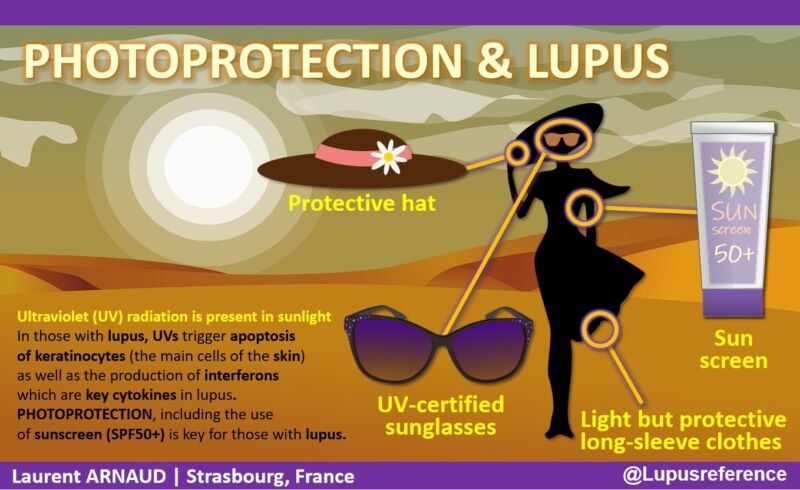
☀️ As we close our #LupusUVprotection campaign, here is one important reminder:

👉 UV protection in lupus is not only about sunny beach days.

😶‍🌫️ UV exposure can happen on cloudy days, near some windows, while travelling by car, or through certain artificial light sources. And in some people with lupus, its effects may not appear immediately.

‼️ That is why clear, reliable information matters.

Whether you have questions about UV light, photosensitivity, skin symptoms, flares, fatigue, daily life with lupus, or many other lupus-related topics, Lupus Europe provides free, reliable and multilingual tools to support you:

🔹 #𝗟𝘂𝗽𝘂𝘀𝟭𝟬𝟬
Patient-friendly answers to 100 key questions about lupus, including sun exposure and UV protection
lupus100.org/en/questions/can-i-sunbathe-with-lupus

Created with lupus experts & patients. Available in 19 languages.

🔹 #𝗟𝘂𝗽𝘂𝘀𝗚𝗣𝗧
A free artificial intelligence tool to help people find reliable, valid lupus information in almost any language.:
lupusgpt.org/

🔹 #𝗘𝗮𝘀𝘆𝗟𝘂𝗽𝘂𝘀
Like LupusGPT, but designed to make the answers even easier to understand:
easy.lupusgpt.org/

🦋 Because lupus does not only affect clinic appointments. It affects everyday life.

✅ Stay informed. Ask questions. Use reliable resources.
... See MoreSee Less

Image attachment
Image attachment
Image attachment

✅ Yesterday Lupus Europe took part in the DORIS+ meeting in London, alongside clinicians, researchers and patient representatives working on a definition of deep remission in #SLE.

🌟 Lupus Europe was wonderfully represented by Jeanette Andersen, Chair of the Lupus Europe Board, Francesca Marchiori, Lupus Europe Board and PAN Member, Blanca Rubio, PAN Member and Zoe Karakikla-Mitsakou, Lupus Europe General Secretary.

🦋 This continues Lupus Europe involvement in the work on remission in lupus, building on the original DORIS initiative, where Lupus Europe also contributed.

🤔 But what is DORIS?

DORIS stands for Definitions Of Remission In SLE. It helped establish a clinical definition of remission in systemic lupus erythematosus.

🐠 DORIS+ builds on that foundation and explores the concept of deep remission.

💁‍♀️ Since the original DORIS definition was published, emerging evidence has suggested that a deeper state of remission may be within reach for at least some people with lupus. DORIS+ aims to better define what that could mean.

This matters because remission is an important concept for research, clinical care and people living with lupus.

🦋 Lupus Europe is proud to be part of this important taskforce alongside many lupologists and researchers including Prof. Laurent Arnaud, Prof. Ronald van Vollenhoven, Prof. Zahi Touma, Prof. David Isenberg, Prof. Mariele Gatto, Prof. Ioannis Parodis, Prof. Eloisa Bonfá, Prof. Frédéric A. Houssiau, Prof. Andrea Doria, Prof. Ricard Cervera and Prof. Maarten Limper.

😃 We will keep you updated!
... See MoreSee Less

Image attachment
Image attachment
Image attachment
Image attachment

☀️ 𝗨𝗩 𝗹𝗶𝗴𝗵𝘁 𝗮𝗻𝗱 𝗹𝘂𝗽𝘂𝘀: 𝘂𝗻𝗱𝗲𝗿𝘀𝘁𝗮𝗻𝗱𝗶𝗻𝗴 𝘁𝗵𝗲 𝗱𝗶𝗳𝗳𝗲𝗿𝗲𝗻𝗰𝗲 𝗯𝗲𝘁𝘄𝗲𝗲𝗻 𝗨𝗩𝗔 𝗮𝗻𝗱 𝗨𝗩𝗕 𝗺𝗮𝘁𝘁𝗲𝗿𝘀.

Ultraviolet light is one of the components of solar radiation. In lupus, UV exposure can contribute to 𝘄𝗼𝗿𝘀𝗲𝗻𝗶𝗻𝗴 𝘀𝘆𝗺𝗽𝘁𝗼𝗺𝘀 𝗼𝗿 𝘁𝗿𝗶𝗴𝗴𝗲𝗿𝗶𝗻𝗴 𝗳𝗹𝗮𝗿𝗲𝘀 in some people.

💁‍♀️ That is why we are launching our #lupusuvprotection campaign: to raise awareness of the impact UV light can have on people living with lupus, especially during summer.

🦋 Photosensitivity is one of the most common manifestations of systemic lupus erythematosus. In the Lupus Europe Living with SLE in 2020 survey, 𝗽𝗵𝗼𝘁𝗼𝘀𝗲𝗻𝘀𝗶𝘁𝗶𝘃𝗶𝘁𝘆 𝘄𝗮𝘀 𝗿𝗲𝗽𝗼𝗿𝘁𝗲𝗱 𝗯𝘆 𝟲𝟴.𝟱% of respondents.

But UV-related lupus symptoms do not always affect only the skin. UV exposure has also been associated with systemic symptoms such as 𝗳𝗮𝘁𝗶𝗴𝘂𝗲 𝗮𝗻𝗱 𝗷𝗼𝗶𝗻𝘁 𝗽𝗮𝗶𝗻, and may contribute to 𝗱𝗶𝘀𝗲𝗮𝘀𝗲 𝗮𝗰𝘁𝗶𝘃𝗮𝘁𝗶𝗼𝗻 in some people.

So what is the difference?

🔴 𝗨𝗩𝗕 𝗿𝗮𝗱𝗶𝗮𝘁𝗶𝗼𝗻:
🔸 Is mainly associated with sunburn.
🔸 Its intensity fluctuates during the day.
🔸 It is usually strongest around the middle of the day.
🔸 It mainly affects the outer layers of the skin.

🔴 𝗨𝗩𝗔 𝗿𝗮𝗱𝗶𝗮𝘁𝗶𝗼𝗻:
🔸 Penetrates deeper into the skin.
🔸 Is associated with skin ageing.
🔸 Its intensity is more constant during the day.
🔸 It can penetrate clouds and windows.

🌡️ 𝗜𝗻𝗳𝗿𝗮𝗿𝗲𝗱 𝗿𝗮𝗱𝗶𝗮𝘁𝗶𝗼𝗻:
🔸 Is perceived as heat.
🔸 Feeling less heat does not necessarily mean there is no UV exposure.

‼️ This is important because UV exposure can still happen even when the sun does not feel strong. UVA rays can pass through clouds and some types of glass, which means UV protection may still be relevant on cloudy days, near windows, while travelling by car or during everyday activities.

Although not everyone with lupus is photosensitive, people living with lupus are encouraged to discuss UV protection with their healthcare team and to learn what protective measures are appropriate for them.

Learn more through #Lupus100:
f.mtr.cool/lptcxwpubz

You can also ask #lupusgpt or #easylupus questions about lupus and UV light:
f.mtr.cool/nfccvjbbep
f.mtr.cool/clxgzteshl

Information on Lupus100 is available in several languages:

🇩🇰 f.mtr.cool/lkmkxyanqw
🇩🇪 f.mtr.cool/jmyfwcgsae
🇪🇸 f.mtr.cool/kdixsnubvi
🇬🇷 f.mtr.cool/dpqkzkejog
🇫🇷 f.mtr.cool/lwhtfzpnte
🇮🇹 f.mtr.cool/utsezhzrqp
🇳🇱 f.mtr.cool/sbfwktzpdr
🇷🇴 f.mtr.cool/xbcdhkqyud
🇫🇮 f.mtr.cool/hkfvtmjobx
🇺🇦 f.mtr.cool/cgpmlevqlb

#lupusuvprotection
... See MoreSee Less

Image attachment
Image attachment
Image attachment
Image attachment
Image attachment
LUPUS EUROPE Uniting people with Lupus throughout Europe
Send