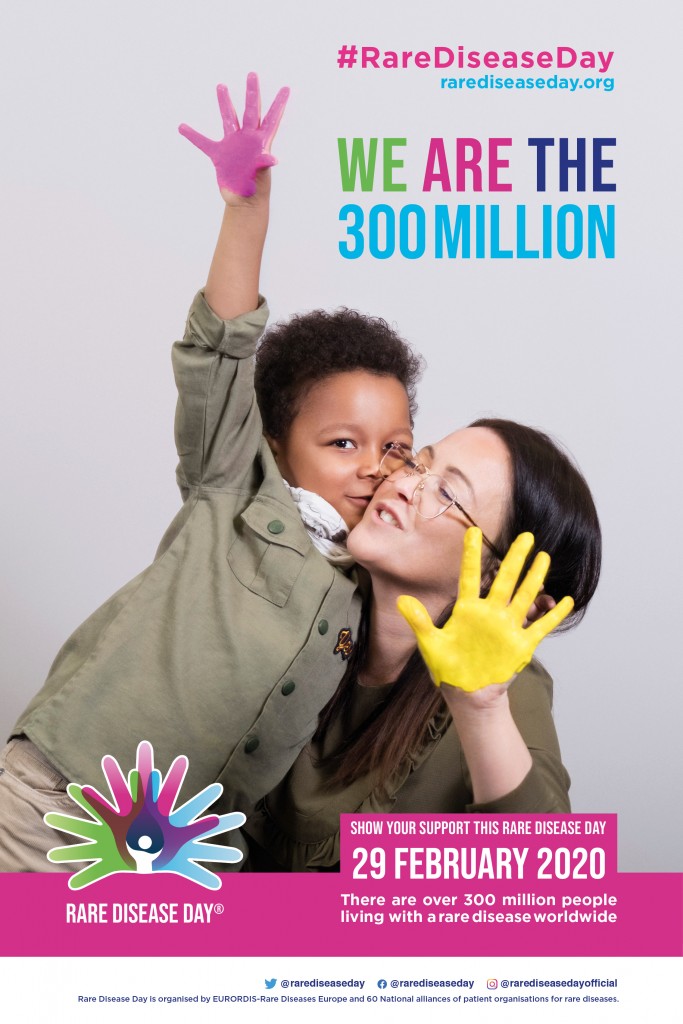
Did you know? Lupus is a Rare Disease!

Lupus is rare, but not for us! Come and join us working on our vision:

A fulfilling life

for all people with Lupus in Europe

until we have reached a world without Lupus

What is a rare disease?  It changes from country to country, but in Europe it means that the disease affects less than 1 in 2000 people.  However, Lupus is also an umbrella word that covers many different types of the disease, as Lupus can affect the joints, skin, kidneys, blood cells, brain, heart and lungs. Each one of these expressions of the disease are rare and very specific, with different treatments.  Lupus is an autoimmune disease, mainly affecting women all around the globe.
To learn more about Lupus and how to help – link to www.lupus-europe.org

to learn more about “Rare Disease Day” – link to https://www.rarediseaseday.org/

To learn more about Lupus as a rare disease – link to https://www.orpha.net/ and search for SLE or ORPHA:536.

Live Facebook Feed

Comments Box SVG iconsUsed for the like, share, comment, and reaction icons

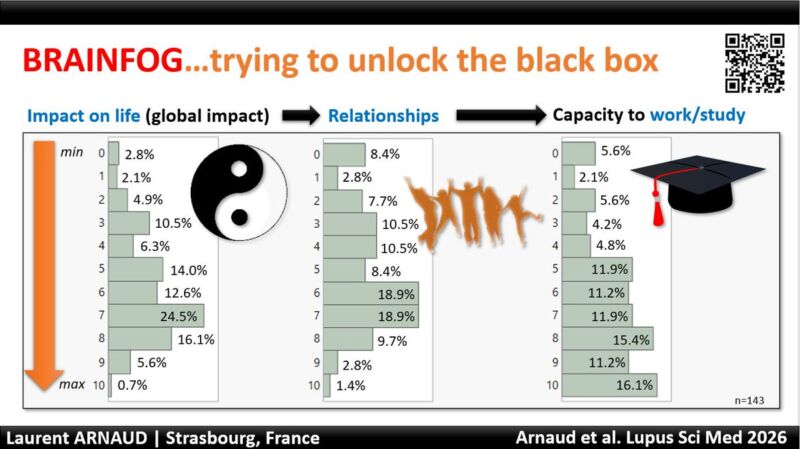
🧠 Brain fog is real.

For many people living with lupus, it affects everyday life, yet it has often remained difficult to measure.

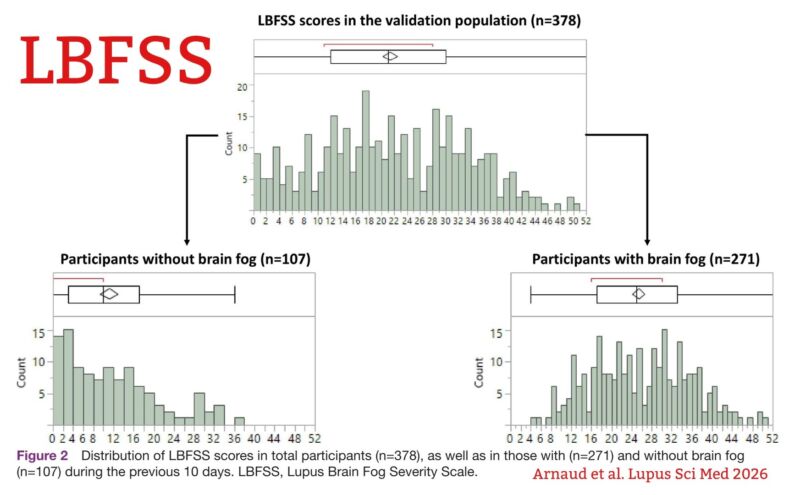
✅ The new Lupus Brain Fog Severity Scale (LBFSS) is the first questionnaire designed specifically to assess brain fog in lupus.

🦋 Lupus Europe is proud to have contributed to its development through meaningful involvement of people living with lupus. It's another example of how patient perspectives help shape better research and better tools.

🎥 Watch Prof Laurent Arnaud and our Chair, Jeanette Andersen, explain why the LBFSS is such an important step forward in lupus care.

lupus.bmj.com/content/lupusscimed/13/2/e002148.full.pdf
... See MoreSee Less

🦋 Understanding lupus is crucial for effective management and self-management.

💁‍♀️ Many of us know what lupus is, and we’ve been learning from trusted resources like #Lupus100 and #LupusGPT.

🤔 But… how much do we really know about SLE?
Do we know as much as we think we do?

𝐓𝐫𝐲 #𝐒𝐋𝐀𝐊𝐄 𝐚𝐧𝐝 𝐟𝐢𝐧𝐝 𝐨𝐮𝐭❗

🎯 SLAKE (Systemic Lupus Assessment score for Essential Knowledge) is a quick and easy online tool designed for people living with lupus to test their knowledge and learn more about the disease.

📝 44 questions, randomly selected from a pool of 394
⏱️ Around 15 minutes to complete
🌍 Available in 20 languages
📊 A score for each lupus domain and an overall knowledge score

💡 Whether you're newly diagnosed or have been living with lupus for years, SLAKE helps you identify what you already know and where there is room to grow. It is not about passing or failing. It is a chance to learn more and feel more confident when taking part in decisions about your health.

📣 The SLAKE study is still open! By taking part, you are helping researchers understand which aspects of lupus are well understood and where important knowledge gaps remain.

These insights could help guide the potential development of better information resources and tools, tailored to the real needs of people living with lupus in different countries and regions.

SLAKE has been made possible thanks to the leadership of Prof Laurent Arnaud and Dr Antonin Satrin, and the collaboration of an international team of lupus experts and patient representatives.

🥰 Lupus Europe has proudly contributed to this project since the very beginning, and we encourage people living with lupus worldwide to take part while the study remains open.

🔗 Complete SLAKE today and let us know what you think!

lupusresearch.limequery.org/775349
... See MoreSee Less

☀️ As we close our #LupusUVprotection campaign, here is one important reminder:

👉 UV protection in lupus is not only about sunny beach days.

😶‍🌫️ UV exposure can happen on cloudy days, near some windows, while travelling by car, or through certain artificial light sources. And in some people with lupus, its effects may not appear immediately.

‼️ That is why clear, reliable information matters.

Whether you have questions about UV light, photosensitivity, skin symptoms, flares, fatigue, daily life with lupus, or many other lupus-related topics, Lupus Europe provides free, reliable and multilingual tools to support you:

🔹 #𝗟𝘂𝗽𝘂𝘀𝟭𝟬𝟬
Patient-friendly answers to 100 key questions about lupus, including sun exposure and UV protection
lupus100.org/en/questions/can-i-sunbathe-with-lupus

Created with lupus experts & patients. Available in 19 languages.

🔹 #𝗟𝘂𝗽𝘂𝘀𝗚𝗣𝗧
A free artificial intelligence tool to help people find reliable, valid lupus information in almost any language.:
lupusgpt.org/

🔹 #𝗘𝗮𝘀𝘆𝗟𝘂𝗽𝘂𝘀
Like LupusGPT, but designed to make the answers even easier to understand:
easy.lupusgpt.org/

🦋 Because lupus does not only affect clinic appointments. It affects everyday life.

✅ Stay informed. Ask questions. Use reliable resources.
... See MoreSee Less

Image attachment
Image attachment
Image attachment

✅ Yesterday Lupus Europe took part in the DORIS+ meeting in London, alongside clinicians, researchers and patient representatives working on a definition of deep remission in #SLE.

🌟 Lupus Europe was wonderfully represented by Jeanette Andersen, Chair of the Lupus Europe Board, Francesca Marchiori, Lupus Europe Board and PAN Member, Blanca Rubio, PAN Member and Zoe Karakikla-Mitsakou, Lupus Europe General Secretary.

🦋 This continues Lupus Europe involvement in the work on remission in lupus, building on the original DORIS initiative, where Lupus Europe also contributed.

🤔 But what is DORIS?

DORIS stands for Definitions Of Remission In SLE. It helped establish a clinical definition of remission in systemic lupus erythematosus.

🐠 DORIS+ builds on that foundation and explores the concept of deep remission.

💁‍♀️ Since the original DORIS definition was published, emerging evidence has suggested that a deeper state of remission may be within reach for at least some people with lupus. DORIS+ aims to better define what that could mean.

This matters because remission is an important concept for research, clinical care and people living with lupus.

🦋 Lupus Europe is proud to be part of this important taskforce alongside many lupologists and researchers including Prof. Laurent Arnaud, Prof. Ronald van Vollenhoven, Prof. Zahi Touma, Prof. David Isenberg, Prof. Mariele Gatto, Prof. Ioannis Parodis, Prof. Eloisa Bonfá, Prof. Frédéric A. Houssiau, Prof. Andrea Doria, Prof. Ricard Cervera and Prof. Maarten Limper.

😃 We will keep you updated!
... See MoreSee Less

Image attachment
Image attachment
Image attachment
Image attachment
LUPUS EUROPE Uniting people with Lupus throughout Europe
Send