 Zoe Karakikla-Mitsakou
Welcome back to our blog series on National Member News!
We are excited about getting our National Member news out to the world! We want more people to find out what it is happening in each country and each member organisation! We caught up with Elina Eklund from Lupus Finland, who talked to us about the brilliant work the organisation is doing, the needs of lupus patients in Finland, COVID19 and a lot more!
How do you keep in touch with or have contact with your members?
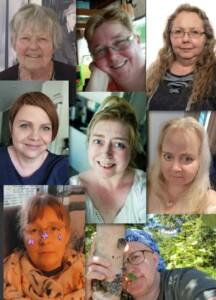 We have always had a lot of online connections with our members. Our group, Lupus Finland, first started by getting people involved online and we have mainly been an online working group due to the distances in the country. Finland is a very long country and since lupus is a rare disease, we have members from all around Finland.
We do have some local meetings like lupus coffee breaks. We encourage people to meet locally, where that is possible, but whether that is possible or how often it’s possible does depend on the city or location. The local gatherings started on World Lupus Day some years ago. In some cities these gatherings continued after World Lupus Day as coffee breaks.
For our online work we have groups on facebook, we’ve found that to be a good forum for discussion groups. (We are not as active on all social media channels like twitter or Instagram, the) facebook page of our group is our most active social media channel. We also do try to have 1-2 events a year, events where we can have some lectures, work and a bit of leisure time together with other members of the group.
Did you have any special meetings or webinars during the past year (World Lupus Day, Rare Disease Day, Annual General Meeting etc)?
Yes! As it happens our group was founded 20 years ago, so this is an anniversary year for us. On World Lupus Day we announced the group’s new name: the name has now officially changed from SLE Finland to Lupus Finland. All group members received a mask with a butterfly on it, which is our logo, as a gift to celebrate the 20 year anniversary of the group!


On World Lupus Day we also had a lecture on SLE by a rheumatologist specialising in lupus. the theme this year for our group was “Making Lupus Visible”. We also had a facebook campaign for World Lupus Day, for which we followed the Lupus Europe theme to celebrate the day.
Has it been difficult to keep connected with your members during the Covid19 pandemic?
As we always been a mainly online group, it wasn’t difficult for us to keep connected with our members during the pandemic. Due to the long distances between the cities in Finland, most meetings and lectures we’ve had as a group have always been online as well.
Have there been any circumstances during the pandemic that changed the way of living with lupus?
Absolutely. There is an uncertainty because of the pandemic that is around all of us, but especially those of us who are in at higher risk groups in case of covid.
For lupus patients in Finland, our daily lives have changed during the pandemic. We are always aware of covid and we’re always being cautious of the possibilities and risks of the virus. There may be an increased need for social distancing in lupus patients due to the fact that many of us are at higher risk groups for complications from covid infections. So of course, this uncertainty affects us.
Last year most of us lived with strict rules and lockdown. In Finland there are still restrictions about gatherings and some other things and it’s an ongoing process. Events still get cancelled et cetera; covid has affected everyone in so many ways, let alone those of us with a disease that makes us more vulnerable to it.
On top of everything else there are also a lot of questions about the covid19 vaccines. There are questions about the safety of the vaccines and a lot of unknowns for people and there are questions about the effectiveness of the vaccines too. It’s a lot; there are many things one has to consider.
In all this there is a need for valid, good information around the pandemic. This is important for everyone, but even more so for lupus patients.
Has Digital Health improved or changed in your country?
Yes! Many improved or new digital possibilities are available now or have been developed specifically as a result of the pandemic. Online services for different situations and instances are now more widely provided.
A person might have a consultation with their doctor online now, via video call for example. Also one can connect with a healthcare professional digitally now; there are some platforms where one can, for example, message their doctor, nurse or other healthcare provider kind of like e-consults. Some of these services were developed due to the pandemic or taken up more widely and offered more widely because of the pandemic. There are pros and cons for this also.
People who have access to electronic devices (i.e. computers or smartphones) and the skills to use them, can benefit from these new digital health possibilities. Those who lack the knowledge, aren’t able to use IT or who may not have the access to electronic devices are in a different position.
What would you most need as support in your country for lupus?
There is a lot being done already in Finland for Lupus. In general, information is really welcome and now we are excited that information is something that we can get from Lupus Europe!
Education around lupus, access to different kinds of courses; they are very welcome too. Anything that can be a tool for our group’s Board, something that we could use to improve and develop the work of our National group to meet the needs of our members would be very welcome.
In terms of information, so many different levels and types of information are needed. Information about lupus in general is vital too, increasing people’s awareness and knowledge is essential. Information about what lupus is, what type of lupus a person may have and what that might mean. This is important for healthcare professionals and for patients too. When you think about it, lupus a rare disease and any rare disease brings challenges of not being understood or not being taken into consideration.
If lupus was more common, it might be that it would be better and more widely understood and more accepted somehow even. It’s difficult for the general public to be aware of lupus because it’s a rare disease, but also because it changes all the time and we all have different kinds of lupus and different symptoms even within the same type of lupus. Increasing public awareness of lupus is essential.
Is there anything you think Lupus Europe could help your organisation with?
One of the important aims for our group is increasing public awareness of lupus, awareness among healthcare professionals of lupus and awareness and knowledge of lupus among people with lupus too.
We would want to continue getting from Lupus Europe tools for improving our work and tools that may help us develop our work, such as courses or information. This, of course, is also about us taking on the materials and the things Lupus Europe does provide us! It’s not a one-way street, it’s also about us taking on and using the resources there are already available.
We also have to remember that we are a small language group and not all of us are able to receive the information in English.
For example, the materials for World Lupus Day and other materials or resources; we first need to translate the materials into Finnish before we can share them. One can’t benefit from courses or information if there is a language barrier. This is an issue with small language groups I imagine- only about 5 million people speak Finnish.
Is there any topic/theme/area that you think Lupus Europe should focus on, on something where European collaboration would make sense?
Any and all collaboration and synergy are definitely good things. Increasing awareness of and knowledge about lupus are really needed. We’ve already covered how information is needed, but increasing awareness and knowledge would also be good all around. And of course this is already being provided and that’s good.
Are you aware of the Lupus Europe Member Capacity Building Program?
We have received information about it. It’s on our to do list.
Could you tell us a bit about a dream you have as a group?
I keep repeating myself, but our dream would be that everyone knows what lupus is. Of course, there are different kinds of dreams, and we have many as a group! Another dream of ours would be that people with lupus can do better and have a very good quality of life. We want our group to be beneficial to our members and well developed, so another dream of ours is that the information about our group and about lupus can be easily accessible for people.