 Zoe Karakikla-Mitsakou
Welcome back to our blog series on National Member News!
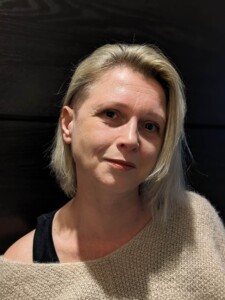
We are excited about getting our National Member news out to the world, so more people can find out what it is happening in each country and each member organisation! We caught up with Viola Zajk from Lupus Poland, who talked to us about the incredible work the organisation is doing, the needs of lupus patients in Poland and much more!
How do you keep in touch with or have contact with your members?
In addressing how we stay connected with our members, we emphasise the use of digital media, particularly Facebook (https://www.facebook.com/lupuspoland/) as a primary communication channel. We are also reachable via email and phone, providing personal responses to members’ questions. Recognising the need to evolve, we are also working on launching a newsletter and improving our website to share the latest news and developments with the world.
Additionally, we have ventured into audio media with the creation of ‘Radio Reuma’ on Spotify. This podcast, available in Polish, currently features episodes on lupus, including on diagnosis and psychological support, and has also attracted interest from medical professionals. We plan to expand the podcast with more episodes, making it even more accessible to a wider audience.
In terms of healthcare initiatives, we worked hard for some time to advocate for a programme for biological treatment; this was successful with the rollout starting in October, enhancing medication accessibility for patients. We are also part of developing a comprehensive care programme for newly diagnosed patients with various forms of inflammatory arthritis, including lupus, to be piloted in 15 locations across Poland. This programme aims to offer coordinated care with multiple specialists in one place, starting in January for newly diagnosed patients. This is a significant step towards centralised and efficient, multi-disciplinary healthcare for lupus patients in Poland.
Did you have any special meetings or webinars during the past year (World Lupus Day, Rare Disease Day, Annual General Meeting etc)?
We have been actively developing educational webinars, primarily focused on lupus. We have also launched “Surrounded by Care” (https://3majmysierazem.pl/edukacja/otoczeni-wspraciem/ ), a new educational and informational campaign for lupus.
These webinars may not yet be featured on our Lupus Poland page, but they are available on our main website, specifically for the needs of lupus patients. Our efforts are continued to expand these resources with even more podcasts and an upcoming webinar which we hope will take place in December with the help of a renowned rheumatologist in Poland. This collaboration reflects our strong commitment to providing valuable information and support to our community.
Our team of wonderful volunteers is key to our efforts. We are currently seeking additional volunteers to help us manage our expanding range of activities and initiatives. There’s a lot to do, and we’re excited about the positive impact we can make, especially as we look towards 2025 when Poland will assume the EU Presidency. Our preparation is already in full swing, with plans to bring extensive information about rheumatology needs to the forefront. This is particularly important, as we have observed an increase in autoimmune disease diagnoses. Our goal is to enhance support for autoimmune diseases across Europe, building on the ideas and momentum generated pre-Covid for better support of people with rheumatological conditions.
Has Digital Health improved or changed in your country?
It’s clear that we are witnessing significant advancements. We now have the ability to make appointments online, access our medical records, consult with doctors virtually, and these capabilities are continuously improving. A great development is our shift towards digital platforms that can handle prescriptions and referrals, mostly eliminating the need for paper-based processes.
One key initiative we are working on is the development of a comprehensive digital platform. This platform already exists and facilitates actions like signing up for COVID vaccinations, whereby patients automatically receive a vaccine invitation and can then select the date and time and their preferred vaccination site. Our aim is to expand this functionality to include all types of medical referrals, improving the ease with which patients can find and schedule appointments with doctors near them.
We also appreciate not having to physically visit a doctor for certain needs, like prescription renewals. The ability to handle these matters with a phone call represents a more efficient and patient-friendly approach. This digital health transformation is an ongoing process in our country, with improvements being made every month!
What would you most need as support in your country for lupus?
We have a strong hope in a new programme designed to provide comprehensive, coordinated care for lupus patients. This programme aims to offer a centralised location where patients can access all the support they need, through a multi-disciplinary team.
Additionally, we are focusing on developing platforms that provide essential information on living with lupus, including self-care. Part of this initiative is, of course, the Polish version of the Lupus100 project, which is set to launch in the next few months.
This project will offer valuable information on topics patients frequently wonder about: such as how a person can prepare for their first doctor’s visit, what information and documents to bring, and other practical concerns. There is also a need for education around basic healthcare procedures, like urine sample collection. I am reminded in mentioning this of a past awareness campaign featuring Toni Braxton, which used graphics to illustrate the correct method of collecting a urine sample for a whole day. This is a task many patients tell us they find challenging and are often hesitant to ask about. Realising the potential impact of such simple yet crucial information, we believe that educating patients, especially the newly diagnosed on many different aspects of the disease and its treatments, is vital.
We emphasise the importance of patient education, starting from the basics and gradually building up to more complex information. This approach is essential not only for supporting people who have had lupus for many years, but for guiding newly diagnosed patients who are just beginning their journey with lupus. Our goal is to improve things so no newly diagnosed patient will face the same challenges and uncertainties that many of us experienced at the start of our lupus journey. Part of that means ensuring people have the necessary knowledge and support right from the beginning.
We also aim to develop education around new treatments for all lupus patients. We have therefore expanded our own knowledge and become Clinical Trial Ambassadors. This allows us to better educate others around clinical trials and how to find the right one.
Is there anything you think Lupus Europe could help your organisation with?
Yes! The exchange of information and new ideas among patient organisations across Europe is so important. By sharing successful strategies and programmes like those we have established in Poland with organisations in other countries or with other countries where there are no organisations yes, we can collectively enhance patient support. When an approach or resource proves effective for people in one country, that can encourage others to adopt and adapt these initiatives to fit their needs within their own countries. This collaborative effort can significantly contribute to the improvement of lupus care and support throughout Europe.
Is there any topic/theme/area that you think Lupus Europe should focus on, on something where European collaboration would make sense?
The topic of cross-border healthcare within Europe is definitely an area that needs attention and collaboration. The challenge faced by rheuma patients generally and lupus patients specifically, when moving countries can be significant. There is a lack of guidance on navigating healthcare systems in a new country, especially when it comes to transferring medical prescriptions and understanding different healthcare rules. This issue is not just relevant for young people who might move for their studies, but it also affects those who may travel for leisure or relocate for work within Europe.
Dealing with healthcare across European borders can be complex and daunting. A key point of focus should be providing patients with essential information on what they need to know, where to go, and what documents they need to have in the context of different health systems across countries. At the moment each country presents its own unique set of challenges and procedures; a need for streamlined healthcare experiences is evident.
This situation underscores the importance of Lupus Europe possibly looking into how cross-border healthcare in Europe could be simplified and what changes might need to be made to ease the burden on patients navigating these complexities. Addressing this issue could significantly improve the quality of life for those who need to access healthcare services in different European countries.
Are you aware of the Lupus Europe Member Capacity Building Programme?
No, but now aware!
Could you tell us a bit about a dream you have as a group?
Yes! Our dream is rooted in the hope that advanced therapies, like CAR-T cell therapy, could become accessible to all eligible patients. Specifically, we dream that CAR-T cell therapy, which is currently expensive and still undergoing clinical trials but has shown promising results, will be available for every lupus patient who can benefit from it.