 Alain Cornet
“INTEGRATing patient reported outcomes, clinical data and quality indicators to physician drive data in clinical management of chronic rheumatic diseases: the paradigm of Systemic Lupus Erythematosus”
You may recall a request from Lupus Europe, on behalf of the Integrate Project, to complete an on-line survey. Over 750 people completed the questionnaire which 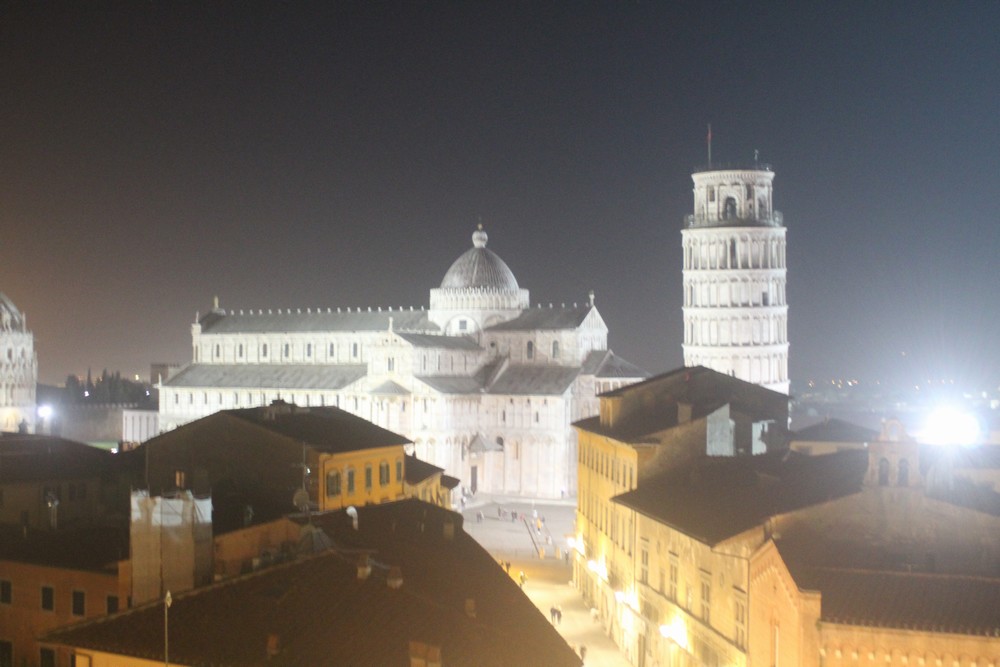 is a fabulous achievement so a huge thank you to those who were able to contribute; it makes a significant difference to this or any other research. 20 members were selected to participate in a face to face focus group weekend in Pisa during the weekend of 1-3 March 2019. Participants were selected based on their clinical history and combination of symptoms so as to portray a wide experience of living with Lupus.
The INTEGRATE project, coordinated by Prof. Marta Mosca from the Rheumatology Unit, Department of Clinical and Experimental Medicine of the University of Pisa (Italy), started on 1st of September 2017 and will last two years. Consortium is composed by three partners from Italy and Germany and involves players from university hospitals and academia.
The main aim of INTEGRATE is the development of a strategy for the monitoring and treatment of chronic diseases relying on the integration of Quality of Life data, Patient Reported Outcomes, and other patient driven data to the traditional evaluation. The INTEGRATE Project was co-funded by the European Union’s Health Programme (2014-2020) (*)
The first evening was an opportunity to relax from the travelling and meet altogether for the first time. There certainly was variety in the group; patients/people with Lupus and professionals new and old (time not age!) Lupus Europe members, warriors starting their journey and those who’ve been around the block more times than they care to remember, tales of experiences both positive and challenging, tips, tricks and so much more. In essence and already with only light conversation to witness, the crucial sharing – and exchange – had truly begun….
 The itinerary had been sent in advance but we can presume that a huge A2 copy in the hotel foyer was worth it’s weight in gold! The weekend would be a combination of focus groups, physiotherapy, discussion and importantly, time for us to rest and recharge. Even so, the details and arrangements were all taken care of by a team of dedicated staff. Everybody was escorted to the St. Anna School for the first day. En route, another chance to meet other participants and hear experiences.
Scuola Superiore Sant’Anna (St. Anna school of Advanced Studies) is stunning. They say never judge a book by it’s cover but with one look at the surroundings on approach, already a sense of excellence could be felt. Absolutely, it is never about the exterior but certain that as keen as participants were to get inside, the hosts were equally excited to welcome everybody in to begin the work. This stunning learning environment was waiting for us to take our seats. Everybody walking in awe to the lecture room. Lecture room? Try fresco painted walls, traditional patio doors, carvings, views to ancients artefacts, sculptures, banana trees. Banana trees!
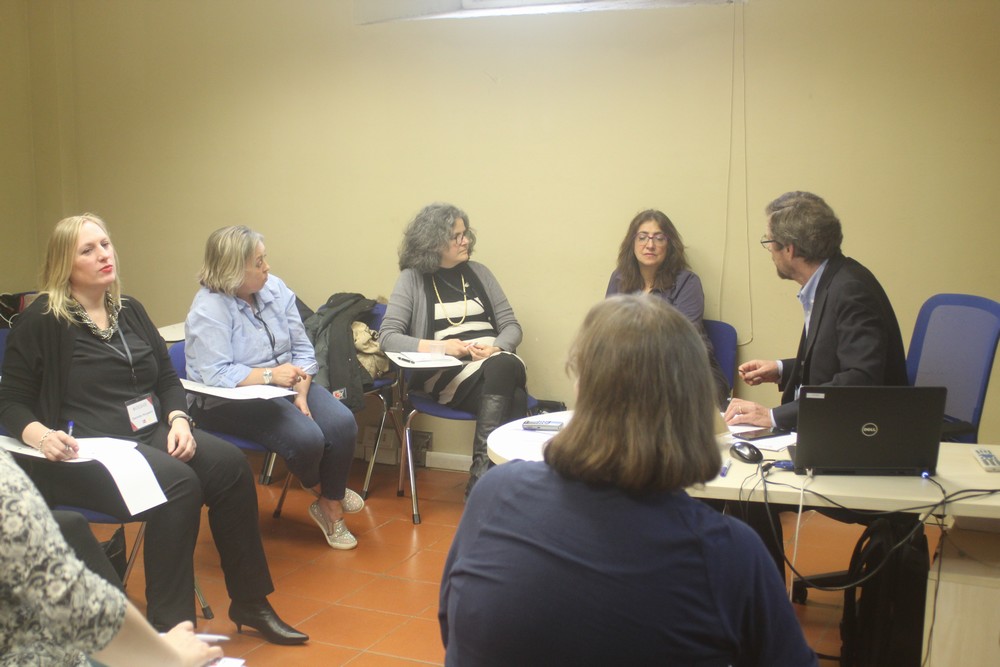
For the duration, people were split between focus group and physiotherapy sessions. The aim of the Focus Group was to take the on-line survey responses and delve further for a deeper understanding. Clinicians and researchers were not allowed to be present. Any researches that did enter the space, were there to ensure 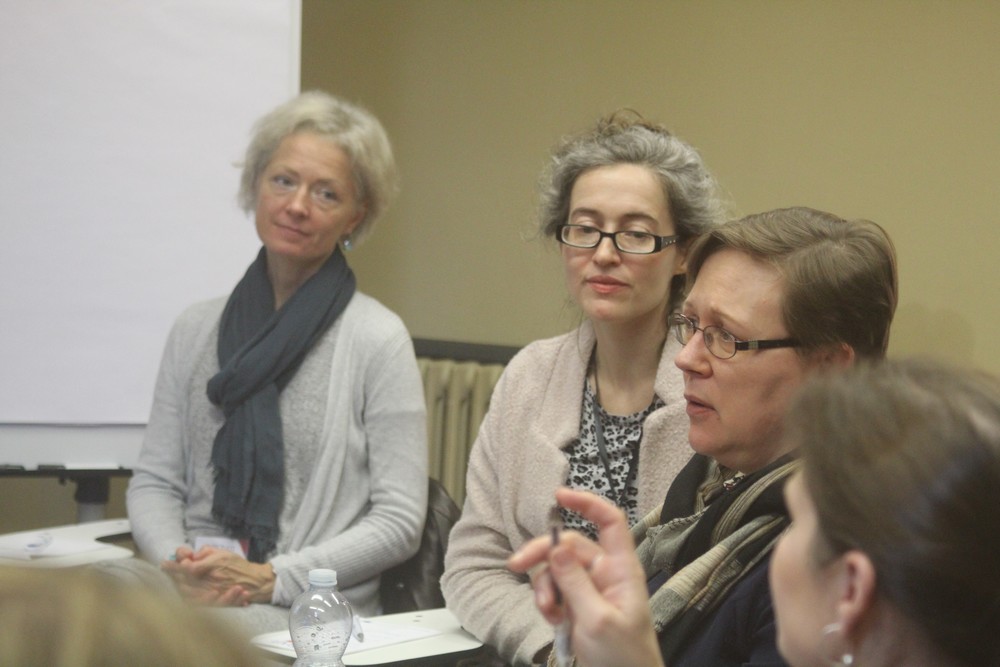 transparency, did not comment and therefor could not influence responses. It’s always fascinating how even in small groups, opinions can differ yet all so valid. The facilitator was able to hold fairly all perspectives and will amalgamate these for the final summary, hopefully published May 2019.
During the physio activity, exercises demonstrated were simple, gentle and a proven method to improve muscle strength and joint mobility. Many people shared their exercise solutions and hurdles but we will ignore the participants who thought the water bottles were for alternative weights not drinking! This was a privilege to be shown and advised by a Lupus-aware expert and received comments such as, ‘this is like a private class!’. The insertion and scheduling within the programme to ‘move’ was a perfect balance.
Beautiful Pisa. The town has blended the traditional with the new but as the project is located within the Old Town, one couldn’t help but consider and be immersed in the rich history all around. Wikipedia says,
Pisa (/ˈpiːzə/; Italian: [ˈpiːza], locally also [ˈpiːsa]) is a city and comune in Tuscany, central Italy, straddling the Arno just before it empties into the Ligurian Sea. It is the capital city of the Province of Pisa. Although Pisa is known worldwide for its leaning tower (the bell tower of the city’s cathedral), the city of over 91,104 residents (around 200,000 with the metropolitan area) contains more than 20 other historic churches, several medieval palaces, and various bridges across the Arno. Much of the city’s architecture was financed from its history as one of the Italian maritime republics.
The city is also home of the University of Pisa, which has a history going back to the 12th century and also has the Scuola Normale Superiore di Pisa, founded by  Napoleon in 1810, and its offshoot, the Sant’Anna School of Advanced Studies, as the best-sanctioned Superior Graduate Schools in Italy. Students are admitted after passing public national and international competitions. Sant’Anna School of Advanced Studies offers to those who decide to take excellence, a multi-disciplinary approach to learning, research, and internationalization.
But what is a place without it’s people? The steering force and passion of the Integrate Team is highly motivational, their enthusiasm infectious. The combination of these qualities aligned with the commitment and desire from participants, resulted in a much-needed way of working. No hierarchy, no preconceived ideas, no judgements simply a willingness to pioneer and prove a new way to partner for successful Lupus healthcare. Knowing these people are dedicating their work for the benefit of the hundreds and thousands of people living with Lupus is humbling. And for that, an acknowledgement of thanks to all, notably, Prof. Dr. Marta Mosca (University of Pisa, Department of Clinical and Experimental Medicine), Prof. Giuseppe Turchetti (Sant’Anna School of Advanced Studies, Institute of Management), Prof. Dr. Matthias Schneider (Heinrich-Heine-University Düsseldorf, Policlinic of Rheumatology & Hiller Research Unit) and all project associated staff. Last but not least, Lupus Europe and member organisations for actively making a difference for people now and in the future. Thank you – your commitment truly matters.
(*) project website at https://www.integrate-sle.eu