As part of its cooperation with the ERN ReCONNET, Lupus Europe is launching an important survey, which we would like to ask you to disseminate as largely as you can to people actually living with lupus. We have made the effort of providing 13 different languages, and are open to adding new ones, so we hope that the responses will be at the measure of the effort. Our objective is to have at least 1 answer per 200,000 inhabitants in your country… Make the count and help us beat it.

The survey will be available at this link https://www.surveylegend.com/s/1gr6 till the end of June. It typically takes less than 5 minutes to complete.

While several questions are focused, on a current hot topic (discover which one by taking part in the survey 😊) there is more to it than you can think at a first glance. This survey is a first effort to collect some general information, which we will then be able to use next year when for the big Living with Lupus in 2020 survey. The more answers we get, the more feedback we obtain on the tool and the questions, … the better equipped we will be for the 2020 survey.

Share the link on  your Facebook group(s), send it to friends, encourage participation and distribute as widely as you can to people living with lupus, so that we gather valuable information. the only condition to participate is to have any form of lupus…

Thank you for your support

LUPUS EUROPE

Live Facebook Feed

Comments Box SVG iconsUsed for the like, share, comment, and reaction icons

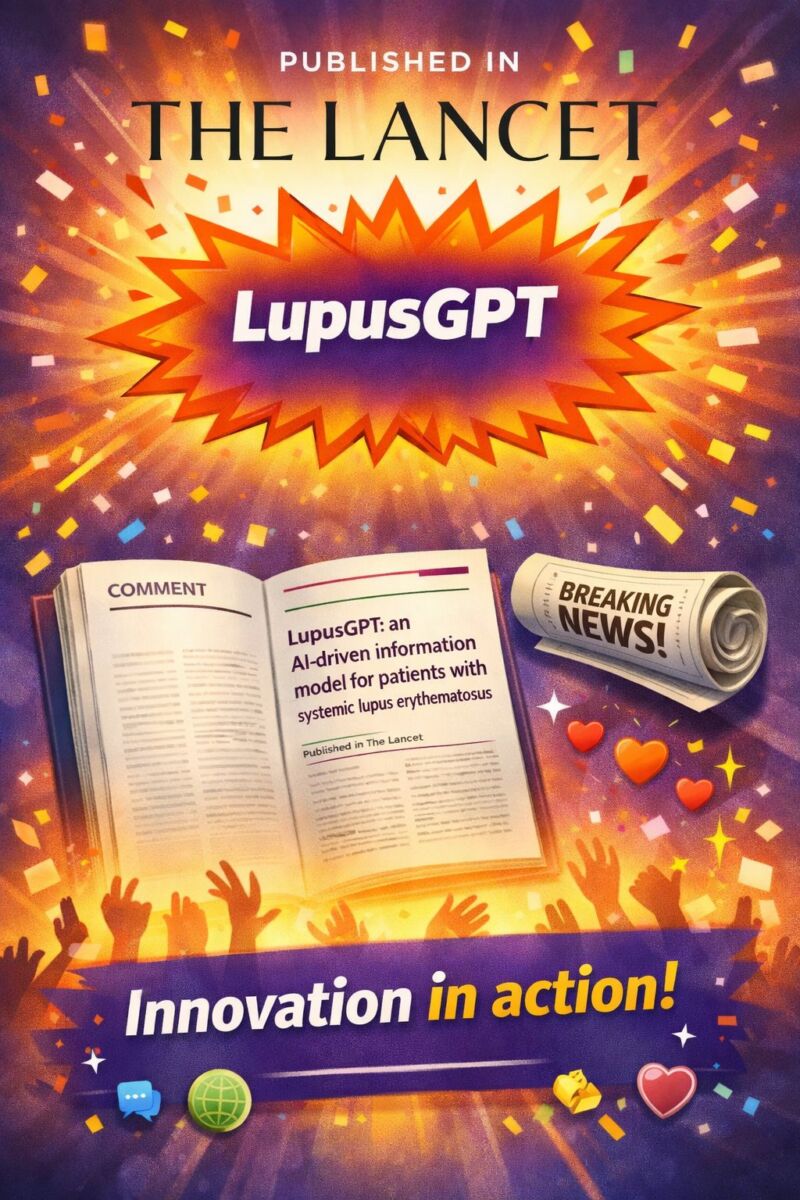
We are very proud to share that LupusGPT has now been published in The Lancet Rheumatology, one of the world’s leading medical journals in rheumatology.

For us, this is not only about a publication. It is about what LupusGPT stands for.

LupusGPT is free. It is patient-led. And it was built to help people living with lupus find reliable, accessible information in almost any language.

It began with a simple but important question: what could become possible if patients, clinicians, and digital experts truly worked together from the start?

That question was first opened up in a fishbowl discussion at the European Lupus Meeting 2024 on how the lupus community could get the best, but not the worst, out of AI. From there, LupusGPT was shaped through the care, intelligence, and effort of many people: volunteers, patient testers, clinicians testing across languages, people who gave feedback, and people already helping us share it with patients in clinics, organisations, and communities.

This publication matters because it shows that patient-led innovation belongs in the scientific world too. It shows that when patient voice is not added at the end, but built in from the start, something real can grow.

A heartfelt thank you to all authors: Zoe Karakikla-Mitsakou, Alain Cornet, Jeanette Andersen, Sarah Dyball, Cristiana Sieiro Santos, Daniel Guimarães de Oliveira, and Laurent Arnaud. Special thanks also to Daniel Guimarães de Oliveira for the thought, care, and belief he brought to this work, and to Professor Laurent Arnaud for his outstanding support, steadiness, and guidance.

And above all, thank you to everyone in the Lupus Europe community who keeps showing us why this matters.

LupusGPT. Free. Multilingual. Patient-led. And now part of the scientific record.

doi.org/10.1016/S2665-9913(25)00370-4

Read it for free now! You only need to register (registration is completely free and takes 1')
... See MoreSee Less

We are very proud to

🚨 Today is #WORDDAY2026! Which stands for WOrld Young Rheumatic Disease Day.

🌍 Through this global event, we can spread the word that children and young people get rheumatic diseases like lupus, too.

‼️ It is estimated that around 15-20% of #lupus patients are children, although it is rare that a child develops lupus before 5 years of age.

As with adult patients, the cause of lupus remains unknown, and there is a great choice of treatments to keep the disease under control.

🔴 On average, it takes nearly 6 years for people with lupus to be diagnosed. This delay in diagnosis, and therefore in treatment, can have an impact on the prognosis and quality of life of patients; this includes kids.

😰 The moment your child gets a diagnosis might be overwhelming for you. This feeling of overwhelm can and does go away with time and with access to the right information.

👉 Remember: it is impossible to learn everything about #lupus overnight! Your child's doctor is the best source of information.

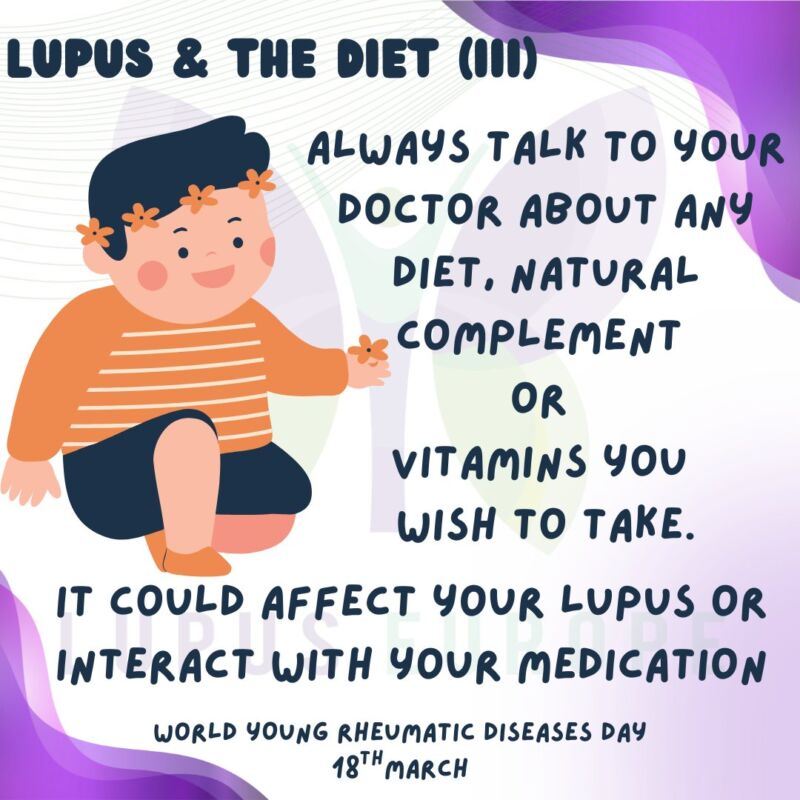
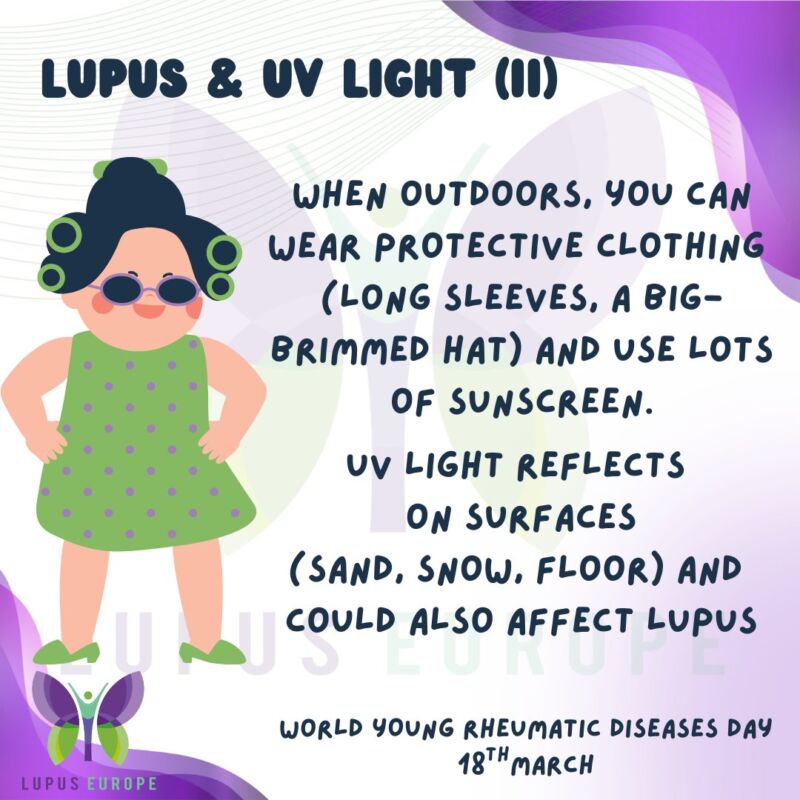
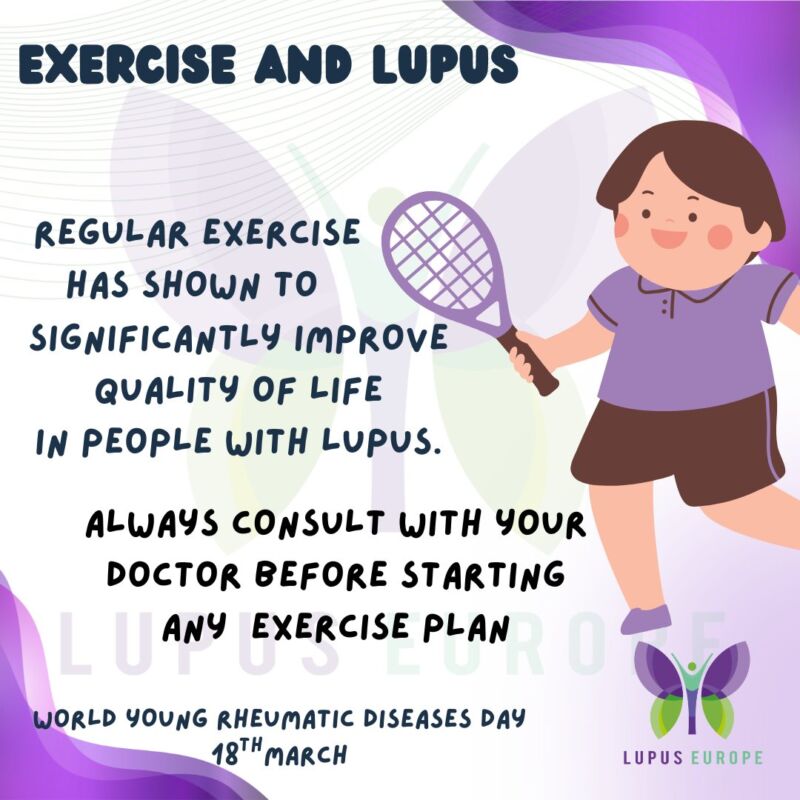
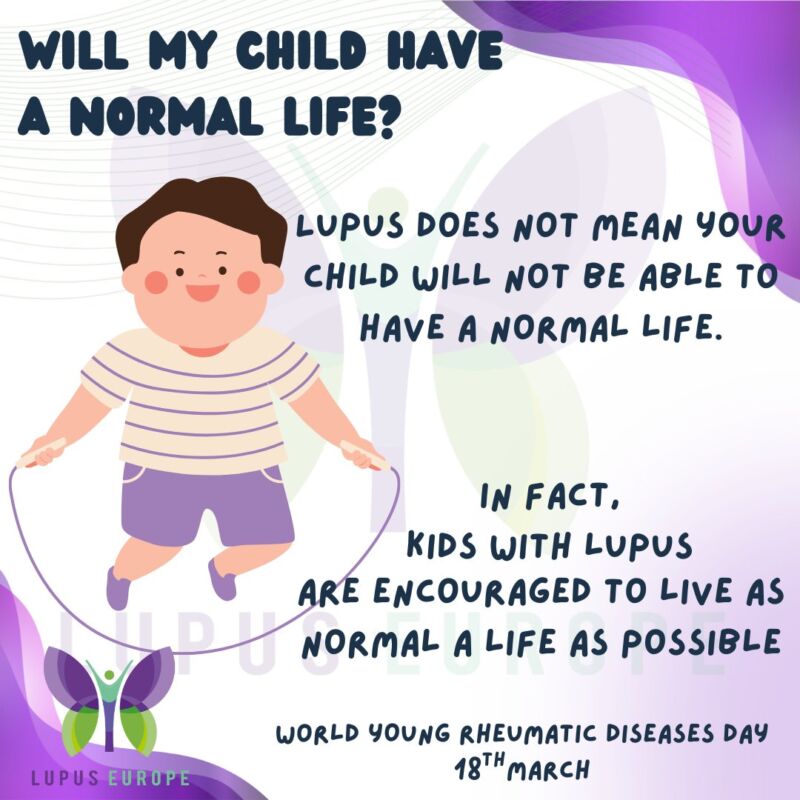
Apart from pharmacological treatment, other non-pharmacological measures can also help in lupus management.

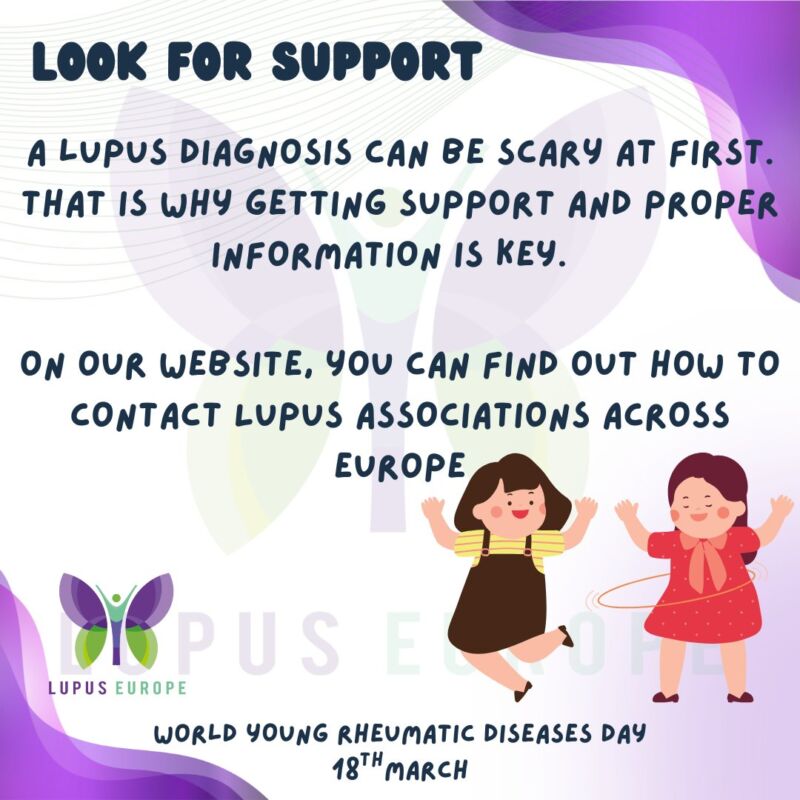
📷 Take a look at the images we are sharing today to learn about these non-pharmacological measures and share them with your community to help us raise awareness.

🐺 Lupus can seem scary at first. Remember that you are not alone and that you are going to do a great job!

Turn to your lupus association for support.

🤗 There are many organisations across Europe that can help you and your child cope with the disease.

More information on #SLE in children at #Lupus100: f.mtr.cool/oklkpqamyu

For more information on WORD Day, you can visit World Young Rheumatic Diseases Day - WORD Day
... See MoreSee Less

Image attachment
Image attachment
Image attachment
Image attachment
Image attachment

🔴 Tomorrow is #WORDDAY2026!

🦋 And we will be sharing tips and information on how #lupus can affect children.

Help us raise awareness, which is key for an early diagnosis & a quick referral to a specialised paediatric rheumatologist.

Share our posts and follow the World Young Rheumatic Diseases Day - WORD Day campaign.

More information on lupus in children at #Lupus100 (19 languages):

f.mtr.cool/hnfukbkwdf
... See MoreSee Less

🔴 Tomorrow is #WO

Watch this Lupus Europe Webinar on the European Lupus Meeting (ELM) 2026, As Viewed by Lupus Europe's PAN Members & Volunteers!

... See MoreSee Less

0 CommentsComment on Facebook

LUPUS EUROPE Uniting people with Lupus throughout Europe
Send