Much remains to be discovered about Lupus. Not just disease mechanisms and new treatments, but also a better understanding of what it means to live with lupus, the day to day issues faced by patients and their relatives, the impact on social and psychological functioning, … To help people living with lupus bring their life experience to the table, LUPUS EUROPE created Patient panels, by and For people with lupus. The panels bring together 10-15 persons living with lupus from all over Europe to discuss topics of interest. the discussions are animated by People living with lupus themselves, creating a unique atmosphere in the group, and allowing to speak in full confidence, without the fear of the “white blouse”, or the impression that “there must be a correct answer”. Participants can simply be themselves and speak their voice…

3 main patient panels have taken place so far:

Patient panel I on treatment

In  November 2014, 10 Lupus affected persons from 7 countries shared their experience about “treatment”, with the view to help improve the quality of life of people living with lupus. The Panel Brought new understanding of treatment, which participants defined as “any product or activity that aims at improving the person with lupus’ quality of life” and resulted in the issuance of 3 letters addressed respectively to People living with lupus, patients organizations, and the medical community, addressing how they each can help in this area. A full report of  this panel can be found here.

Patient panel II on the burden of living with lupus

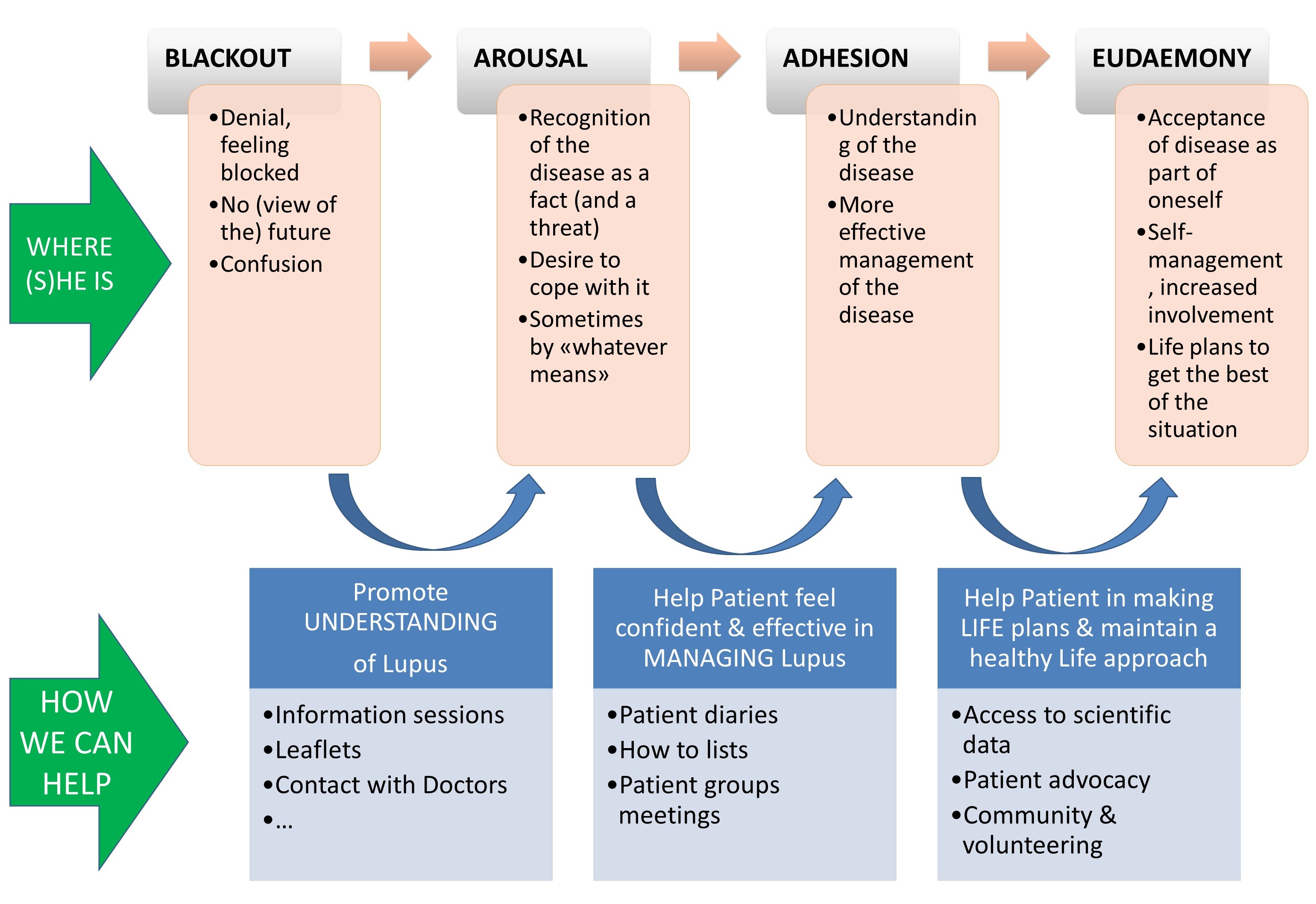
In March  2016 , a new panel aimed at further exploring the burden of living with lupus, and to dive into the burden of treatment day after day. One of its objective was to understand the journey with the disease, how the Patient Engagement model used in Health psychology applies to people living with lupus, and the consequences for Patient organisations. The model was validated and its implications for patient organisations, and how they need to address differently patients based on where they are in their journey with lupus are significant. A complete report on this patient panel can be found here.
This panel also resulted in a publication by D. Mazzoni in the magazine Muskulo-skeletal care, which you can download here .

A specific session was dedicated to Clinical trials, seeking to understand what would cause patients to join or not a Clinical trial, and too stay committed till the end.


Patient panel III on Youth

In May 2018, our 3rd patient panel was organised on the theme of youth. 10 Lupus affected young people, aged 18 to 26, from all over Europe shared their experience of living with lupus. The agenda was focused on the topics of interest and issues they identified themselves ahead of the Friday to Sunday gathering.  While they considered taking pills every day as a key problem, they preferred to focus on the collective issues of being understood by friends and family and having to live with limitations. A big “Wow” was the feeling of guilt expressed by several female participants (guilt of imposing limits to their partners, guilt of not being able to do as much as others, …). This guilt seems to be a very important underlying dimension of their social and affective life, which is likely much misunderstood by doctors and patient organizations. Young people with lupus remain fundamentally more positive on their life with lupus than the average patients. Their messages to other young people with lupus are reassurance, and positivism, and while they perceive lupus as being “all over their lives”, they want to make sure they are not ruled by it, and want to have no obligations relating to it… On the medical front, when we probed what would drive them to consider joining a clinical trial, clear first media is their lupus doctor, second are national lupus groups and LUPUS EUROPE. A full report of this panel can be downloaded here.


LUPUS EUROPE intends to continue running patient panels, so stay tuned on this page, where more information will be available as we progress 🙂


Live Facebook Feed

Comments Box SVG iconsUsed for the like, share, comment, and reaction icons

🦋 EULAR started yesterday!

This year, #EULAR2026 brings together a huge rheumatology community:

📊 5,705 abstracts submitted from 102 countries, a new EULAR record
📊 187 scientific sessions across 15 tracks
📊 More than 350 distinguished speakers from 43 nations

And Lupus Europe is here!

As promised, some of our PAN members are covering lupus-related sessions to bring key messages back to the lupus community.

🧑‍🤝‍🧑 One of yesterday’s highlights was seeing Marina Pietri present our poster on Sex & Lupus co-creation, with Rita Vieira also there representing the Youth Group’s work. The poster shows how young people with lupus worked with a clinician to create a safe, respectful space to talk about sex, intimacy and lupus, topics that are still too often left out of routine care.

A big thank you to Dr Cristiana Sieiro Santos for her support and collaboration in making this work possible.

🎥 If you haven’t watched the webinar yet, visit our YouTube channel and watch it there.

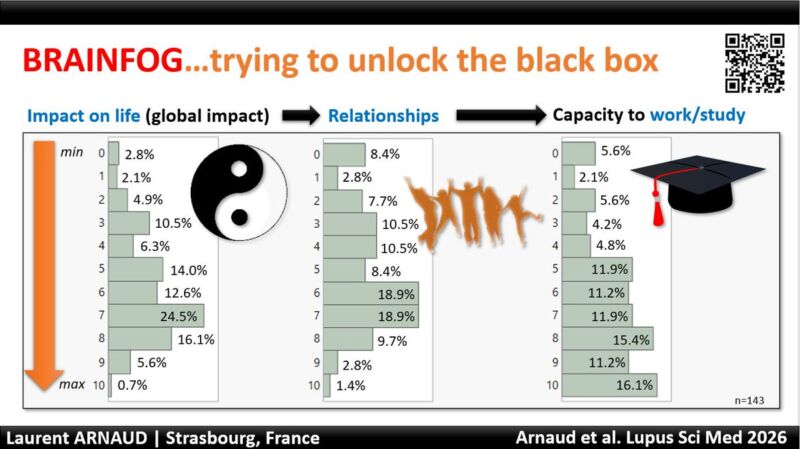
🧠 We also followed a session on fatigue, one of the symptoms people with lupus most often report as difficult to explain, measure and manage. The session looked at when tiredness becomes pathological, how fatigue can be assessed, and why lifestyle advice needs to be realistic and adapted to each person.

💬 Patient-doctor communication was another key topic yesterday. Have you heard about the Lupus Consultation Cards? Inspired by the work of NVLE in collaboration with ERN ReCONNET, they are a simple tool to help people prepare for appointments, organise symptoms and questions, and focus the conversation on what matters most. This is the idea behind our #MakeItCount campaign.

🌍 Dr Daniel Guimarães de Oliveira presented a poster on social determinants of health in lupus care, co-authored with our General Secretary Zoe Karakikla Mitsakou. This work shows how healthcare professionals, Patient Research Partners from Lupus Europe, local patient volunteers and social workers co-designed a practical framework to identify barriers such as financial pressure, health literacy, transport, social support and access to care, and connect them with local solutions.

📱 Digital tools were also part of yesterday’s programme, with discussions on how technology can support self-management, shared decision-making and patient empowerment. For Lupus Europe, this strongly connects with our work on reliable, patient-centred digital information, including #LupusGPT and #EasyLupus.

🔬 We also followed the session “The mitochondria: a new culprit for autoimmune diseases?”. The discussion explored how mitochondrial DNA and RNA may act as danger signals, activating immune pathways such as interferon responses and contributing to inflammation in lupus and other autoimmune diseases.

👏 Kudos to our PAN members and Board members for their great job on this first day of EULAR!

🦋 Stay tuned. Today will be another big day for Lupus Europe at #EULAR2026!

Our Chair, Jeanette Andersen, will speak in the session on non-pharmacological interventions to improve quality of life.

We also have a Meet the EULAR Expert session on “AI as a Partner in Care: Empowering the RMD Community with Information”, focusing on AI tools such as #LupusGPT and #EasyLupus, which will be delivered by Zoe Karakikla Mitsakou.
... See MoreSee Less

Image attachment
Image attachment
Image attachment
Image attachment
Image attachment

☀️ Good morning from beautiful London!

#Eular2026 is here, and so are we‼️

💬 You may already know #lupusgpt. You may have read the paper in The Lancet Rheumatology. You may have tried the tool, shared it with a patient, or recommended it to a colleague.

📊 But there is more. More to do. More lessons learned from two years of building something genuinely patient-led. More to understand about what happens when patients, clinicians, and AI specialists work together from the very first question.

🦋 This week, we will be sharing it all.

#lupusgpt: more than you think. Further than you imagined.
... See MoreSee Less

☀️ Good morning

📅 Tomorrow, the EULAR Congress begins!

🌍 #Eular2026 starts tomorrow, and Lupus Europe will be there!

🦋 We will be representing the patient voice, following the latest research, and sharing key updates with our community throughout the week.

Stay tuned for live updates, session highlights, and much more.

💬 Will you be following the congress? Let us know in the comments!
... See MoreSee Less

📅 Tomorrow, the E

🔴 𝐑𝐞𝐦𝐢𝐬𝐬𝐢𝐨𝐧 𝐝𝐨𝐞𝐬𝐧❜𝐭 𝐚𝐥𝐰𝐚𝐲𝐬 𝐟𝐞𝐞𝐥 𝐥𝐢𝐤𝐞 𝐫𝐞𝐦𝐢𝐬𝐬𝐢𝐨𝐧 🔴

This is one of the most important insights from a new editorial just published in Rheumatology.

📋 The editorial responds to a study analysing five years of data from the Amsterdam SLE cohort. The findings are striking:

🔹 In over half of clinical visits, patients rated their disease as more active than their physicians did.
🔹 Even among visits meeting formal remission criteria, more than 1 in 3 patients still reported significant disease burden.

These discrepancies highlight an important gap between how disease activity is measured clinically and how lupus is experienced by patients in daily life

📊 According to LUPUS EUROPE’s Swiss Knife Survey, patients’ definitions of “disease control” often go far beyond normal blood tests. They include 𝗳𝗿𝗲𝗲𝗱𝗼𝗺 𝗳𝗿𝗼𝗺 𝗳𝗹𝗮𝗿𝗲𝘀, 𝘀𝘁𝗮𝗯𝗹𝗲 𝘁𝗿𝗲𝗮𝘁𝗺𝗲𝗻𝘁, 𝗾𝘂𝗮𝗹𝗶𝘁𝘆 𝗼𝗳 𝗹𝗶𝗳𝗲, and the ability 𝗹𝗶𝘃𝗲 𝗮𝘀 𝗻𝗼𝗿𝗺𝗮𝗹𝗹𝘆 𝗮𝘀 𝗽𝗼𝘀𝘀𝗶𝗯𝗹𝗲.

𝗦𝗵𝗮𝗿𝗲 𝘄𝗶𝘁𝗵 𝘂𝘀 𝘄𝗵𝗮𝘁 𝗿𝗲𝗺𝗶𝘀𝘀𝗶𝗼𝗻 𝗺𝗲𝗮𝗻𝘀 𝗳𝗼𝗿 𝘆𝗼𝘂. Let's make it visible.

The editorial, co-authored by Dr Alvaro Gomez from Karolinska Institutet, and Zoe Karakikla-Mitsakou, LUPUS EUROPE General Secretary, points to several possible ways this might be addressed:

✅ Incorporating patient-reported outcomes into treatment target definitions
✅ Using assessment tools that better integrate patient-reported symptoms
✅ Exploring broader target frameworks that better reflect what meaningful disease control may look like for people living with lupus

This reinforces why people with lupus must be involved from the start in shaping how treatment success is defined, measured, and pursued.

💬 Have you ever been told you are in remission but not felt like it?

Share what remission means for you in the comments. Let’s make it visible.

📖 Read the full editorial: doi.org/10.1093/rheumatology/keag259
... See MoreSee Less