 Zoe Karakikla-Mitsakou
Welcome back to our blog series on National Member News!
We are very excited about getting our National Member news out to the world, so more people can find out what it is happening in each country and each organisation! We caught up with Andreas Panteli from Lupus Suisse, who talked to us about the great work the organisation is doing, the needs of lupus patients in Switzerland, COVID19 and so much more!
How do you keep in touch with or have contact with your members?
We send our Lupus Magazine to around 550 of our members twice per year; from 2021 onwards, this will move to once a year. We send our members 5-6 e-mails and post letters per years. We also have workshops and conferences twice a year. This is an area we are looking to improve, so we can have faster communication with our members.
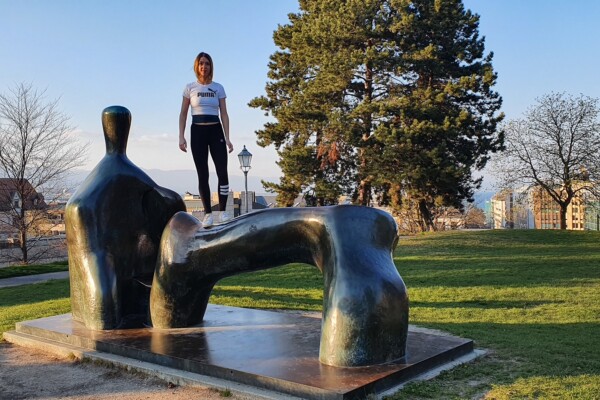
Photo of Magdalena from an article within the Lupus Suisse magazine sharing thoughts on seeing life in a positive way
Did you have any special meetings or webinars during the past year (World Lupus Day, Rare Disease Day, Annual General Meeting etc)?
Yes! We had our Annual General meeting on April 24th. We also had 2 doctor led webinars:
- SLE and COVID-19 https://www.youtube.com/watch?v=4Sy0NopqR50
- SLE and Vaccination https://www.youtube.com/watch?v=V1-w85PEnCE
In 2020 we had no General assembly, doctors’ webinars or workshops
Has it been difficult to keep connected with your members during the Covid19 pandemic?
Yes, face-to-face interactions have not been possible. The French part of Switzerland tried to use Zoom, but this didn’t work very well due to technical and personal issues. WhatsApp and messages seem to have more been useful than voice or video interactions during the covid19 pandemic for our group.
Many regional sub-groups found it difficult to keep in touch, as lupus members preferred to stay away from gatherings and interactions.
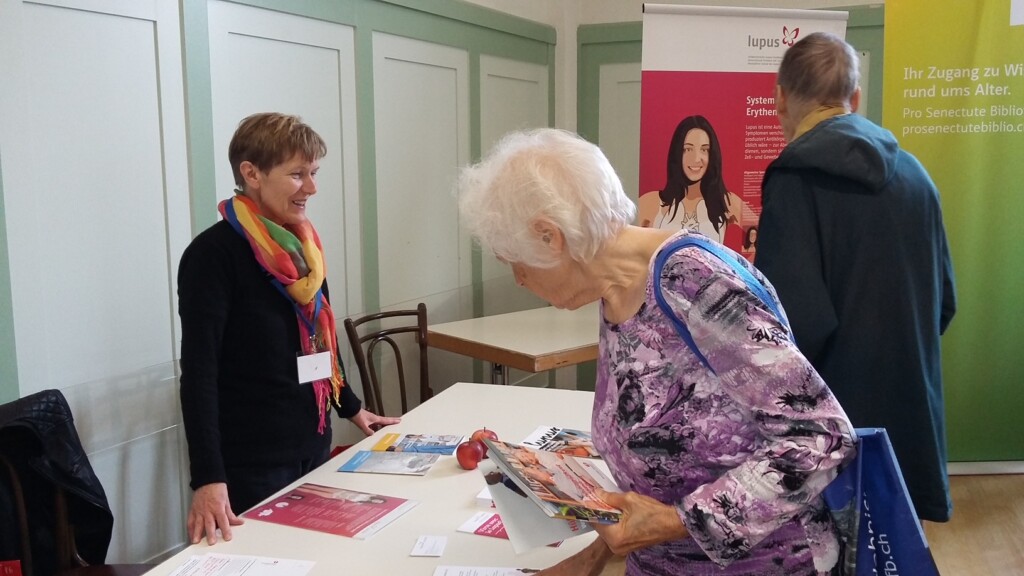
Photo from a past Lupus Suisse event
Have there been any circumstances during the pandemic that changed the way of living with lupus?
Lupus Suisse members preferred to stay away from gatherings. This was truer for lupus patients who are members of Lupus Suisse, than for people who were not lupus patients.
We observed that for newly diagnosed patients there was increased care, as recurring appointments were postponed during in the first lockdown. Care was more organised due to the strict appointment window. Caregivers had restricted access at the beginning, now this is back to normal.
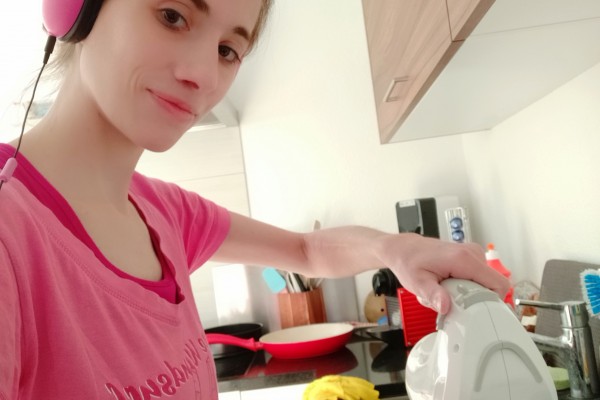
Photo of Lerna – from an article within the Lupus Suisse magazine sharing ideas & tips for how to cook healthy meals
Has Digital Health improved or changed in your country?
Digital health has not changed in the country as a result of the pandemic.
PCR covid19 or lateral flow test results are sometimes sent via SMS or e-mail, there have been some issues with this however and some people had to revisit the test centre to get their results.
What would you most need as support in your country for lupus?
We are currently missing groups and meeting face to face; we would like to see group meetings coming back, activity increasing, face to face workshops returning and interactions resuming.
Diagnosis in Switzerland can take a long time and may not be accurate. We would like to see shorter times to diagnosis and increasing accuracy of diagnoses.
Doctors currently must frequently switch medicines to find the one that works best for the patient. We need this situation to be improved for patients; it would be better for patients if doctors could predict which medicine would work for what patient.
Is there anything you think Lupus Europe could help your organisation with?
Yes! Lupus Europe could help our organisation through exchanging ideas and resources and through involvement in clinical or other studies.
Is there any topic/theme/area that you think Lupus Europe should focus on, on something where European collaboration would make sense?
Yes! We think there should be European collaboration on increasing funding for new therapies for lupus.
Are you aware of the Lupus Europe Member Capacity Building Program?
No!
Could you tell us a bit about a dream you have as a group?
We dream of bringing most lupus patients in Switzerland closer, of creating a community. We dream of lupus patients in Switzerland being offered the services they need to improve their social position and quality of life. We dream of being advocates and the patient voices for lupus patients in Switzerland. We want lupus patients to be able to have access to doctors they feel comfortable with; that they can choose their doctors. We dream of integrating healthcare professionals, creating a lupus network of healthcare professionals’ network with specialists like rheumatologists, immunologists et cetera that all lupus patients in Switzerland will be able to access.