 Zoe Karakikla-Mitsakou
Hello and welcome back to our blog series on National Member News! We are so very excited about getting our National Member news out to the world, so more people can find out a lot more about what it is happening in each country and each organisation!
We caught up with Katy Antonopoulou from the Hellenic League Against Rheumatism, who talked to us about the wonderful work the organisation is doing, the needs of lupus patients in Greece, COVID19, digital health and so much more!
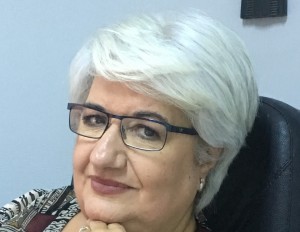
Katy Antonopoulou – Hellenic League Against Rheumatism
How do you keep in touch with or have contact with your members?
Pre-covid we had a number of face-to-face meetings with our members. We had regular meetings in our head office in Athens, as well as in other major cities such as Patra, Karditsa, Thessaloniki, we were doing members’ training sessions and we had also started offering 1:1 as well as group sessions for psychological support to our members. We used to do a lot of in person work with our members on decision making and psychological support. We also implemented a “school of health education” during the past couple of years for our members in several Greek cities, apart from Athens.
We have a helpline for psychological support, which is on the official referral list of helplines by the Greek Ministry of Health for people with RMDs. It’s been running for 10 years and it’s doing really well.
On top of that every year we run campaigns on several issues, for example we did a campaign on pharmacovigilance. We have found that every time we run a campaign on an issue, there is a corresponding increase in incoming calls in our helpline on that issue. Our helpline is staffed by a mental health professional, and is open Monday to Friday from 10 am to 6 pm.
Our group has also always been very active on social media, especially on Facebook.
With covid, we adapted, and we adapted quickly. Our in-person training sessions became webinars, for example. We’ve found that during covid, calls to our helpline have increased a great deal and our helpline is always busy.
We still offer 1:1 as well as group sessions for psychological support for our members. These are online now, because of covid. It took some getting used to it, but now everyone has adapted well to using the online platforms.
We have a very strong Facebook presence through our page. We do have twitter, Instagram and youtube accounts as well, but our social media presence is mainly through facebook, and this is a way we use a lot to have contact with our members right now. Of course, our members can also visit our website for updates.
We are very proud of how quickly we adapted to the unique challenges covid brought. We have a very good and active Board, we’re also very lucky in that we have volunteers from a specialised health communication office; we are all volunteers. The only paid staff we have is the one psychologist.
Our organisation was much smaller until 2016, it was a very important organisation that was doing wonderful work, but it wasn’t as outward looking as it is now. From 2016 onwards the organisation has become more outward looking and has developed very quickly. Our membership, that stood at 400-500 members in 2016 has reached 7,700 members now. We think that’s a credit to the work the organisation does, but also to how outward looking the organisation has become, strengthening our connections with other organisations around Europe and communicating the work we do to the public and to our members effectively.
We publish 35-40 press releases and articles per year and gather about 600 press clippings. We ensure we have a media presence by giving interviews on television and giving speeches whenever possible. We have a good working relationship with any government and we work collaboratively with the Panhellenic Pharmacists Association and the Hellenic Medical Society.
Did you have any special meetings or webinars during the past year (World Lupus Day, Rare Disease Day, Annual General Meeting etc)?
We did have a number of special meetings and webinars during the past year! Starting from March 2020 onwards, we hold 1-2 webinars every month. We stop for the summer in July or August, and we re-start the webinars in September. Our webinars are educational, and they typically last for an hour. They are live and are ran by two healthcare professionals. There is normally time for questions and answers from people towards the end. Our organisation is the Hellenic League Against Rheumatism, so our work is not exclusive to lupus, but includes all rheumatic and musculoskeletal diseases. In the past we have had webinars on topics like pregnancy and rheumatic diseases, work and rheumatic diseases, lupus et cetera.
We also had a webinar specifically for World Lupus Day. This was very popular, with close to 7-8 thousand views.
In 2020 we had a very successful campaign about Lupus, “LUPUS GR 2020”. We saw this as the starting point of an integrated artistic/social project whose goal it is to inform and raise awareness about prevention, early diagnosis, treatment and rehabilitation of lupus patients. We are now preparing the second part of our campaign about Lupus!
Our organisation is a member of EURORDIS. We took part in the celebrations for Rare Disease Day and disseminated EURORDIS campaigns.
This year we also had a small podcast, publicity and an online campaign for World Scleroderma Day and Sjögren’s Awareness Month and an online campaign for Ankylosing Spondylitis Day and Wolrd Sjögren’s Day. Last but not least, we held a virtual Press Conference and a social media campaign for World Arthritis Day.
Has it been difficult to keep connected with your members during the Covid19 pandemic?
No, it hasn’t. We faced some difficulties keeping in touch with a minority of people who do not have internet access. We found this was more of a difficulty with older people or people who did not have IT skills. We are currently thinking of how best to reach people with no internet access going forward.
Generally, it was easy to keep connected with our members during the pandemic through facebook, through our helpline et cetera.
We also have access to a closed facebook group about rheumatism on facebook, most people in that closed group are our members, but we have a good rapport with those who aren’t our members too. It was easy to use that platform too to communicate with people about upcoming webinars for example.
Have there been any circumstances during the pandemic that changed the way of living with lupus?
Yes!
We noticed a lot of our members with lupus experienced flare-ups of their disease during the pandemic. During the first National Lockdown, people had no contact with their specialists. Specialists were moved from their regular posts to covid-related posts and people were scared to go to hospital for non-covid reasons. This had a psychological impact, people felt low emotionally.
In the beginning of the pandemic there was a problem with hydroxychloroquine access for lupus patients. We were receiving some inbox messages on how people will be able to access their medication, if there is going to be enough in the market to cover their needs et cetera. Thankfully, largely due to our organisation’s intervention to the Government and to the Panhellenic Pharmacists Association, this issue was rapidly solved in Greece. We are happy we managed to help resolve this difficulty of access to hydroxychloroquine for lupus patients here. People can now get their hydroxychloroquine without any issues.
During the second wave of the pandemic, all rheumatology clinics closed. In Greece there are general rheumatology clinics, but no specialist lupus clinics. Appointments with specialists were cancelled and people were offered tele-consultation appointments instead.
We believe there is a big role for patient groups in this new reality we are all facing. The Hellenic League Against Rheumatism does not receive any state funding. We do receive support from pharma, but we also have to fundraise for activities.
We need to change our mentality as patients and our mentality as support groups. Patient groups need to be seen as organisations that can collaborate with governments and help support patients through this new, post-covid reality.
Has Digital Health improved or changed in your country?
Yes! In Greece digital health has improved a great deal. With the pandemic, health was suddenly digitalised. Long standing issues existed that had not been addressed for years, such as online prescriptions, but with covid digital health rapidly and significantly improved. A lot of things can now be done online. People can have online prescriptions, can apply for a range of certificates online, there are webinars, phone and online consultations with doctors et cetera. Digital health has truly made an entrance in our lives!
A new challenge for Greece is creating a digital health file for everyone. This is an ongoing, complicated process and we are trying to support this however we can.
At the Hellenic League Against Rheumatism, we have created a number of digital applications. We have collaborated with universities around Greece and, as a result, we have launched and are in the process of launching a number of apps, like the StigmApp. The StigmApp is an innovative mHealth solution for fighting stigma associated with chronic pain. You can find more information about this app here: https://play.google.com/store/apps/details?id=gr.uniwa.pain
Another app we were involved in is the EPIONE app, which is a full pain management solution. We are also currently involved in the development of yet another app related to chronic pain management for patients with osteoarthritis. This app will have a platform patients will be able to use to talk to other patients, their doctor and, we hope, it will also serve as a central access point for information, articles, advice et cetera.
What would you most need as support in your country for lupus? Is there anything you think Lupus Europe could help your organisation with? Is there any topic/theme/area that you think Lupus Europe should focus on, on something where European collaboration would make sense?
What we would like at the moment and what we need is to come up with a way to approach and offer support and training to people who have poor IT literacy and cannot use the internet or do not have access to the internet.
We also need support and help to create the first specialist clinic for lupus in Greece. People with lupus are very different as patients to people with other rheumatic conditions. We would like to talk to Lupus Europe about this and to explore ideas for how we might be able to get this project off the ground.
We also need a platform where we can exchange programmes and information, aimed at increasing awareness in patients and doctors. We would like a way to be able exchange programmes and resources with other organisations.
We also need to have data with regards to lupus patients and covid vaccinations. There is a lot of misinformation, misconceptions and a lack of information on this issue, we are noticing a lot of members with lupus are scared to be vaccinated and a lot of members with lupus are saying they had lupus flare-ups after they were vaccinated. We need clinical data for patients with lupus and covid vaccinations. – what happened after vaccinations? Did they actually had a flare? How was it treated?
A lot of misinformation and lack of information on this, people are scared because a lot of patients are saying they flared after vaccines, but there are no actual evidence or systematic data to support that.
A big issue in Greece is having children when you have lupus, so pregnancy and lupus needs to be researched further. Gynaecologists do not have enough knowledge about lupus, they do not communicate or work together with rheumatologists during pregnancy and this is a big problem. We would like some support to improve this situation for lupus patients in Greece. We do have some training material for gynaecologists, but we need some support on this issue to make gynaecologists more aware of the unique issues surrounding lupus and pregnancy and of the need to have multidisciplinary teams following the pregnancies of lupus patients.
Are you aware of the Lupus Europe Member Capacity Building Program?
No, but this programme sounds very interesting, and it sounds like something we could use for a number of projects, for example with regards to training programmes for gynaecologists and lupus patients. We do want to do a lot for lupus patients, but things are not easy financially for patient organisations and the pandemic has made things even harder.
Could you tell us a bit about a dream you have as a group?
Our vision is a better quality of life for patients with rheumatic and musculoskeletal diseases, less inequalities and equal access for all to health, education and employment.