 Zoe Karakikla-Mitsakou
Welcome back to our blog series on National Member News! We are so very excited about getting our National Member news out to the world, so more people can find out a lot more about what it is happening in each country and each organisation!
We caught up with Lupus France and found out all about the wonderful work they are doing, the needs of lupus patients in France, COVID19 and so much more!
How do you keep in touch with or have contact with your members?
We keep in touch with our members in various ways. As Lupus France, we have regional delegates who can receive direct telephone calls from patients and give information. Often, the first contact people have with us is through a telephone call to our regional delegates. We also keep in touch with our members through our newsletter, through facebook and through organised web conferences.
Did you have any special meetings or webinars during the past year (World Lupus Day, Rare Disease Day, Annual General Meeting etc)?
This past year was the beginning of the covid19 pandemic. This has had an effect on our ability to have as many meetings as we would have liked and as we normally would have had. These difficulties, because of the pandemic, are persisting in 2021.
Last year we did have our annual General meeting; that was held in October 2020. We then had a medical conference about Lupus with Dr. Chiche, from the centre of competence in Marseille. This conference was held online and it is still on our website, so people who want to can watch it. Here is a link to the conference programme: https://www.lupusfrance.com/8-actualites/689-conference-medicale-le-17-octobre-2020
For World Lupus Day our President, Johanna Clouscard, used to have a special day for lupus patients with walking, games and all sorts of activities. This was cancelled in 2020 and 2021 because of covid19. We are hopeful we will be able to have this special day to celebrate World Lupus Day again in the future, as things improve.
Has it been difficult to keep connected with your members during the Covid19 pandemic?
No, it has been easy to keep connected with our members who have internet, this is a marvellous way to keep in contact. Social networks and our website have allowed our members to keep in contact with us during the pandemic. Of course, things are not so easy for people who do not have internet access. There are very few members who don’t have internet and who can only connect with us over the phone.
There are a lot of ways for an organisation to keep in touch with its members. For example, the studies that Lupus Europe launched are good for all and also a great way for our members to keep in touch and a way for people to feel and see that organisations are working for them. We are a small association so we can’t launch those kinds of studies ourselves, but we are very happy to take part. Of course, we are keen to know the results of the studies. We have also been able to send our members recommendations from the autoimmune disease sector such as updates on vaccine recommendations for adult patients with autoimmune or autoinflammatory diseases during the covid19 pandemic by FAI2R: https://www.fai2r.org/actualites/covid-19?fbclid=IwAR1OzgvcuPP5CNRzqEjJ8UO9BFcLyVhOG-cNCSylDAi5JLwLf6KWLQzF9VY
Have there been any circumstances during the pandemic that changed the way of living with lupus?
This is such a difficult question to answer because the answer is different depending on the person, where she lives. The problem in France is that when people live in remote regions, it can be like a medical desert and people can struggle to get access to medical care and medical consultations; that, I think, is the case in other countries too.
During the pandemic, well we can look at the Lupus Europe Hydroxychloroquine survey because the patients have answered that survey.A few people have been out of Hydroxychloroquine and for them it has been a real pain to find their medicine. The stress of having to stop treatment was added to the stress of the pandemic and put these patients in a panic.
As a matter of fact, it’s sure that the pandemic might have been more severely felt in the older population and patients. Patients have also experienced a lot of anxiety about covid19.
In France now we’re going to be more and more vaccinated, but this was not the case two months ago. But there are still questions in the lupus community in France about what is best for lupus patients. Fortunately, in France we have a healthcare sector called FAI2R, this is a special branch of the Healthcare Ministry devoted to autoimmune conditions, and they do a lot of work on such questions of vaccines et cetera. So, we regularly include information from this organisation in our newsletters, recommendations about what to do with covid, what to do with vaccinations. Of course, we can’t tell people with lupus what to do and whether they should get the vaccine or not, it’s a personal decision for each person and they need to discuss it with their doctor. We can send people the existing recommendations on vaccination by FAI2R, but they are general recommendations for autoimmune conditions and not specific to lupus. There is also a concern about possible sub-immunity of lupus patients following vaccination, because of their condition and treatments they may be on.
Has Digital Health improved or changed in your country?
Yes! In France we have digital consultations. If someone wants to have a medical appointment with their general physician, they can do it in person or digitally. Maybe in remote areas in France digital consultations aren’t as frequently used, but in France digital consultations are very common now. The capacity of some sites (eg. doctolib) has been strengthened during the pandemic for virtual consultations to take place.
The problem is whether some people maybe don’t have a computer, don’t have access to a computer or don’t know how to use a computer. This may not be an issue for a lot of people, maybe it’s more of an issue for the older generation or people who are not computer literate.
Nevertheless, it is a lot more difficult to have remote visits with specialists due to the inability of transforming follow-up or review specialist consultations to virtual appointments, but also because of hospital overloading due to the pandemic. Specialists still see patients in person when possible. Therefore, some patients have had a bad experience with tele-consultation. It is a very good means of communication with the medical profession, but it can be distressing for the patient (absence of examinations).
Diagnostic wandering is still a problem. The case, for example, of a call from a young woman, who thinks she has lupus, seen by her general practitioner, but who struggles to have appointments with specialists to confirm or deny the diagnosis and remains without an answer on her condition and no treatment for her pain.
What would you most need as support in your country for lupus?
We have very good specialists in France and good care for lupus patients; care is improving in a lot of regional hospitals in France too.
In some hospitals, the internist can group several appointments during the day. At the CHU, with current IT resources, a patient can make several consultations. A resemblance to the Shared Medical File within an establishment. Another improvement would be to raise awareness of lupus in general physicians who often see the patient first.
Is there anything you think Lupus Europe could help your organisation with?
Yes! We are considering doing something for young people, adolescents. Usually this is the age of diagnosis and many questions arise about the disease and how to live with it as an adult. We have found a guide for young people with lupus from Lupus UK; this is the only guide we have been able to find for this age group. We plan to translate it to offer it to young patients. Maybe if we move forward with this project, we could discuss how we could work with Lupus Europe to print it out and give it to the young patients involved.
This year, we have supported the ‘Kroonik’ comic strip in the past as a communication tool to allow children to discuss difficult topics such as illness: https://www.lupusfrance.com/8-actualites/695-bd-a-titre-d-elles We would also love some help from Lupus Europe so we can centralise information on basic subjects common to lupus and affecting patients’ quality of life such as lupus and the skin, UV protection or approaching the disease and understanding those around you. A kind of sharing of resources. Is there any topic/theme/area that you think Lupus Europe should focus on, on something where European collaboration would make sense? For Lupus France research is very important. There are a lot of research topics and we are interested to know which research topics are the most important ones for lupus patients. It’s very difficult to know which are the most important, because there is a lot of research on a lot of areas. It would be good a general overview of lupus research on a European level- we feel Lupus Europe could help in that.
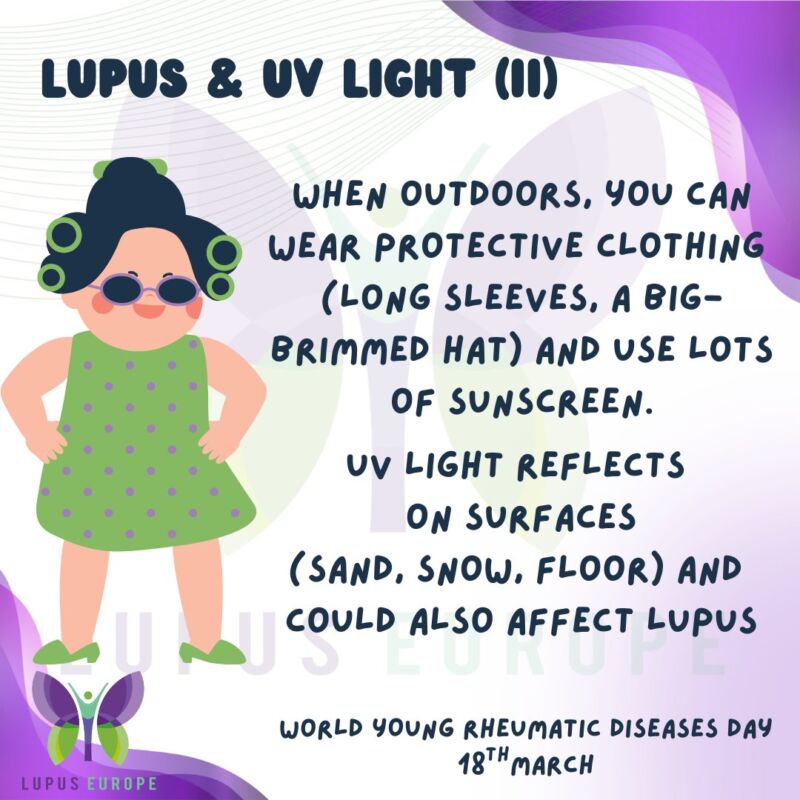
Pooling information for basic resources on lupus may also be very useful; such as for sun protective clothing, sun creams et cetera.
Are you aware of the Lupus Europe Member Capacity Building Program?
We were not aware of this program! Thanks to Lupus Europe, our Board is now aware of the program.
Could you tell us a bit about a dream you have as a group?
One of the dreams we have is for diagnosis time for lupus patients to be shorter, we need faster diagnoses for people so they can have faster access to treatment. Another dream we have is to understand the origin of the disease, so we can stop its onset and “make a world without lupus”.
[/vc_column_text][/vc_column][/vc_row]