 Zoe Karakikla-Mitsakou
First of all we would like to say a huge “thank you” to Lupus Europe for supporting us financially with the organisation of this meeting. It went great and both: the patients and us, the board of Lupus Poland, really needed it to meet in real life – most of us had never met before outside of the online reality.
The meeting of Lupus Poland was organised on the 27th of June 2021 in Gdańsk and it was a result of the need expressed on one of our groups on Facebook by a person living with lupus. We, Lupus Poland, have taken this opportunity and organised it, in order to connect everybody and to create a network of patients, who can support each other.
The meeting was smaller than we expected, as several people cancelled at the last moment for various reasons (health, environmental, weather, distance, etc.). However, this also had a positive side, because all of us could open easier and had enough time to share our stories. We were in total with 7 people and the meeting still lasted for 4,5 hours, with constant talking. It felt like we could have been there forever. We noticed that the entire group really needs these kinds of meetings to be able to talk about their worries, about their experiences, and to get to know more about the disease from others.
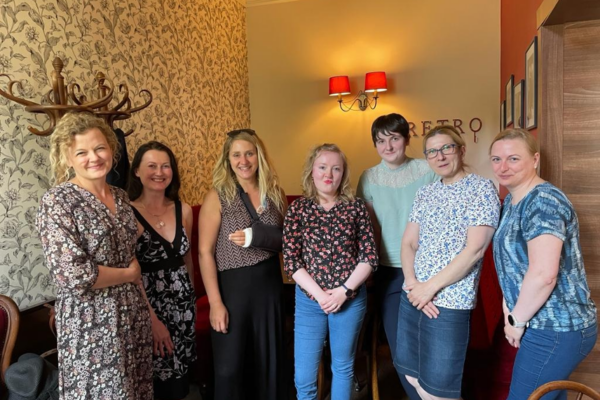
During the meeting, we shared our stories about the diagnosis, difficulties with the disease, life with lupus and obstacles we are dealing with everyday. We have talked about what we need to change in Poland regarding the path to the diagnosis, what to improve and what is necessary for patients to have the best healthcare possible and variety of treatments available. Next of all, we talked about our achievements, passions, hobbies and positive things, which make us feel alive and happy, despite the obstacles of the disease. We have finalised the meeting by sharing our contacts and by creating a first support group in Poland for people living with lupus. As a result of the meeting, we created the 1st support group for now in Gdańsk. We wish to create more groups like this in various polish cities to enable everybody to be able to join F2F meetings.
We understand the importance of it and we want to continue our task to support Polish patients. We know that it is also just the beginning of the activity of Lupus Poland and various support groups. We have plenty of ideas and we are looking forward to developing our future projects.
Lupus Poland Board meeting
Already on the following day (28th of June) the Board of Lupus Poland met to continue working on our projects and develop further our ideas, which the group collected on the previous day. We (Magdalena Misuno, Klaudia Kępa and Magdalena Sławińska) have worked for another several hours in order to continue creating our strategy and action plan for the next few years. The main activities, which we are planning to do till the end of 2020, are:
- to actively participate in the Lupus Europe convention and to bring the information gained and lessons learnt from international experts to our national context
- to organise two more webinars on the clinical trials, and perhaps on pregnancy in Lupus patients,
- to continue with regular meetings of the support group in Gdansk,
- to research, in which cities in Poland we could organise similar meetings and create support groups as well,
- to engage into creation of various informative articles and translation projects,
- And finally to develop our communication team, keep our social media active and to create our website.
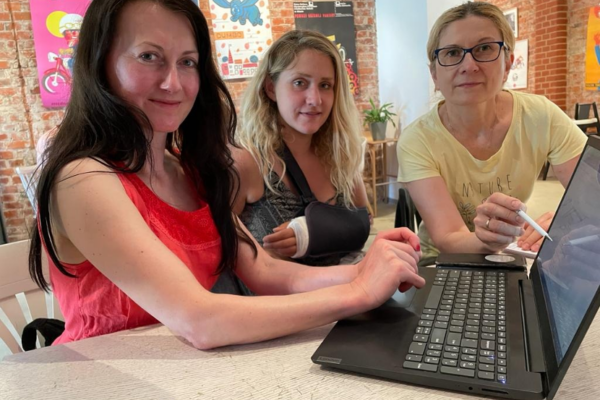
Moreover, we already have plenty of ideas for the next few years, for instance, we would like to organise a big meeting (assembly) for people living with Lupus in the entire Poland. For this event we would like to invite specialists and experts to talk about the diagnosis, living with Lupus, treatment options, etc. We are also planning to create a project with psychological support for those in need, to organise online workshops on various topics (relaxation, dietary, exercising), as well as, to create an informational database and a blog on our website with Lupus resources and contacts to relevant clinics. We gathered a lot of ideas for future webinars, articles and workshops and we would like to start a project, which was proposed by one of our volunteers (Anna) – Lupus Cafe – which would be an online support group with regular meetings, where patients could share their thoughts with a cup of tea or coffee. Finally, one of our biggest plans is to open a physical office in Gdansk, where we can hold various meetings, connect with partners and patients.
Article by Klaudia Kępa for Lupus Poland