logo_epf

From April 10th-11th EPF held its annual AGM. Katharine Wheeler attended on behalf of LUPUS EUROPE.

Naturally, in the year of EPF’s campaign on Access to Healthcare, there was a strong focus on the #Access2030 campaign and putting healthcare firmly back on every politician’s agenda.

A noteworthy result of EPF’s survey on Access to healthcare is the fact that 60% of respondents experience financial hardship as a result of accessing healthcare. A result that won’t be a surprise to anyone affected by a chronic condition.

“I refuse to be considered a second-class citizen or a cost, my care is not a cost, it’s an investment.” – Marco Greco, EPF President
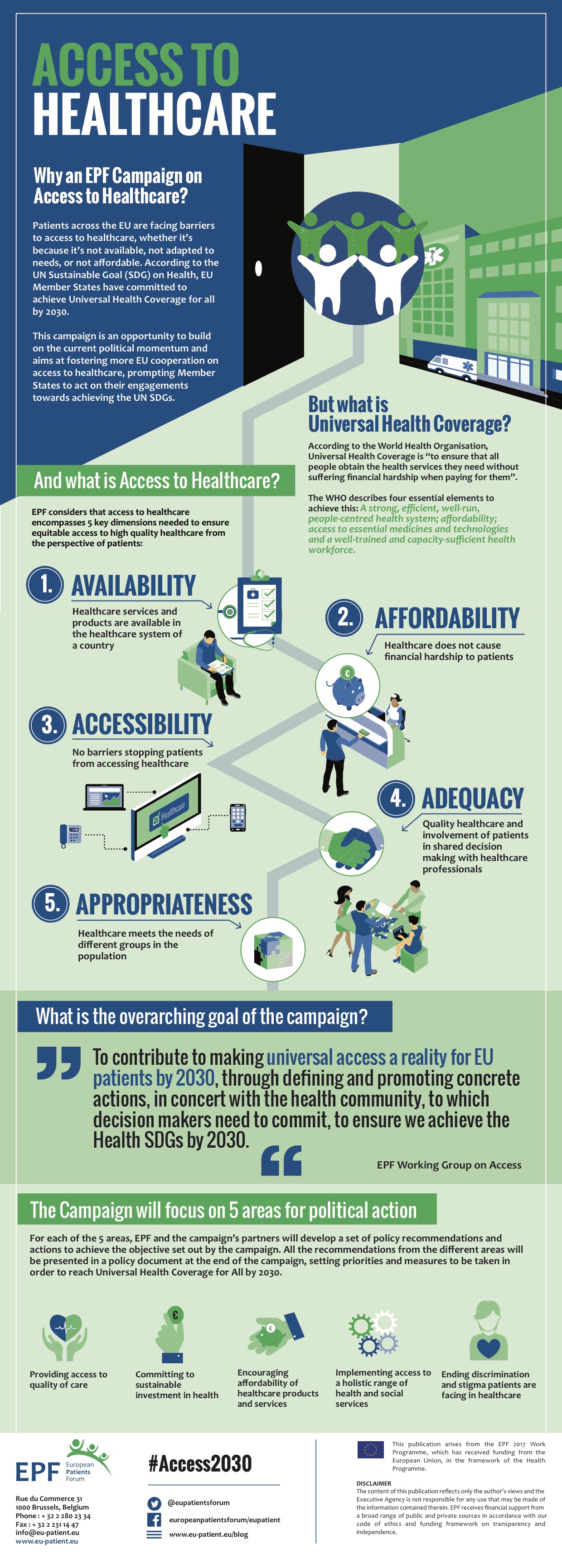
access_to_healthcare_epf_infographic

For more on the #Access2030 campaign, please click here.

“2017 is a pivotal year – now that we have seats at the table, need to ensure enough patient advocates!” – Marco Greco, EPF president

Seven patient groups applied for EPF membership. BAG Selbsthilfe (German patient self-help group umbrella), the European Congenital Heart Disease Organisation, the Swedish National coalition (HSO Handikappförbunden, and the NCDP – Greek National confederation of Disabled people (not the official English name) were approved as full members. Due to a late application, the Spanish platform for patient organisations (Platforma de Organizaciones de Pacientes) was granted provisional membership.

AGORA (platform representing patient organizations of people with Rheumatic and Musculoskeletal Diseases (RMDs) in Southern Europe) and LuCE – Lung cancer Europe were approved as associate members.

Eight candidates put forward their applications as board members. Four positions were available. Marco Greco, Radu Ganescu and Stanimar Hasardjiev were re-elected while Hilkka Härkkäinen was newly elected. Robert Johnstone, a long-standing board member and well-known to many stood down. He was thanked warmly by the board and members for his years of service in patient advocacy. As someone whose comittment and good humour never wavered, he will no doubt be sorely missed.

A record number of Patient Organisations attended the AGM (the highest number yet), and many fruitful discussions were had on subjects such as Access, the complexity of research and clinical trials, the interest of data collection and volunteer recruitment – to name but a few. Work groups also discussed Access, Empowerment, Sustainable Patient Organisations and Governance.

“If each patient is a drop of water, together, we are the sea” – Marco Greco, EPF President

Live Facebook Feed

Comments Box SVG iconsUsed for the like, share, comment, and reaction icons

Today is rare disease day!

🚨 There are over 300 million people who live with a #raredisease in #europe.

🌎 Today, we join our fellow patient organisations that work towards a better life for people with rare diseases and their families.

🔴 Some facts about #rarediseases:

1️⃣ There are more than 6000 identified rare diseases.

2️⃣ Rare diseases currently affect 5% of the worldwide population.
The true impact of rare diseases is much wider, however, with those affected in Europe in the millions, as the disease affects not only the patient but also our loved ones.

3️⃣ 72% of genetic diseases are genetic, although #lupus is not one of them.
👉 Lupus is not a genetic disease. Although it is very much related to genes, there are other factors that play a role in its manifestation.

4️⃣ 👶Neonatal #lupus is a rare congenital disorder that some infants of mothers with lupus and anti-Ro/SSA and/or anti-La/SSB antibodies develop.
The most serious complication of neonatal lupus is a heart condition known as congenital heart block.

5️⃣ Having an early diagnosis is key to having access to the right treatment. This has an impact on physical and mental health and, therefore, on the quality of life.

Along with organisations like Rare Disease Day and EURORDIS-Rare Diseases Europe, we will carry on working towards an early diagnosis, access to treatment and equality for #raredisease patients 🙌.

Thank you for your support on this #rarediseaseday!

#ShareYourColours
... See MoreSee Less

Image attachment
Image attachment
Image attachment
Image attachment
Image attachment

#lupus is a #raredisease that affects nearly 500,000 people in Europe. Furthermore, there are over 300 million people who live with a #raredisease in #europe.

Today, along with Rare Disease Day, patient organisations around the world advocate for equity for people living with a rare disease

#ShareYourColours and help us spread the word by liking and sharing. Remember that you can also download the material of the official campaign on the website

f.mtr.cool/iyctvzvvtj
... See MoreSee Less

#Lupus is a #RareDis

Today is #RareDiseaseDay!

And we have joined Rare Disease Day campaign.

Everyone deserves equal opportunities, access to healthcare ➕ early diagnosis, which is key to setting a treatment plan &, hence, achieving a good quality of life.
#ShareYourColours

www.youtube.com/watch?v=7J1oTfoIOGw
... See MoreSee Less

Today is #RareDiseas

😃 Throwback to the HMA/EMA Multi-Stakeholder Workshop on Artificial Intelligence.

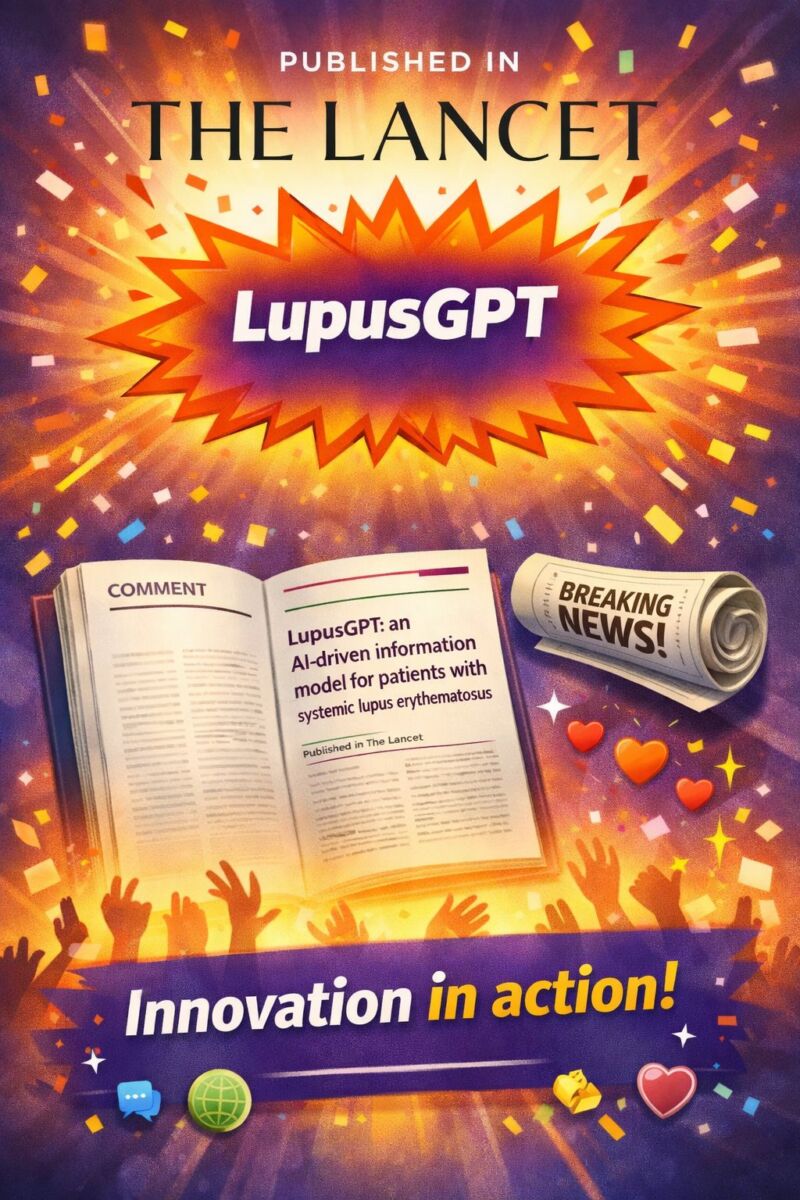
Watching Alain Cornet show the world what #LupusGPT really is still gives us goosebumps! 🙌

For those who still don't know this artificial intelligence tool:

💡 LupusGPT is built by patients and doctors.
🗣️ It speaks virtually any language.
💸 It’s free and anonymous- you don’t need to create an account.
📚 It is trained exclusively on a curated repository of validated documents.
🚫 It does not invent answers.

If something is not in the repository, LupusGPT will clearly say so. It will not guess. It will not generate false information.

🥹 Seeing LupusGPT presented at such a high-level regulatory forum confirmed something important:
Patient-led innovation can meaningfully contribute to the future of AI in medicine when it is built responsibly.

🔗 Try it here! lupusgpt.org/

🧠 Are medical terms confusing? Prefer shorter explanations in simple language?
Try #EasyLupus! The easy-read version of LupusGPT: easy.lupusgpt.org/
... See MoreSee Less

LUPUS EUROPE Uniting people with Lupus throughout Europe
Send