Hello! My name is Ida, and I’m here to share my incredible journey through the EUPATI Open Classroom, an initiative by the European Patients’ Academy of Therapeutic Innovation (EUPATI). For me, EUPATI training was a ride filled with challenges, dedication, and a newfound understanding of the medical world.


Let me be honest; diving into the EUPATI Open Classroom was challenging. It demanded time, effort, and a willingness to embrace a whole new language – the language of medical research. The EUPATI course required substantial dedication. It wasn’t just about reading materials or participating in online events; it was about immersing yourself in an entirely new realm of knowledge. Picture this: medical jargon, complex terms, and a professional language that doctors and researchers use daily.


As I familiarised myself with this new language, I found myself understanding the world of medical research better. Suddenly, concepts that once seemed foreign became clear, and the importance of learning more about research for my work as a Patient Advisory Member (PAN) for Lupus Europe became undeniable. Learning these intricacies not only enhanced my knowledge, but also deepened my motivation.


My EUPATI story didn’t unfold smoothly; health issues threw a wrench into my plans. But here’s where EUPATI stood out – their understanding and support were great. When I couldn’t complete the course in one year due to health concerns, they allowed me to postpone. I now have two modules left, the final training, and the final test. With the support of EUPATI, I am continuing my journey. Slowly but steadily, I will earn my last credits, absorb new knowledge, and prepare for the final face-to-face training and test.


In hindsight, despite the challenges, I can confidently say it is worth it. The EUPATI Open Classroom has already transformed me. Yes, it demands focus, dedication, and countless hours of learning, but the rewards are immeasurable. So, to all of you out there considering this journey, here is my advice: be prepared to invest your time and energy. Embrace the difficulties, because on the other side, there is a world of understanding waiting for you. The EUPATI Open Classroom might not be easy, but it is undeniably transformative. It’s a unique opportunity to empower yourself, to comprehend the intricacies of medical research, and to contribute meaningfully to the betterment of patient experiences worldwide.


With determination and the right support, you can conquer the challenges and emerge stronger, wiser, and more empowered than ever before. Here’s to your journey of discovery and enlightenment at the EUPATI Open Classroom!


By Ida Daiva Povilaite, Lupus Europe PAN and Board Member


Live Facebook Feed

Comments Box SVG iconsUsed for the like, share, comment, and reaction icons

Today is rare disease day!

🚨 There are over 300 million people who live with a #raredisease in #europe.

🌎 Today, we join our fellow patient organisations that work towards a better life for people with rare diseases and their families.

🔴 Some facts about #rarediseases:

1️⃣ There are more than 6000 identified rare diseases.

2️⃣ Rare diseases currently affect 5% of the worldwide population.
The true impact of rare diseases is much wider, however, with those affected in Europe in the millions, as the disease affects not only the patient but also our loved ones.

3️⃣ 72% of genetic diseases are genetic, although #lupus is not one of them.
👉 Lupus is not a genetic disease. Although it is very much related to genes, there are other factors that play a role in its manifestation.

4️⃣ 👶Neonatal #lupus is a rare congenital disorder that some infants of mothers with lupus and anti-Ro/SSA and/or anti-La/SSB antibodies develop.
The most serious complication of neonatal lupus is a heart condition known as congenital heart block.

5️⃣ Having an early diagnosis is key to having access to the right treatment. This has an impact on physical and mental health and, therefore, on the quality of life.

Along with organisations like Rare Disease Day and EURORDIS-Rare Diseases Europe, we will carry on working towards an early diagnosis, access to treatment and equality for #raredisease patients 🙌.

Thank you for your support on this #rarediseaseday!

#ShareYourColours
... See MoreSee Less

Image attachment
Image attachment
Image attachment
Image attachment
Image attachment

#lupus is a #raredisease that affects nearly 500,000 people in Europe. Furthermore, there are over 300 million people who live with a #raredisease in #europe.

Today, along with Rare Disease Day, patient organisations around the world advocate for equity for people living with a rare disease

#ShareYourColours and help us spread the word by liking and sharing. Remember that you can also download the material of the official campaign on the website

f.mtr.cool/iyctvzvvtj
... See MoreSee Less

#Lupus is a #RareDis

Today is #RareDiseaseDay!

And we have joined Rare Disease Day campaign.

Everyone deserves equal opportunities, access to healthcare ➕ early diagnosis, which is key to setting a treatment plan &, hence, achieving a good quality of life.
#ShareYourColours

www.youtube.com/watch?v=7J1oTfoIOGw
... See MoreSee Less

Today is #RareDiseas

😃 Throwback to the HMA/EMA Multi-Stakeholder Workshop on Artificial Intelligence.

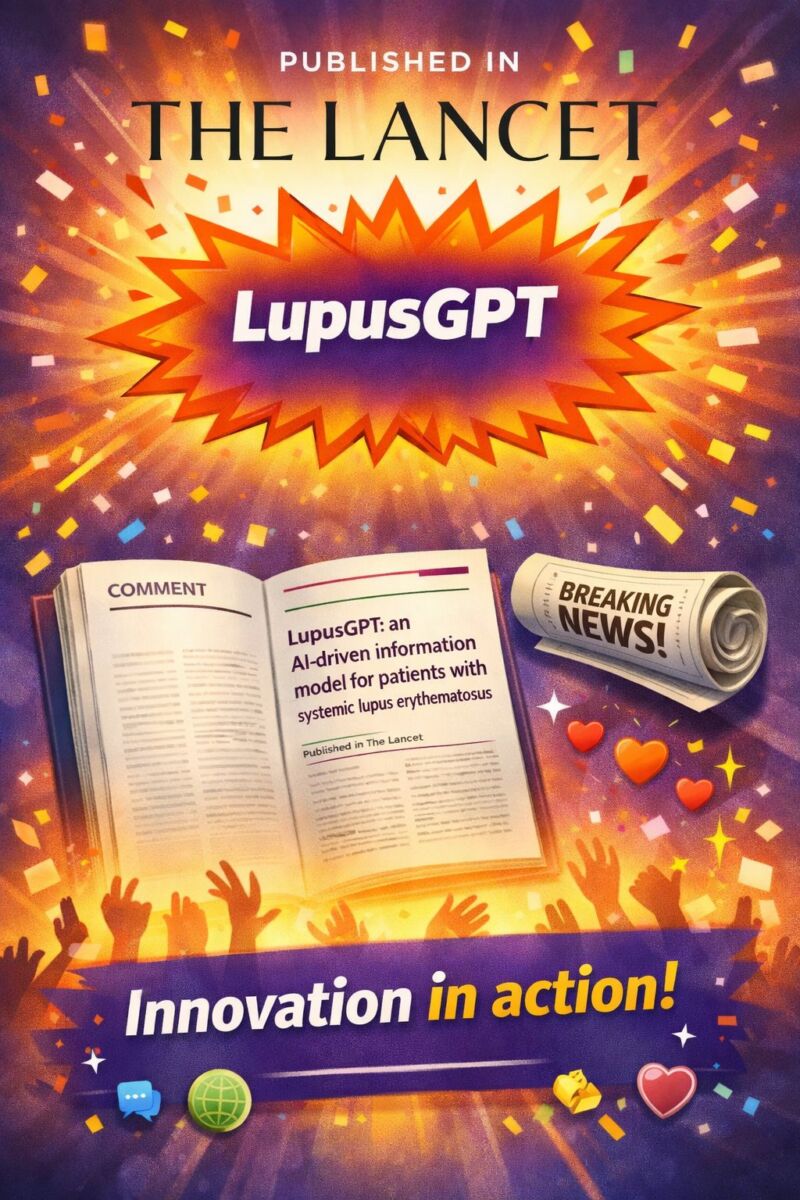
Watching Alain Cornet show the world what #LupusGPT really is still gives us goosebumps! 🙌

For those who still don't know this artificial intelligence tool:

💡 LupusGPT is built by patients and doctors.
🗣️ It speaks virtually any language.
💸 It’s free and anonymous- you don’t need to create an account.
📚 It is trained exclusively on a curated repository of validated documents.
🚫 It does not invent answers.

If something is not in the repository, LupusGPT will clearly say so. It will not guess. It will not generate false information.

🥹 Seeing LupusGPT presented at such a high-level regulatory forum confirmed something important:
Patient-led innovation can meaningfully contribute to the future of AI in medicine when it is built responsibly.

🔗 Try it here! lupusgpt.org/

🧠 Are medical terms confusing? Prefer shorter explanations in simple language?
Try #EasyLupus! The easy-read version of LupusGPT: easy.lupusgpt.org/
... See MoreSee Less

LUPUS EUROPE Uniting people with Lupus throughout Europe
Send