17039112_1416509001714366_4066735195383475998_o

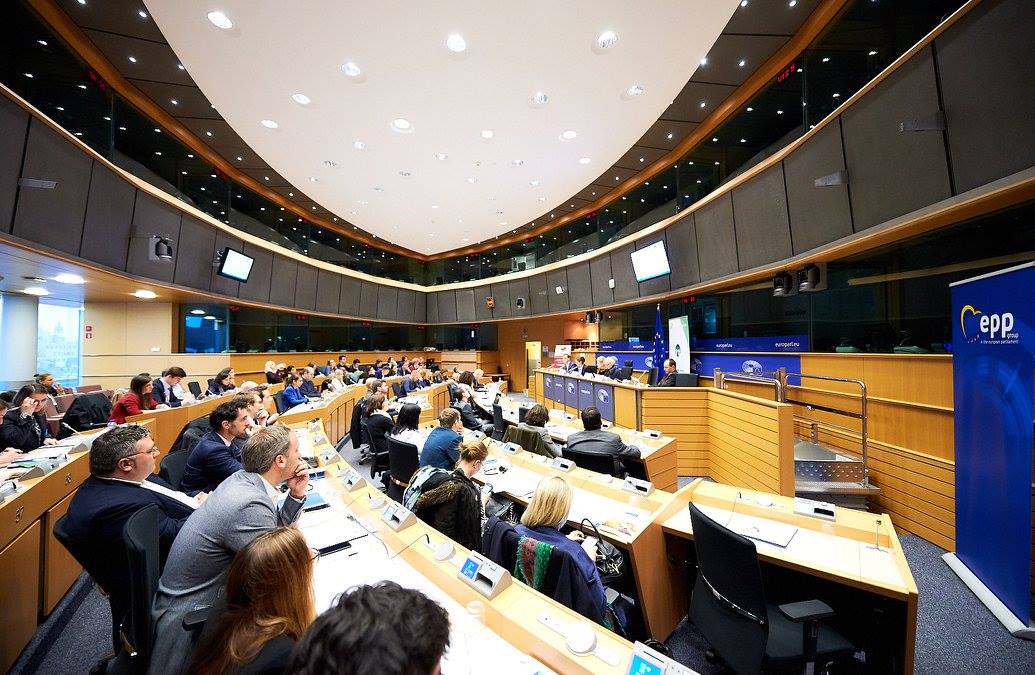
Monday 27th saw the official launch of EPF’s campaign on Access to Healthcare at the European Parliament. LUPUS EUROPE has been involved in the Working group for this project and the working group met on Tuesday to discuss Monday’s meeting and the next steps and the work which remains ahead. There is still a lot of work to do on this very important subject.

Photos from the kick off meeting at the parliament are visible on EPF’s facebook page here.

The following article is copied from EPF’s web page on the campaign.

Campaign on Access to Healthcare

From January 2017, EPF carries a flagship campaign on Access to Healthcare. This theme is a long standing priority for EPF and its membership, and is at the heart of the vision of the organisation.

Under the tagline ‘Universal Health Coverage For All’, the campaign is an opportunity to raise awareness about the barriers patients face in accessing healthcare, and to build on current political momentum – including the UN Sustainable Development Goals for health – to foster more EU cooperation on access to healthcare.

The EPF Working Group on Access drafted the following overarching strategic objective for the campaign:

The EPF Access campaign will contribute to make universal access a reality for EU patients by 2030, through defining and promoting concrete actions, in concert with the health community, to which decision makers need to commit, to ensure we achieve the Health SDGs by 2030.”

EPF has used use its prior work on access to shape the messages of the campaign; in particular looking at the definition of access to healthcare, and the statement on pricing and reimbursement of innovative medicines.

Practical info

The one-year campaign will be officially launched on 27 February at the European Parliament, in Brussels. The event – co-hosted by MEP Kateřina Konečná (GUE/NGL, Czech Republic) and MEP Andrey Kovatchev (EPP, Bulgaria) – will be an opportunity to present the campaign and to discuss what actions should be taken to achieve Universal Health Coverage at European level.

Rationale – Why a campaign on access?

Disparities in access to healthcare predate the financial crisis in Europe, but against a background of austerity measures and falling healthcare spending in many Member States since 2009, inequalities have been made worse. Access to care is affected by austerity policies in response to the economic crisis, such as cuts in healthcare budgets and in insurance coverage, increased fees and co-payments, and cuts in social protection measures.

At the same time, healthcare systems are facing increasing demands as a result of demographic change. As the population ages, the number of patients with chronic diseases is growing. Patients who developed a chronic disease at a younger age are also living longer, thanks to modern medical treatments. Patients with chronic diseases develop specific needs which the healthcare systems need to adapt to.

Patients across the EU are reporting multiple barriers to access to healthcare, whether it’s not available, not adapted to needs, or not affordable. EU Member States need to overturn the current trends of short sighted decisions on investment in healthcare, and commit to realising universal access by 2030 by taking concrete steps. EU Member States need to achieve universal health coverage and improve access to healthcare by 2030 according to the UN Sustainable Development Goals.

Contact

If you have questions about the campaign, don’t hesitate to contact us!

  • For policy-related content:

Katie Gallagher – Policy Adviser

  • For dissemination/communication activities & material:

Laurent Louette – EPF Communications Officer

Sara Gayarre – EPF Communications Assistant


Live Facebook Feed

Comments Box SVG iconsUsed for the like, share, comment, and reaction icons

🎥 Missed our #EULAR2026 recap webinar?

The recording is now available on YouTube.

In this session, Lupus Europe volunteers bring back some key lupus-related learnings from EULAR 2026 from fatigue, pain & lived experience, to LupusGPT, access, youth co-creation and new research directions.

A huge thank you again to everyone who helped make this webinar possible.

Watch here:
f.mtr.cool/ncqeapqfjt
... See MoreSee Less

🎥 Missed our #EUL

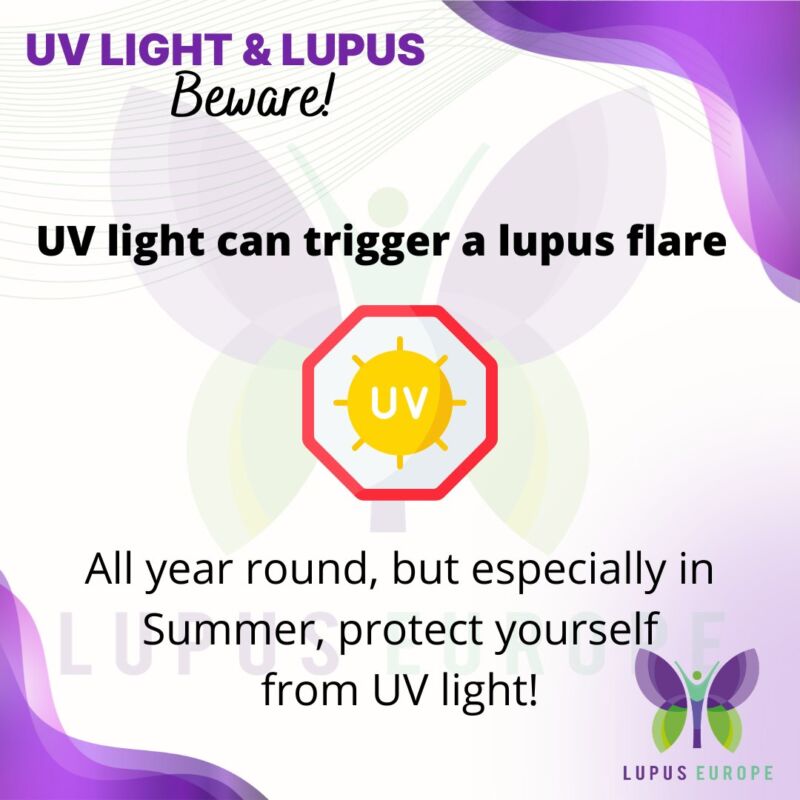
☀️ UV light and lupus: it is 𝗻𝗼𝘁 ❞𝗷𝘂𝘀𝘁 𝘀𝘂𝗻𝘀𝗵𝗶𝗻𝗲❞.

🔴 For many people living with lupus, sun and UV exposure can affect much more than Summer plans.

In the Lupus Europe Living with SLE in 2020 survey, photosensitivity was 𝗿𝗲𝗽𝗼𝗿𝘁𝗲𝗱 𝗯𝘆 𝟲𝟴.𝟱% of respondents.

😔 Furthermore, in Lupus Europe’s Swiss Knife Survey 2024, 25.8% of respondents said 𝘀𝘂𝗻 𝘀𝗲𝗻𝘀𝗶𝘁𝗶𝘃𝗶𝘁𝘆 𝗽𝗿𝗲𝘃𝗲𝗻𝘁𝗲𝗱 𝘁𝗵𝗲𝗺 𝗳𝗿𝗼𝗺 𝗹𝗶𝘃𝗶𝗻𝗴 𝗹𝗶𝗳𝗲 𝘁𝗼 𝘁𝗵𝗲 𝗳𝘂𝗹𝗹𝗲𝘀𝘁.

💥 The potential effect of the UV rays in lupus can influence when people go out, what they wear, how they plan holidays, whether they join outdoor activities, and how much they need to explain their choices to others.

𝗧𝗵𝗮𝘁 𝗺𝗮𝘁𝘁𝗲𝗿𝘀.

❌ Sun sensitivity may sometimes be seen as a “minor” symptom, but 𝗶𝘁𝘀 𝗶𝗺𝗽𝗮𝗰𝘁 𝗰𝗮𝗻 𝗯𝗲 𝘀𝗶𝗴𝗻𝗶𝗳𝗶𝗰𝗮𝗻𝘁. It can affect work, education, personal relationships, social life and mental wellbeing. It can also affect the people around someone living with lupus, from family and friends to colleagues who may not always understand why plans need to change.

Have questions about lupus and UV light?
Explore reliable information through #Lupus100 or ask #LupusGPT or #EasyLupus.

Swiss Knife Survey 2024:
f.mtr.cool/nsgolzfaek
... See MoreSee Less

☀️ UV light and

🦋 Our final #EULAR2026 recap is here!

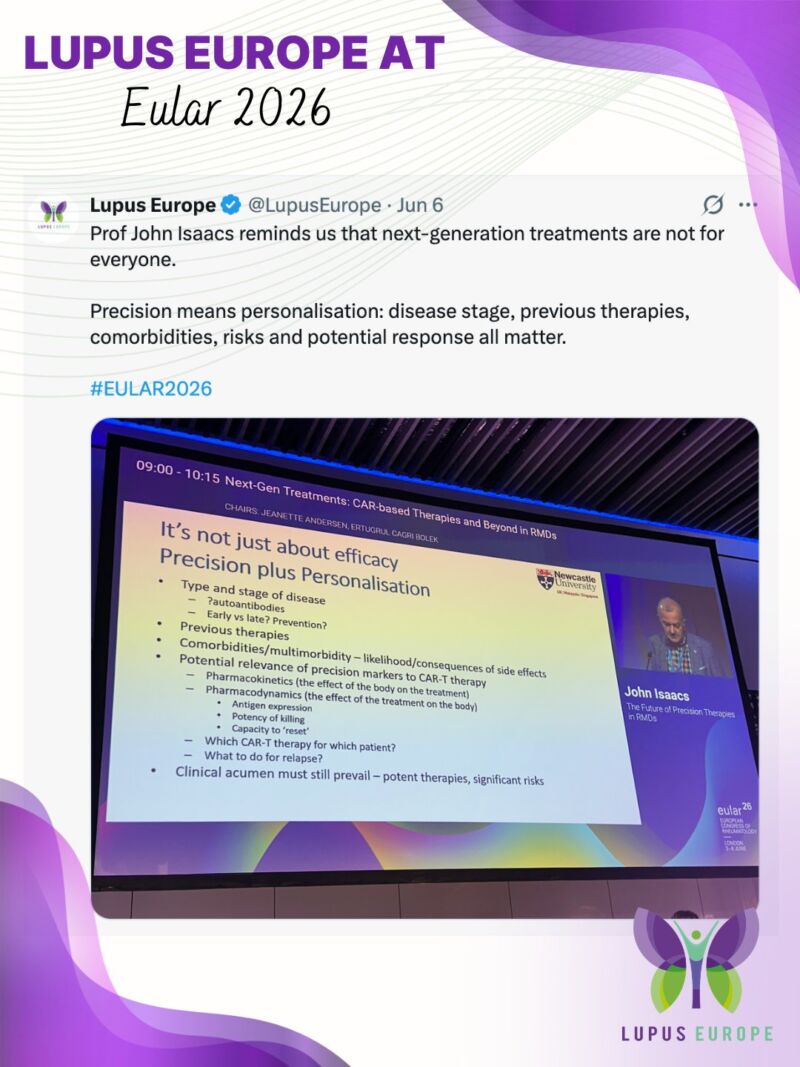
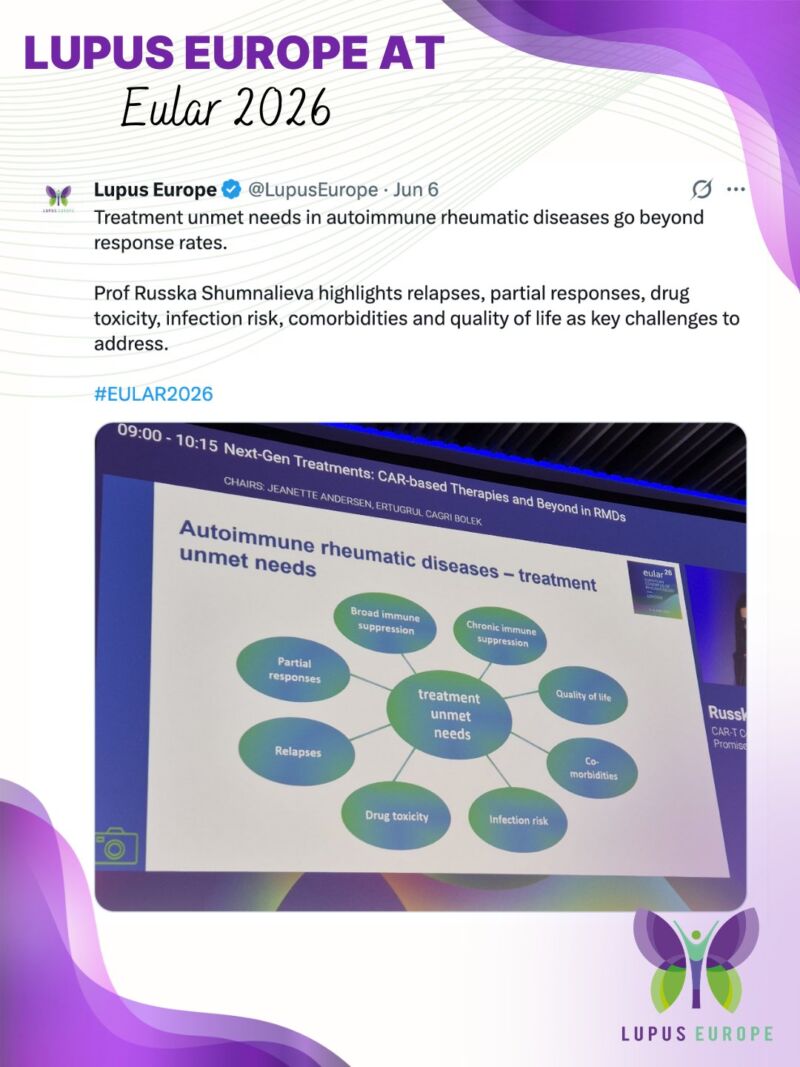
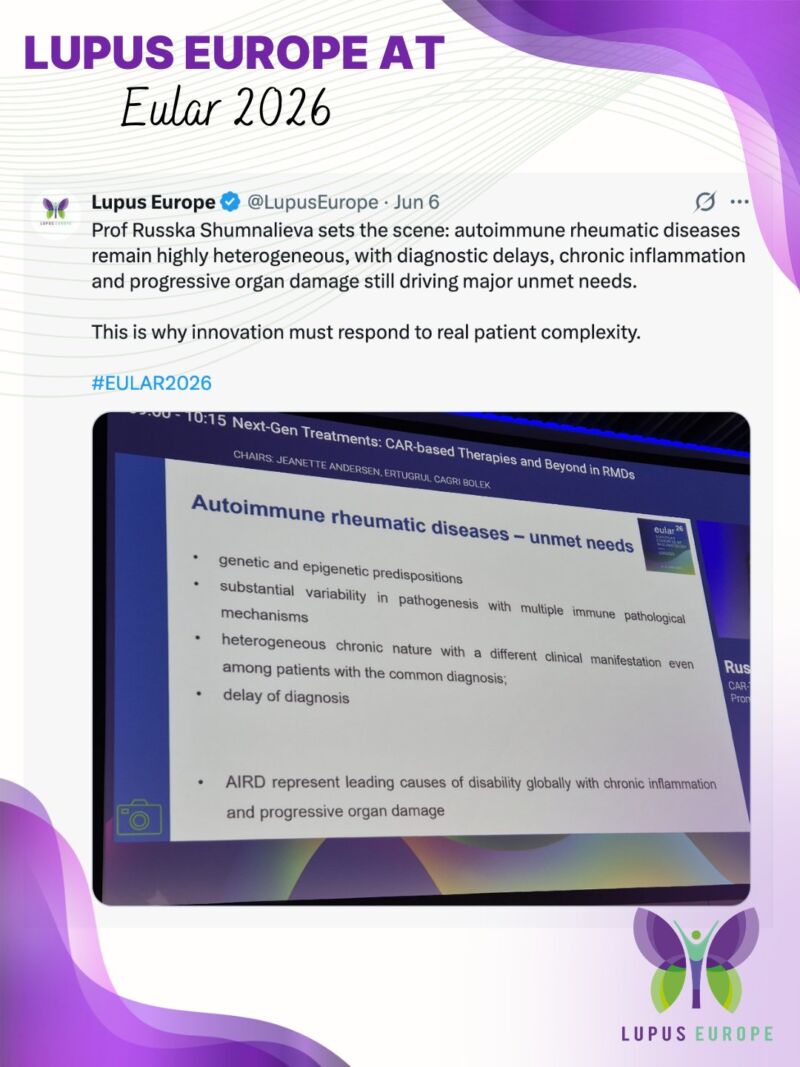
🌍 We started the day in the session “Next-Gen Treatments: CAR-based Therapies and Beyond in RMDs”, chaired by our Chair, Jeanette Andersen.

The session explored new therapeutic frontiers, but also the responsibilities that come with them. For us, one message remains essential: innovation must be developed with patients, not only for patients.

💬 Jeanette also delivered the PARE Meet the EULAR Expert session “AI as a Partner in Care: Empowering the RMD Community with Information”.

The room was packed, showing the strong interest around #LupusGPT and #EasyLupus as powerful patient-led, validated digital tools that help people living with lupus access reliable, understandable information in almost any language.

The many questions from attendees showed how relevant this topic has become for healthcare professionals, researchers, patient representatives and the wider rheumatology community.

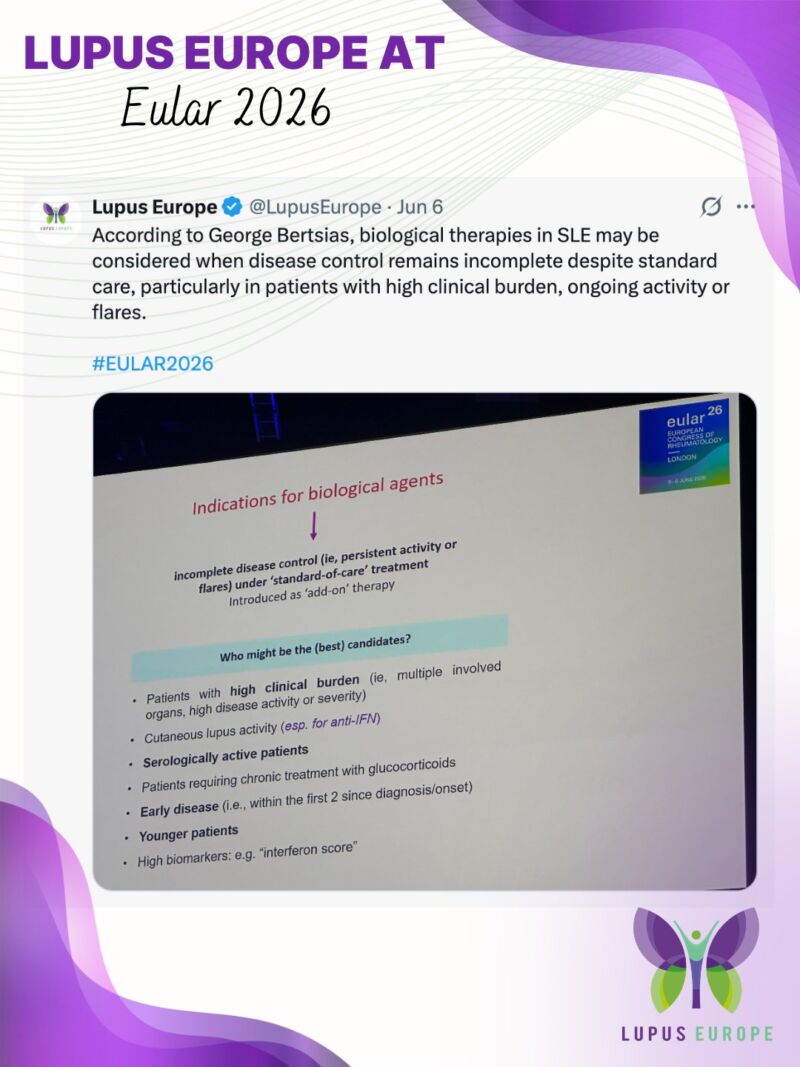
🧬 We also followed the “How to treat SLE” session with George Bertsias, who focused on current and evolving approaches in lupus care, including treat-to-target strategies, remission or low disease activity, and the importance of reducing long-term organ damage.

🦴 Later, Edward Vital led the Meet the EULAR Expert session on “Management of joint involvement in systemic lupus”, a topic that matters deeply to many people living with lupus.

💜 A special highlight of the day was seeing Lupus Europe’s work recognised during the EULAR highlights another year.

These sessions take place at the very end of the Congress and bring together the key takeaways from #EULAR2026. Importantly, there are no parallel sessions at that time, which means there is no competition with other talks, and most of the attendees are in the room.

🙏 Thank you to everyone who followed, shared, visited us, spoke with us and supported us throughout #EULAR2026.
... See MoreSee Less

Image attachment
Image attachment
Image attachment
Image attachment
Image attachment

🦋 We continue bringing you our #EULAR2026 congress recaps!

The third day was another intense day for Lupus Europe, with patient-led research, emerging science and important conversations about lived experience, as well as ongoing and potential projects to improve lupus care.

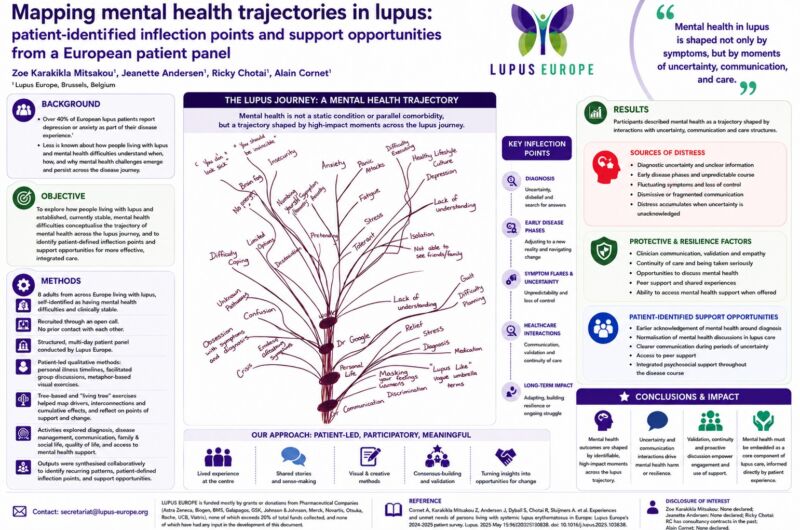
🧠 One of the highlights was Alain Cornet’s poster on mental health trajectories in lupus: “Mapping mental health trajectories in lupus: patient-identified inflection points and support opportunities from a European patient panel”.

Presented by Ricky Chotai on Alain’s behalf, this patient-led work explored how people living with lupus and mental health difficulties understand mental health across the lupus journey.

Yesterday, we already told you more about this poster and its key messages, in case you missed it!

🦠 On 5 June, we followed emerging science on the microbiome, and the Meet the EULAR Expert session “Management of joint involvement in systemic lupus” with Professor Edward M. Vital.

📊 Disease activity measurement in SLE was another important theme, especially how clinical targets can be better aligned with lived experience.

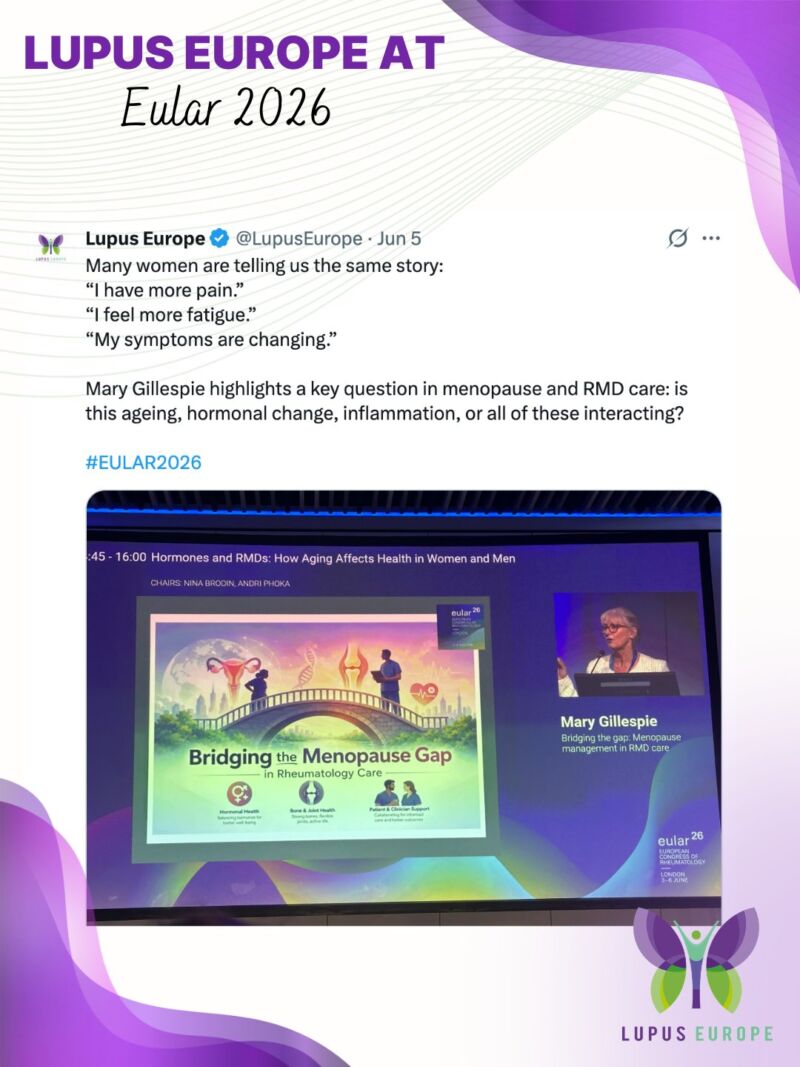
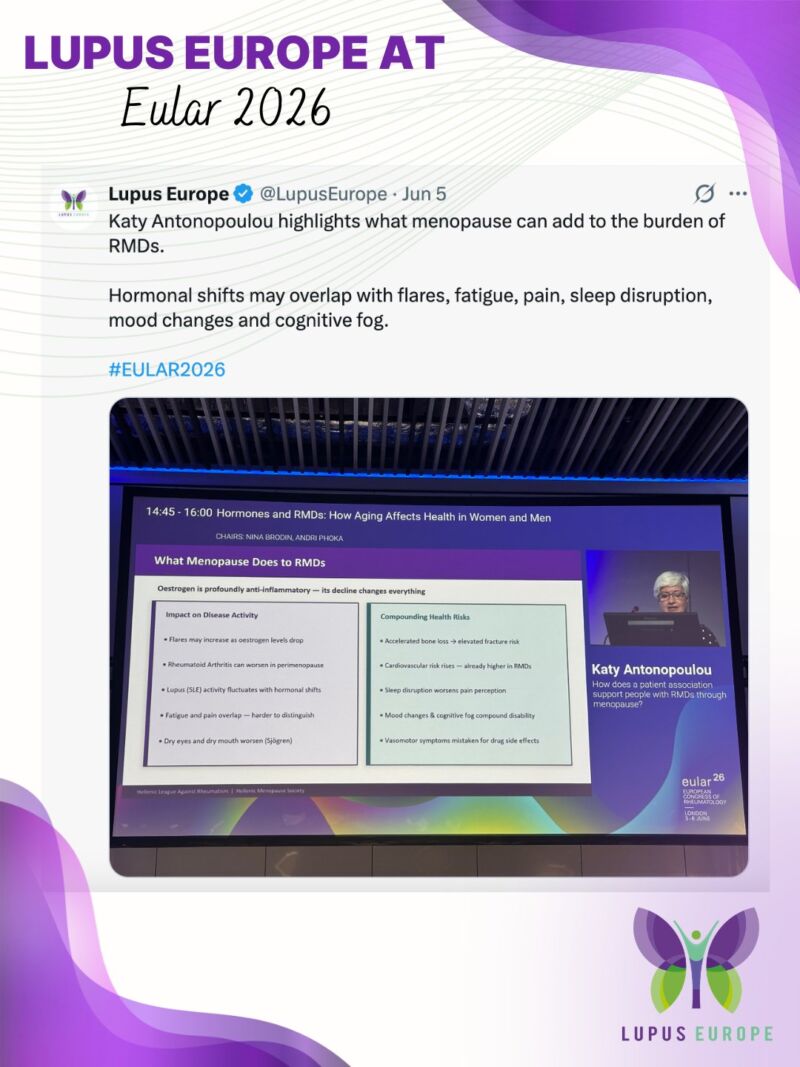
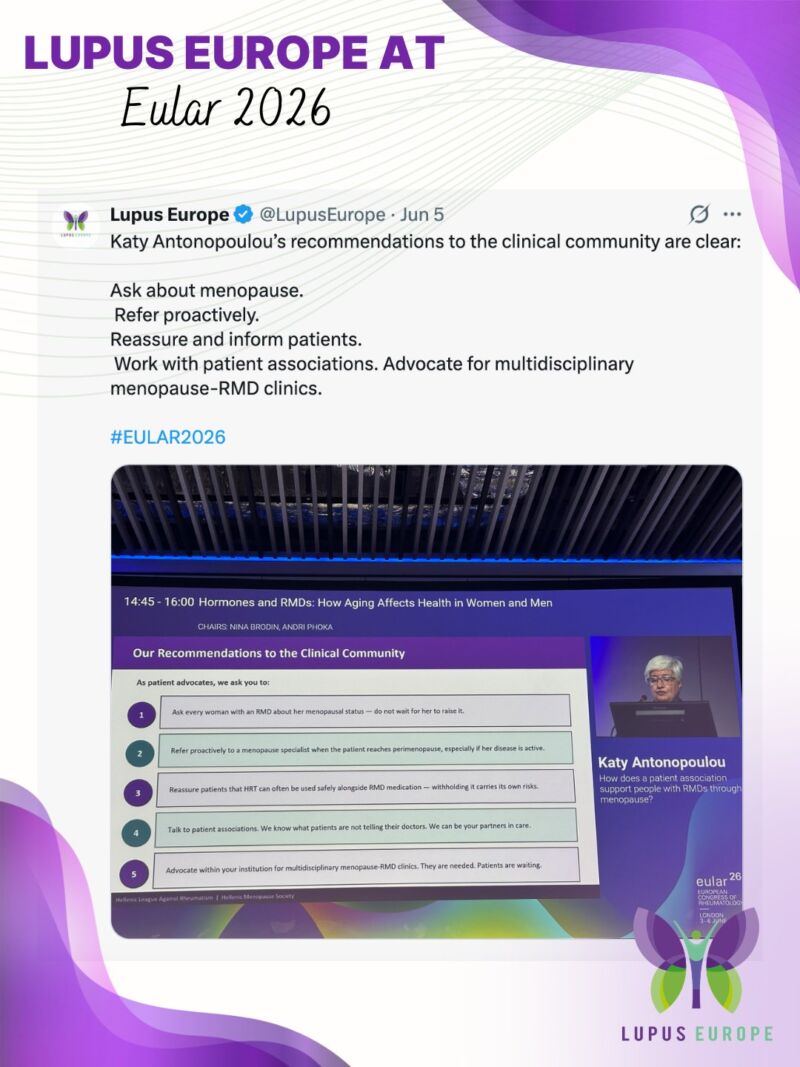
♀️ Menopause was part of the day’s conversations, highlighting the importance of asking about it routinely and recognising how hormonal transitions may shape symptoms and quality of life.

🌍 Across the day, one message kept returning: better lupus care needs science, but also communication, patient priorities and tools that help people say what matters most.

That is exactly why tools such as the Lupus Consultation Cards matter. They are available in 20 languages and help people prepare for their lupus appointments by organising symptoms, concerns and top questions in advance. Check them out here: www.lupus-europe.org/lupus-consultation-cards/

💬 We kept connecting these discussions with #LupusGPT and #EasyLupus, because access to understandable, reliable information before and after consultations is part of helping people take a more active role in their care.

🥳 And we celebrated Jeanette's birthday!

😃 Want to know more? Catch up on the latest insights from the congress in our #EULAR2026 Recap Webinar, which you can watch here: www.facebook.com/LupusEurope/videos/2035644043691260
... See MoreSee Less

Image attachment
Image attachment
Image attachment
Image attachment
Image attachment
LUPUS EUROPE Uniting people with Lupus throughout Europe
Send