In 1989, LUPUS EUROPE (then named ELEF)’s first convention took place in the historical city of Leuven. 29 years later, LUPUS EUROPE’s 2018 annual convention brought us back to the place of our beginnings. The 2018 convention theme was “Restoring Hope”. Lupus is not always easy to deal with and we can often feel down: when a flare is painfully reminding us of the disease; when one more clinical trial fails; when we feel tired and misunderstood… As leaders in patient groups, we also regularly receive calls for help from people who are so scared after just being diagnosed, or who face depression. It is so easy to lose hope when you have lupus…. Yet there are reasons to keep hope: the search for new medication is more active than ever; patients are becoming more involved handling their own disease; lupus awareness is growing; legislation in support of people with disabilities (visible or not) is progressing; and patient support groups are bringing hope to their members in many different ways.

A total of 37 member delegates, coming from Belgium (5), Cyprus (2), Denmark (3), Finland (2), France (3), Italy (4), Lithuania (2), Netherland (3), Portugal (2), Slovakia (1), Sweden (1), UK (7), Switzerland (1), and Israel (1) joined the convention this year, making it a record number of participants.

Our program gave a very large place to interactions between participants, with 15 different workshops on various topics centered on the “restoring hope” theme. Participants defined and selected themselves the themes that they had most interest for, including how patients can better participate to research, making the web more positive, Giving inspiring life stories, or enjoying the small things in life.

We obviously reviewed the activities of lupus Europe in 2018, and in our council session, renewed the board and set the direction for 2019. Several external speakers gave us additional insights on the theme of “restoring hope” : Professor Houssiau, chair of the European Lupus Society addressed the recent medical developments, and the reasons to hope they provide;  Bernadette Van Leeuw, Chair of Lupus Belgium (French speaking group) highlighted the importance of action to make better things indeed happen as a key component of hope; Torben Wiese, inspirational speaker, invited us to all become change agents; and Nele Cayers (Chair of PARE) explained how we can achieve better results by leveraging the broader EULAR community. The convention closed with an excellent seminar from Sylvia Gauman (Swiss delegate)on improving our communication with Journalists…

A detailed convention report can be downloaded here: Leuven 2018. You can also find here convention reports from prior years: Milan 2017Wurzburg 2016 and Vienna 2015


Live Facebook Feed

Comments Box SVG iconsUsed for the like, share, comment, and reaction icons

Today is rare disease day!

🚨 There are over 300 million people who live with a #raredisease in #europe.

🌎 Today, we join our fellow patient organisations that work towards a better life for people with rare diseases and their families.

🔴 Some facts about #rarediseases:

1️⃣ There are more than 6000 identified rare diseases.

2️⃣ Rare diseases currently affect 5% of the worldwide population.
The true impact of rare diseases is much wider, however, with those affected in Europe in the millions, as the disease affects not only the patient but also our loved ones.

3️⃣ 72% of genetic diseases are genetic, although #lupus is not one of them.
👉 Lupus is not a genetic disease. Although it is very much related to genes, there are other factors that play a role in its manifestation.

4️⃣ 👶Neonatal #lupus is a rare congenital disorder that some infants of mothers with lupus and anti-Ro/SSA and/or anti-La/SSB antibodies develop.
The most serious complication of neonatal lupus is a heart condition known as congenital heart block.

5️⃣ Having an early diagnosis is key to having access to the right treatment. This has an impact on physical and mental health and, therefore, on the quality of life.

Along with organisations like Rare Disease Day and EURORDIS-Rare Diseases Europe, we will carry on working towards an early diagnosis, access to treatment and equality for #raredisease patients 🙌.

Thank you for your support on this #rarediseaseday!

#ShareYourColours
... See MoreSee Less

Image attachment
Image attachment
Image attachment
Image attachment
Image attachment

#lupus is a #raredisease that affects nearly 500,000 people in Europe. Furthermore, there are over 300 million people who live with a #raredisease in #europe.

Today, along with Rare Disease Day, patient organisations around the world advocate for equity for people living with a rare disease

#ShareYourColours and help us spread the word by liking and sharing. Remember that you can also download the material of the official campaign on the website

f.mtr.cool/iyctvzvvtj
... See MoreSee Less

#Lupus is a #RareDis

Today is #RareDiseaseDay!

And we have joined Rare Disease Day campaign.

Everyone deserves equal opportunities, access to healthcare ➕ early diagnosis, which is key to setting a treatment plan &, hence, achieving a good quality of life.
#ShareYourColours

www.youtube.com/watch?v=7J1oTfoIOGw
... See MoreSee Less

Today is #RareDiseas

😃 Throwback to the HMA/EMA Multi-Stakeholder Workshop on Artificial Intelligence.

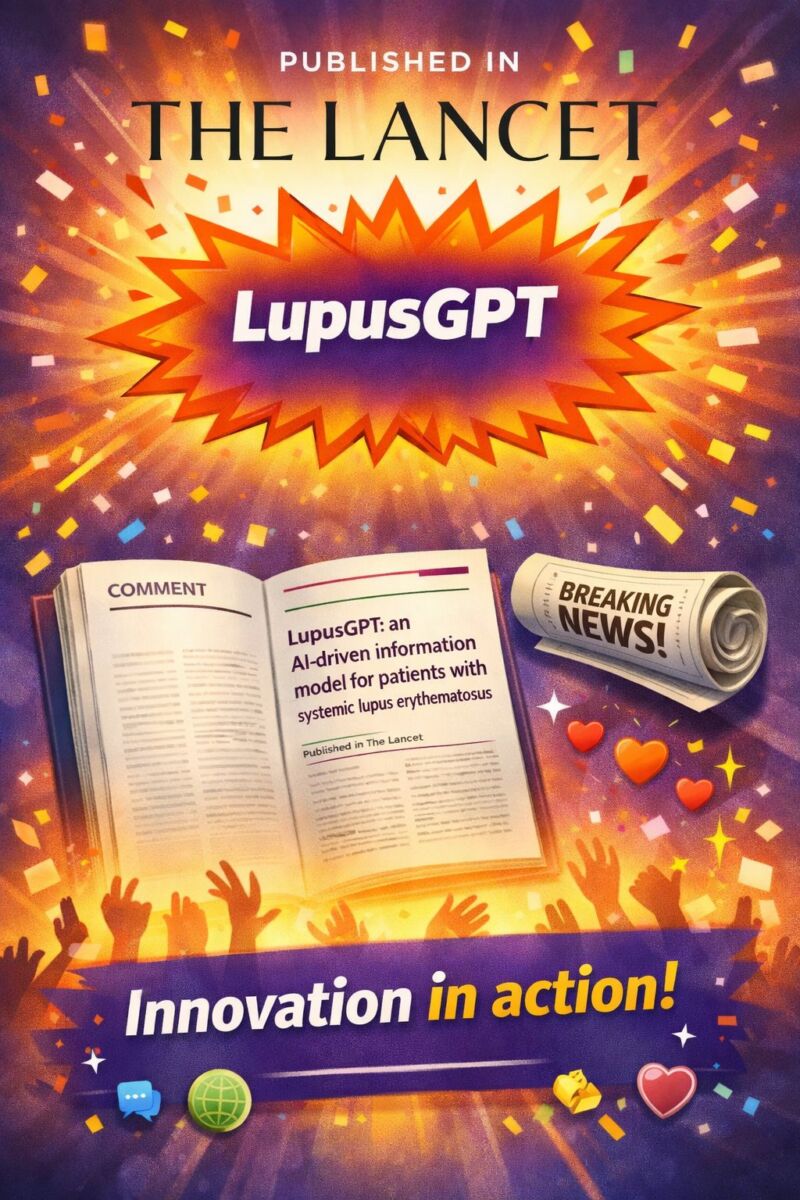
Watching Alain Cornet show the world what #LupusGPT really is still gives us goosebumps! 🙌

For those who still don't know this artificial intelligence tool:

💡 LupusGPT is built by patients and doctors.
🗣️ It speaks virtually any language.
💸 It’s free and anonymous- you don’t need to create an account.
📚 It is trained exclusively on a curated repository of validated documents.
🚫 It does not invent answers.

If something is not in the repository, LupusGPT will clearly say so. It will not guess. It will not generate false information.

🥹 Seeing LupusGPT presented at such a high-level regulatory forum confirmed something important:
Patient-led innovation can meaningfully contribute to the future of AI in medicine when it is built responsibly.

🔗 Try it here! lupusgpt.org/

🧠 Are medical terms confusing? Prefer shorter explanations in simple language?
Try #EasyLupus! The easy-read version of LupusGPT: easy.lupusgpt.org/
... See MoreSee Less