 Zoe Karakikla-Mitsakou
Lupus Europe at the Lupus Academy’s 12th Annual Meeting: Highlighting Patient Perspectives
The Lupus Academy is a long-term initiative committed to improving patient outcomes in systemic lupus erythematosus (SLE). The Lupus Academy provides a highly interactive educational forum and brings together experts from around the world to discuss the latest advances in SLE.
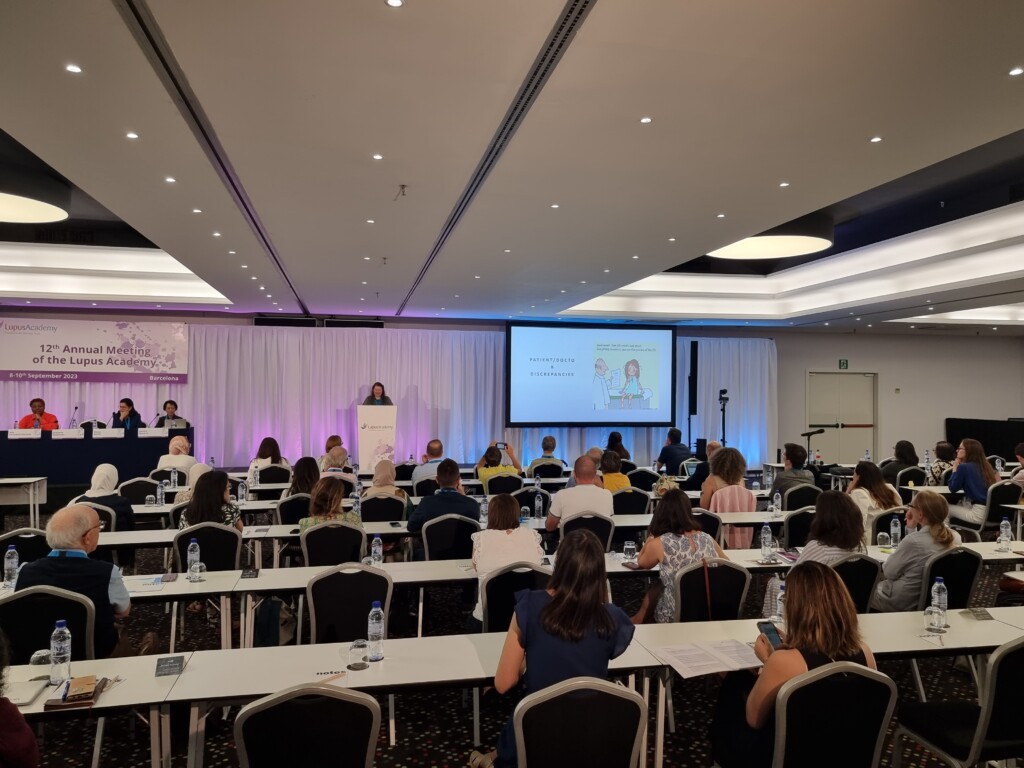
Each year, the Lupus Academy’s annual meeting plays an important role in disseminating and discussing cutting edge scientific and clinical research on SLE. This year, the 12th Annual Meeting of the Lupus Academy, held as a hybrid event with an in-person gathering in Barcelona, Spain, from 8th to 10th September 2023, continued its tradition of fostering collaboration and innovation in the fight against lupus.
Subjects Explored:
At this year’s meeting, attendees delved into key subjects that impact the lives of people with lupus. Discussions ranged from paediatric lupus to the ever-relevant topic of vaccination. The management of lupus nephritis, a challenging aspect of SLE care, was also a focal point. Furthermore, the meeting featured an exploration of the new 2023 ACR/EULAR recommendations for the management of SLE, shedding light on evolving standards of care.
The Patient Perspective:
Jeanette Andersen, Lupus Europe Chair, presented at the Lupus Academy Meeting. Her presentation brought into sharp focus the vital, but sometimes overlooked, patient perspective in the management of lupus.
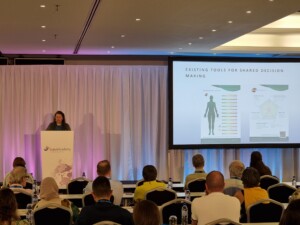
Lupus can place a significant burden on the lives of people it affects. However, patients and physicians often have differing priorities when it comes to this complex disease. Physicians may primarily focus on controlling disease activity to prevent damage accrual, while patients grapple with symptoms that may profoundly affect their health-related quality of life (HRQoL).
Despite patient and physician efforts, there can be a substantial discordance between how physicians might assess the disease and how patients might experience it:
- Patients often report relevant clinical symptoms even when physicians consider them to be in remission.
- Patients tend to rate disease activity higher than physicians.
- Patients emphasise the importance of subjective manifestations, while physicians often prioritise laboratory abnormalities.
This discordance reveals a gap in understanding and prioritising outcomes between patients and physicians. A way to bridge this gap is through Patient Reported Outcomes (PROs). PROs allow us to capture the aspects of the disease that have a direct impact on patients, constituting their unique burden.
In her presentation, Jeanette Andersen emphasised that the dialogue between doctors and patients should address the symptoms that are most bothersome for the individual patient. What is most burdensome for one person may not hold the same significance for another, and this disconnect can be particularly detrimental to HRQoL and overall care, especially when dealing with symptoms that are challenging to manage with traditional SLE treatments.
Conclusion:
The Lupus Academy’s 12th Annual Meeting reaffirmed the significance of collaboration and the integration of the patient perspective in the fight against lupus. In the quest for better lupus management, it is crucial to have a view that encompasses both medical expertise and the lived experiences of those with lupus. Together, we can continue to make strides in improving the quality of life for people living with SLE.