 Zoe Karakikla-Mitsakou
Welcome back to our blog series on National Member News!
We are excited about getting our National Member news out to the world, so more people can find out what it is happening in each country and each member organisation! We caught up with Ingrid Hennes from CIB Liga who talked to us about the wonderful work the organisation is doing, the needs of lupus patients in Belgium, sex and rheumatic diseases, COVID19 and so much more!
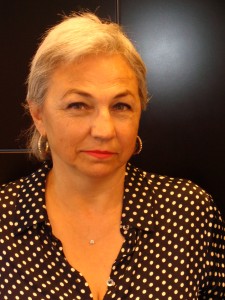
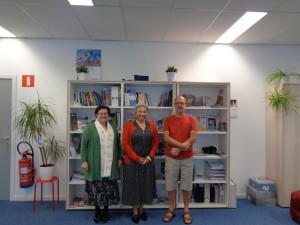
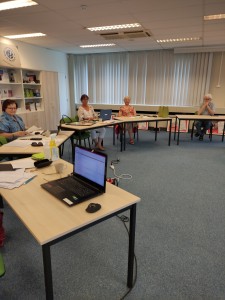
Photo of Ingrid Hennes – CIB Liga Photo of Board Members – CIB Liga Photo of Meeting – CIB Liga
How do you keep in touch with or have contact with your members?
We keep in touch with our members in many ways. We have Facebook, we have our magazine which we make ourselves. For our magazine we collect all the news, from Lupus Europe, from FESCA et cetera – from lots of places with relevant information and we put it together. It’s a postal magazine, so we send it by post. We asked our members and found that 80% of them would prefer to read it via post and not as an electronic version, so we send it by post every 3 months. We also have a website and we regularly send mailings to ask some things or show some things we think are important. So we have lots of different ways of keeping in touch with our members.
Did you have any special meetings or webinars during the past year (World Lupus Day, Rare Disease Day, Annual General Meeting etc)?
Yes, we had very regular webinars this past year! We had webinars about patients’ rights, about financial issues related to patients, what rights people have, immunology for dummies, webinars on vaccinations and a lot more! There was a webinar at least every 2 months.
We also had some board meetings virtually, but we were also very happy to meet each other again in-person!
Has it been difficult to keep connected with your members during the Covid19 pandemic?
Yes, because most of our members are elderly women and I’m not sure they are as much familiar with digital meetings. We think that they passed it, they didn’t get in touch. So we decided to summarise the webinars, make a report about them and put it in the magazine so people who couldn’t attend could read about them!
Now we’re looking for a solution to enable people to follow, we’re thinking about buying a little gizmo to stream meetings. So if people are having a bad day and can’t attend meetings or webinars/lectures, they can stay at home and look at their computer and join that way.. Our treasurer is trying to get in touch with Annemarie to see about funding for it. We’ve tried it with a loan camera and it worked so we think we want to buy the camera. This is for ALL members, not just the board.
Have there been any circumstances during the pandemic that changed the way of living with lupus?
In 2020 it was a bit difficult to get in touch with rheumatologists, because everyone had clinics on hold due to the pandemic. Then it changed but because we are patients who mostly need medication and not surgery it’s ok. People are now able to see the doctor again, sometimes with a bit of delay, but it’s ok in general.
Has Digital Health improved or changed in your country?
We didn’t used to have any digital consult, but they are happening now. I still hope I will see my doctor in person, but I’m not sure. I can’t imagine an e-consult for lupus is good enough for all meetings, because does a dermatologist or rheumatologist not need to see the patient or feel a rash? Does speaking on the phone replace that? You can’t do that with new patients. Maybe with patients who know what they have and how their body works. But not new patients or unstable patients.
We do have electronic prescriptions. We just have to get in touch with the pharmacist, they read the patient ID and the prescription is all there – it’s a very easy process. In Belgium we have a home pharmacist, that is a person’s chosen pharmacist. They get some funding to compensate for this and their job is to keep track of a person’s medication regimen – they keep an eye on interactions or potential problems with medications. We have the same with our General Practitioners (GPs) – it’s also a person’s chosen doctor who keeps track of their medical dossier; that doctor knows what specialists a person is seeing, what tests they need to have, what immunisations. They get compensation for that too. If someone isn’t satisfied with the care they get they can always change doctor.
What would you most need as support in your country for lupus?
I believe in Belgium we are well off. When I see colleagues from other countries, especially from the East where they don’t get medication as much or where medication is very expensive for patients…. In the start of the pandemic there was a bit of trouble getting plaquenil, but we didn’t have many problems with good pharmacists who safeguarded the supply for lupus patients.
I think we do need more awareness of lupus though. When people go to their GP with symptoms and their GP starts treatment for something completely different because they don’t know the signs of lupus, that’s very difficult. For as long as I’ve been chairman of CIB Liga the situation hasn’t changed; the time between when the first symptoms appear and diagnosis is still quite long. Some people are lucky and get a diagnosis after just one year, that’s not very long for a lupus patient. I had to wait 7 years, I felt like a hypochondriac, like I was complaining for nothing. It’s incredible that this kind of delay can still happen on this day and age.
Is there anything you think Lupus Europe could help your organisation with?
Yes!! We’ve submitted an application to the Capacity Building Programme on some assistance with our streaming programme!
(Lupus Europe has since been in touch about this!)
We have a good contact with Lupus Europe with Alain (General Secretary), with Annemarie (Board of Directors Member -Secretary). When there is something we can talk about, we do and as I said we here in Belgium are not so bad compared to some other countries in terms of doctors, medicines, access to treatment.
Is there any topic/theme/area that you think Lupus Europe should focus on, on something where European collaboration would make sense?
There is Rheumanet in Belgium. We are at the moment working on: let’s talk about sex. Because people with rheumatic diseases, not only lupus but lupus too, have complaints and trouble and pain and how to have sex and feel their partner doesn’t understand these issues. We thought we have to work on it, so we are doing it now.
It’s painful to hear what people go through because their partner doesn’t understand and sometimes wants to have sex no matter what, or that people are separating because of these issues, there’s also issues around wanting to have children that come into this. But also practical issues like how can we make sex less painful for people with lupus?
We want this programme to grow and get better and better. This is a big issue for a lot of people with lupus and it does need to be addressed more. We don’t know yet if there’s something out there that might be quite practical, for example about what positions may be best for people with joint pain et cetera. Sometimes people make fun of this and they say oh we’re not going to discuss the kama sutra, but why not! If people find less painful ways of having sex, then it’s all worth it.
Are you aware of the Lupus Europe Member Capacity Building Program?
Yes! We know that you make it possible for Lupus Europe members to get some help with funding things like programmes or other things.
Could you tell us a bit about a dream you have as a group?
To get young people involved! I have every respect for them, we need some youth! The Board, the people we see the most are older! We really dream of young people amongst us because their drive is different, they have a different energy about them and their issues are different.
I respect that they sometimes want to forget about the disease, that they want to live life and have their children, career, household, vacations, or whatever else they may have been dreaming of when they thought of what their life was going to be like; I respect that. But we do want to have young people with us to learn from them and see what their needs are. Let’s talk about sex is one of their needs, but there are other things that are relevant to young people and we need to know about them! It can be very difficult to get interested in the disease and in patient organisations when people are very young.