Exercise

LUPUS EUROPE • EXERCISE PROGRAM for LUPUS PATIENTS

In collaboration with trained physical therapists Lupus Europe has developed an exercise program in five levels which has been endorsed by leading European Lupologists.

INTRODUCTION

Studies show, that the only thing, that is clinically proven to help lupus fatigue is “moderate” exercise. We as lupus patients ourselves do however realise, how difficult it can be to start exercising, when you feel fatigue! This is why we developed this program from our own experiences.

Exercise doesn´t necessarily mean, that you have to run a marathon or go to the gym. With this program we want to show, that you can do it no matter where you are and how you are feeling. You should be able to find a level that suits you each day.

The goal is of course to increase in level whenever you can, but you will probably experience, that you have to go down a level at some point. Don´t despair, this is quite normal, and the most important thing is, that you do one exercise a day – not which level it is.

Who knows – you might even feel so energized by doing one program, that you can take on the next level straight away…?

All exercises can be done without training tools and in the individual videos we will guide you through the various options for increased or reduced difficulties. Each program can be done in 15-20 minutes, if you do two or three rounds.

LEVEL 1

• LYING DOWN

• 6 Exercises
• 10-15 Minutes

This level is for when you feel unable to get out of bed for one reason or another or feel more comfortable lying down.

This should be your starting point, if you are not used to exercising.

The exercises can be done while lying in bed or on a mat on the floor.

You can increase the difficulty of some of the exercises by using waterbottles or dumbbells.

Download Exercise PDF

Download

LEVEL 2

• SEATED

• 6 Exercises
• 10-15 Minutes

This level is for when you are able to sit on a chair or are in a wheel chair but cannot stand up for longer periods of time.

For this program you will need a kitchen chair or similar.

You can increase the difficulty of some of the exercises by using an elastic band, water bottles or dumbbells.

Download Exercise PDF

Download

LEVEL 3

• STANDING

7 Exercises
• 10-15 Minutes

This level is for when you are able to stand up, but not walk for longer periods of time.

For this program you will need a kitchen chair or similar, a floor mat and a wall to lean against.

Download Exercise PDF

Download

LEVEL 4

• STANDING
• WALKING


• 7 Exercises
• 10-15 Minutes

This level is for when you are able to walk for longer periods of time, but not run or do high impact exercise.

For this program you will need a floor mat and a wall to lean against.

You can increase the difficulty of some of the exercises by using an elastic band, water bottles or dumbbells.

Download Exercise PDF

Download

LEVEL 5

• STANDING
• WALKING
• JUMPING

• 7 Exercises 
• 10-15 Minutes

This level is for when you are able to run a bit,
jump and do high impact exercise.

For this program you will need a floor mat.

You can increase the difficulty of some of the exercises
by using a kettle bell, water bottles or dumbbells.


Download Exercise PDF

Download

Live Facebook Feed

Comments Box SVG iconsUsed for the like, share, comment, and reaction icons

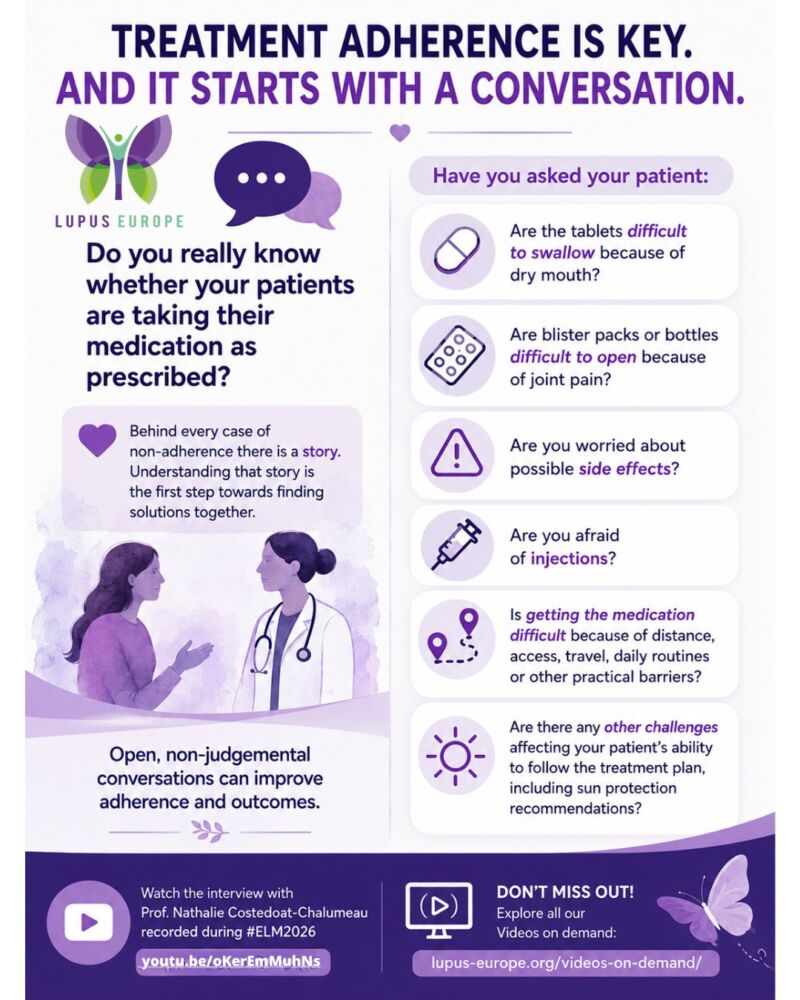
💊 Are you finding it difficult to follow your treatment?

💜 You're not alone.

Sometimes the problem isn't forgetting.

It might be that:
• the tablets are too large to swallow
• dry mouth makes them uncomfortable
• painful hands make blister packs difficult to open
• you're worried about possible side effects
• you're afraid of injections.

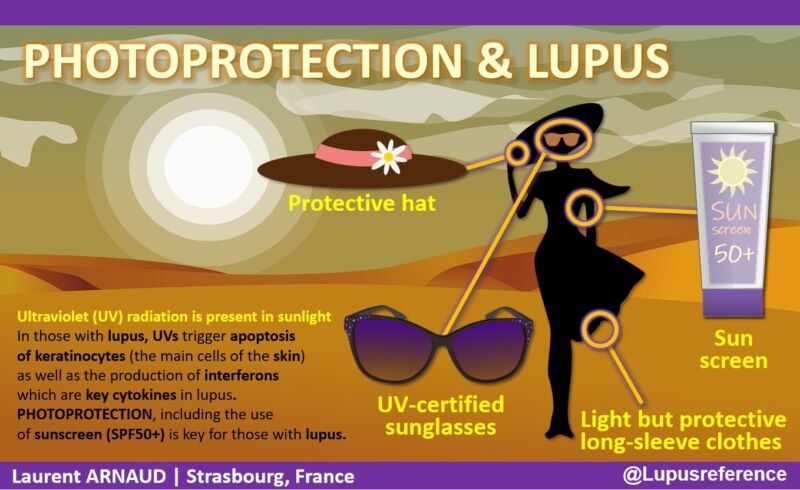
☀️ Or something else entirely. Perhaps you've been advised to avoid sun exposure, but your work requires you to spend long hours outdoors, making it difficult to follow that recommendation.

💊 Maybe getting your medication is not always easy because of distance, access, travel, daily routines or other practical reasons.

💫 Whatever the reason, your medical team can only help if they know about it.

💬 Remember that your health comes first. Tell your healthcare team about anything that makes your treatment difficult. They may be able to help you find a solution that works better for you.

In this interview recorded during #ELM2026, Prof. Nathalie Costedoat-Chalumeau explains why these conversations are so important.

🎥 Watch the video:
youtu.be/hNlDFIGck7E

▶️ Don't miss out and visit the Videos on demand section on our website for the full #ELM2026 series:
www.lupus-europe.org/videos-on-demand/
... See MoreSee Less

💊 Are you finding

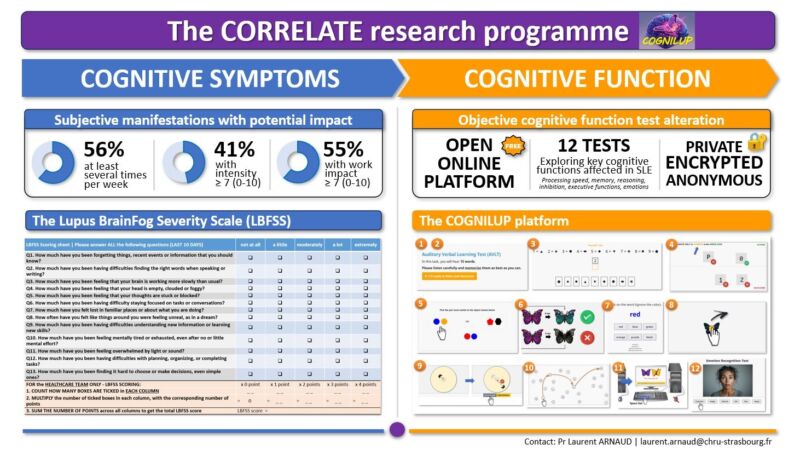
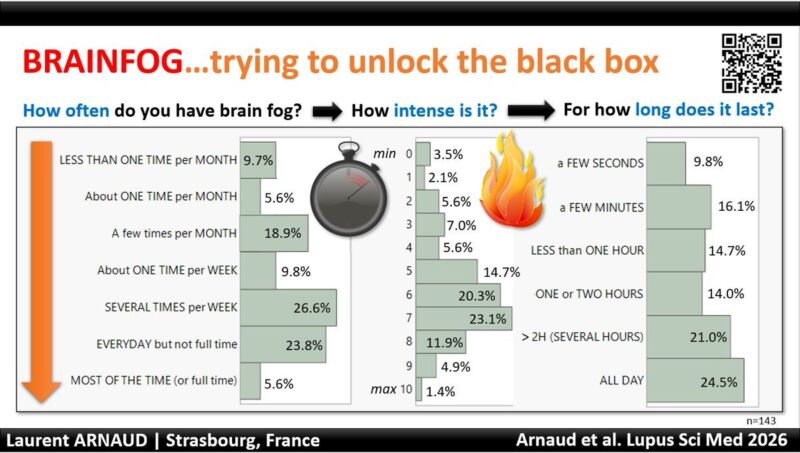
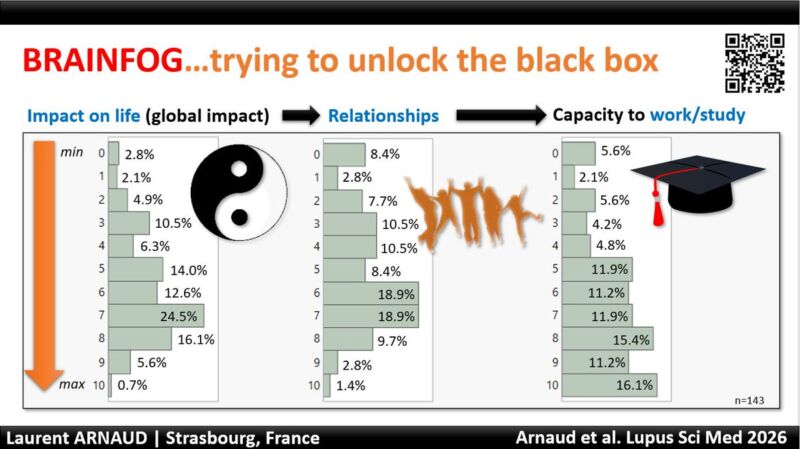
🧠 As lupus specialist Prof Laurent Arnaud clearly states, “Your experience of brain fog is real. It is common. It deserves attention.”

That is why the Lupus Brain Fog Severity Scale (LBFSS) was developed: to provide a lupus-specific way to assess the severity and impact of brain fog and related cognitive symptoms.

Importantly, people living with lupus were not simply asked to approve a finished questionnaire. Their own descriptions of brain fog were the starting point for its development.

🎥 Watch Prof Laurent Arnaud and our Chair, Jeanette Andersen, explain how people living with lupus helped shape the #LBFSS from the very beginning.

🦋 Lupus Europe is proud to have contributed to this international work and to have supported meaningful patient involvement throughout the development process.

📖 Read the study:
lupus.bmj.com/content/13/2/e002148
... See MoreSee Less

‼️Today is #WorldSjogrensDay, a chronic autoimmune disease that affects 14-17.8% of #lupus patients.

💁‍♀️ Although Sjögren's is a systemic disease that goes far beyond dryness, dryness remains a frequent, significant and disabling symptom.

➡️ Follow Sjögren Europe to know more.
... See MoreSee Less

‼️Today is #Worl

🧠 Brain fog is real.

For many people living with lupus, it affects everyday life, yet it has often remained difficult to measure.

✅ The new Lupus Brain Fog Severity Scale (LBFSS) is the first questionnaire designed specifically to assess brain fog in lupus.

🦋 Lupus Europe is proud to have contributed to its development through meaningful involvement of people living with lupus. It's another example of how patient perspectives help shape better research and better tools.

🎥 Watch Prof Laurent Arnaud and our Chair, Jeanette Andersen, explain why the LBFSS is such an important step forward in lupus care.

lupus.bmj.com/content/lupusscimed/13/2/e002148.full.pdf
... See MoreSee Less