 Marisa Costa
20th annual European Congress of Rheumatology took place in Madrid in June 2019. The Congress was hosted by the European League Against Rheumatism (EULAR) and jointly organised with the Paediatric Rheumatology European Society (PReS). There were 14,500 attendees from 120 countries and the scientific programme included presentations from 4,900 abstracts submitted.
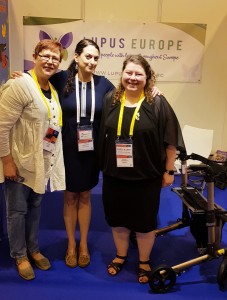
Three Trustees attended the Congress to hear the latest news in Lupus research and to represent Lupus Europe and network with different partners; industry, researchers, physicians, patients, HCPs etc. (i.e. from our Lupus Europe booth).
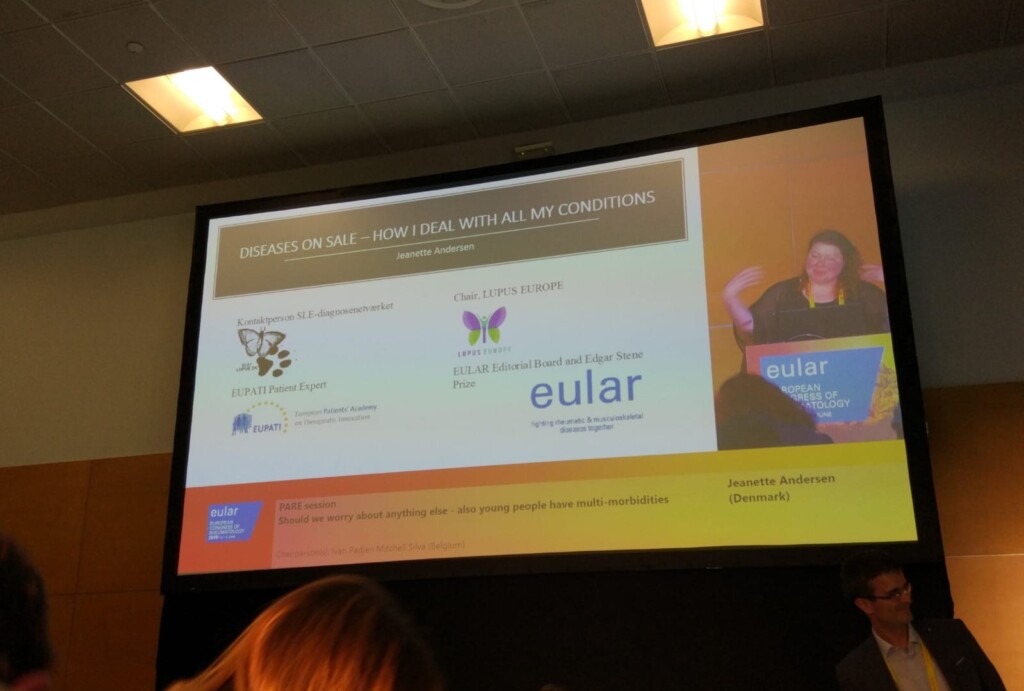
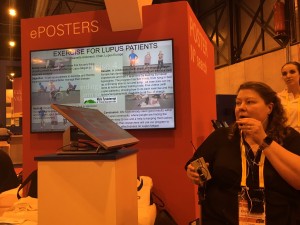
Our Chair Jeanette Andersen gave two presentations at the PARE session called: Should we worry about anything else – also young people have multi-morbidities. The first presentation was called “Diseases on sale – how I deal with all my conditions”, the second one was on the “Lupus Europe Youth Panel – what we learned from young people living with lupus”. She also presented a poster on her Exercise program for lupus patients.
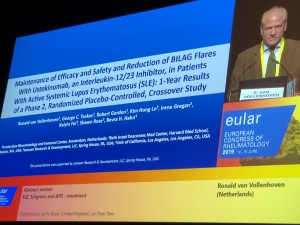
In the scientific programme Ronald von Vollenhoven presented about the success of Phase 2b Global Clinical Trial of Ustekinumab (UST) for SLE that started in 2018. The SLE Responder Index SRI showed the best result – UST 62% compared with placebo 33%. Most improvement was noticed after week 24. Ustekinumab provided sustained clinical benefit across global and organ-specific SLE-disease activity measures and reduced flares through 48 weeks. The randomised, placebo-controlled, crossover study will continue being further evaluated. This is an interesting to follow!
Thomas Dörner presented novel paradigms in the management of SLE. The recently developed new classification criteria for SLE have been revised to exclude SLE mimickers and to diagnose a truly autoimmune systemic lupus, suitable for early diagnosis.

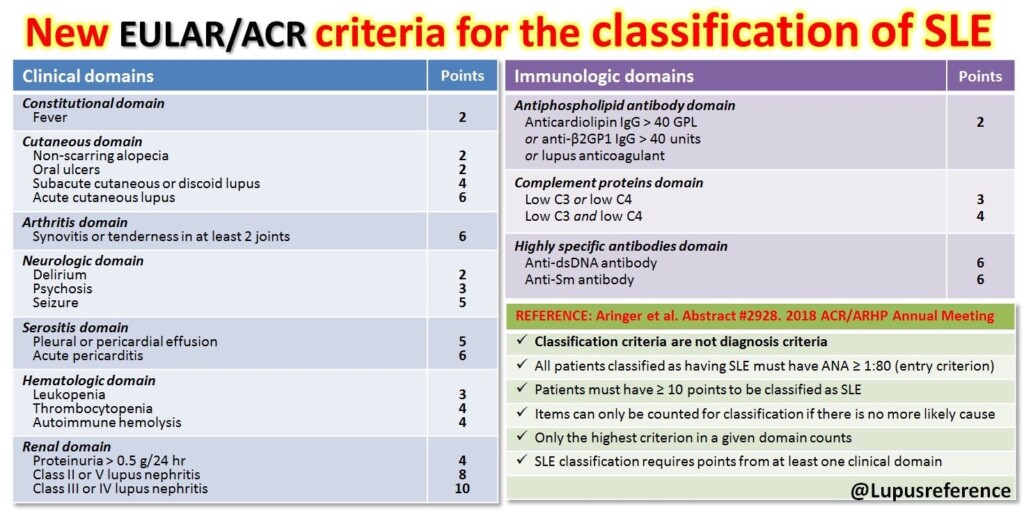
Definitions of remission and low disease activity in SLE (LLDAS) have been proposed and validated against outcomes such as glucocorticoid usage, damage accrual and quality of life. Both targets are associated with improved outcomes, however at present persistence in remission is not common. The achievement of LLDAS is not rare, persistence in LLDAS is achievable.
In 2019, Belimumab (Benlysta) met the endpoint in four trials. It proved to increase quality of life and prevent organ damage. It has also been approved for use in children.
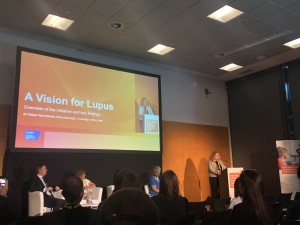
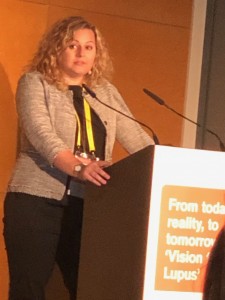
In the GSK Satellite Symposium: From today’s reality, to tomorrow’s “Vision for Lupus” the presenters told about the “Vision for Lupus” project, where a global multidisciplinary Steering Committee comprising a person with lupus, a patient advocacy expert, representation from international lupus patient organisations and clinicians specialising in the condition to discuss the future. The mission of the project was to identify the current gaps and inconsistencies in lupus care, consider what we want lupus care to look like in the future and how to get there. You can read more about the results of the vision for lupus report on the website: https://www.visionforlupus.org
There was a huge interest in the Lupus Europe Exercise programme for lupus patients from both patients, physicians and HPRs. They all mentioned, that this programme would be useful for all rheumatic diseases. Professor Marta Mosca saw a small preview of the videos and was very excited! She wants the ERNs not only to endorse the programme but also to distribute it. Exercise as a form of treatment for people with RMDs was an overall topic of this year´s EULAR programme.
Alice Grosjean, who started the Sjögren Europe in March this year presented her group at a PARE session. In her presentation of “Setting up a European federation of Sjögrens Syndrome” she acknowledged Lupus Europe as a big help and inspiration. Here is a link to their website: http://sjogreneurope.org