LUPUS EUROPE was present once again at this year’s PARE conference, which was held from 16th-18th February in Brussels. PARE provides an opportunity to meet with other patient organisations who are members of the PARE network, to hear the latest updates on some of the programmes, to influence PARE’s priorities for the next year, and to build on some of our skills.
The conference was opened by Ms. Marianne Thijsen, the EU commissionaire for employment and Social affairs. She highlighted the commission’s progress on defining “European pillars of social rights”, 20 statements that should guide future EU Social policy. Three of those statements are particularly relevant as anchors to our work : (i) Everyone has the right to timely access to affordable, preventive and curative health care of quality; (ii) Access to safe work environment, fit for everyone; (iii) Right to inclusion for people with disabilities (including income support that ensures living in dignity, services that enable to participate in the labour market and in society, and a work environment adapted to their needs).

Another key statement that she made is that while some would like healthcare to be left entirely up to each country, she disagrees: “Arthritis does not know borders. Pain does not ask for your passport. There is a need to tackle health together: We can learn from each other, there should be no 2nd class citizens in Europe”. This is both the recognition of a threat, and a very nice statement on the need for EU health policy.

The conference then mostly evolved around the EULAR campaign “Don’t Delay, Connect Today”. If you are not yet familiar with this European wide campaign, see more on this link and offer your full support to this important initiative. Early diagnosis is a key priority, in Lupus and other RMD’s and can save a lot of personal hardship thanks to early treatment. The delegates very largely voted for a continuation of this campaign for at least another 2 years, so we can reach a maximum number of people.

Finally, a fun souvenir starring our chair, Jeanette Andersen who is reminding us of the importance of exercise.

[wpvideo nyYgZqqJ]


Live Facebook Feed

Comments Box SVG iconsUsed for the like, share, comment, and reaction icons

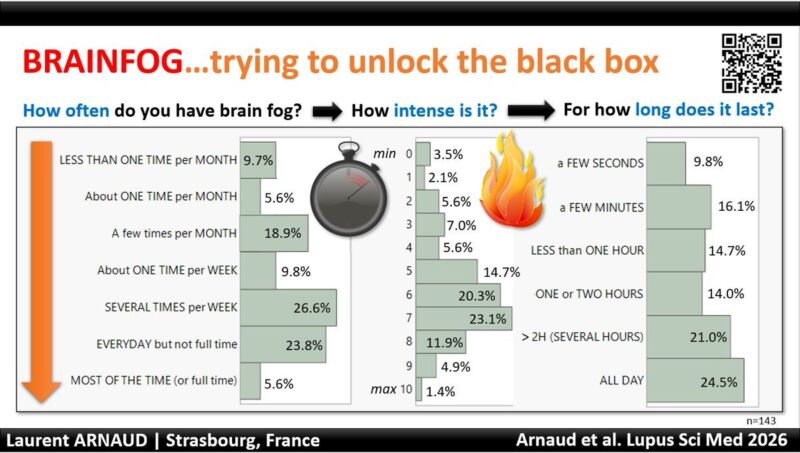
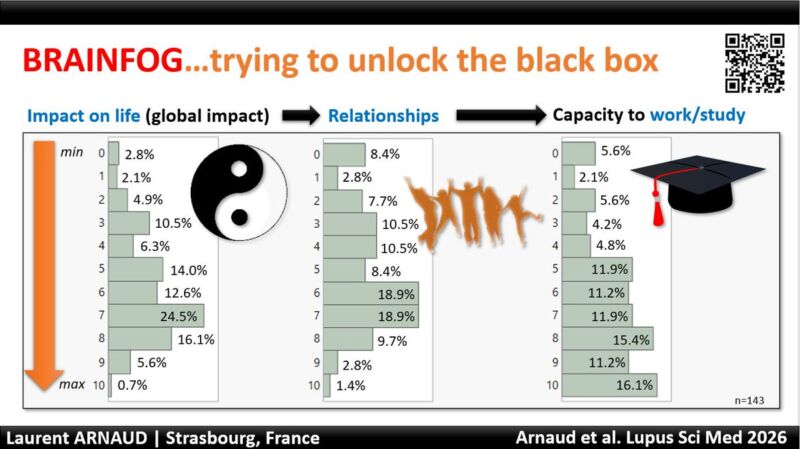
🧠 As lupus specialist Prof Laurent Arnaud clearly states, “Your experience of brain fog is real. It is common. It deserves attention.”

That is why the Lupus Brain Fog Severity Scale (LBFSS) was developed: to provide a lupus-specific way to assess the severity and impact of brain fog and related cognitive symptoms.

Importantly, people living with lupus were not simply asked to approve a finished questionnaire. Their own descriptions of brain fog were the starting point for its development.

🎥 Watch Prof Laurent Arnaud and our Chair, Jeanette Andersen, explain how people living with lupus helped shape the #LBFSS from the very beginning.

🦋 Lupus Europe is proud to have contributed to this international work and to have supported meaningful patient involvement throughout the development process.

📖 Read the study:
lupus.bmj.com/content/13/2/e002148
... See MoreSee Less

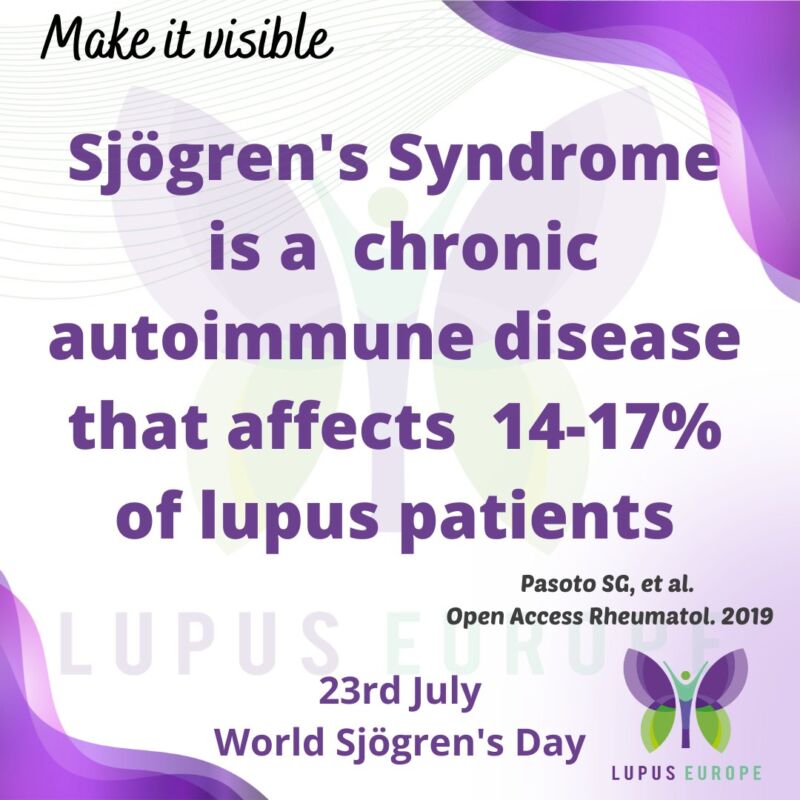
‼️Today is #WorldSjogrensDay, a chronic autoimmune disease that affects 14-17.8% of #lupus patients.

💁‍♀️ Although Sjögren's is a systemic disease that goes far beyond dryness, dryness remains a frequent, significant and disabling symptom.

➡️ Follow Sjögren Europe to know more.
... See MoreSee Less

‼️Today is #Worl

🧠 Brain fog is real.

For many people living with lupus, it affects everyday life, yet it has often remained difficult to measure.

✅ The new Lupus Brain Fog Severity Scale (LBFSS) is the first questionnaire designed specifically to assess brain fog in lupus.

🦋 Lupus Europe is proud to have contributed to its development through meaningful involvement of people living with lupus. It's another example of how patient perspectives help shape better research and better tools.

🎥 Watch Prof Laurent Arnaud and our Chair, Jeanette Andersen, explain why the LBFSS is such an important step forward in lupus care.

lupus.bmj.com/content/lupusscimed/13/2/e002148.full.pdf
... See MoreSee Less

🦋 Understanding lupus is crucial for effective management and self-management.

💁‍♀️ Many of us know what lupus is, and we’ve been learning from trusted resources like #Lupus100 and #LupusGPT.

🤔 But… how much do we really know about SLE?
Do we know as much as we think we do?

𝐓𝐫𝐲 #𝐒𝐋𝐀𝐊𝐄 𝐚𝐧𝐝 𝐟𝐢𝐧𝐝 𝐨𝐮𝐭❗

🎯 SLAKE (Systemic Lupus Assessment score for Essential Knowledge) is a quick and easy online tool designed for people living with lupus to test their knowledge and learn more about the disease.

📝 44 questions, randomly selected from a pool of 394
⏱️ Around 15 minutes to complete
🌍 Available in 20 languages
📊 A score for each lupus domain and an overall knowledge score

💡 Whether you're newly diagnosed or have been living with lupus for years, SLAKE helps you identify what you already know and where there is room to grow. It is not about passing or failing. It is a chance to learn more and feel more confident when taking part in decisions about your health.

📣 The SLAKE study is still open! By taking part, you are helping researchers understand which aspects of lupus are well understood and where important knowledge gaps remain.

These insights could help guide the potential development of better information resources and tools, tailored to the real needs of people living with lupus in different countries and regions.

SLAKE has been made possible thanks to the leadership of Prof Laurent Arnaud and Dr Antonin Satrin, and the collaboration of an international team of lupus experts and patient representatives.

🥰 Lupus Europe has proudly contributed to this project since the very beginning, and we encourage people living with lupus worldwide to take part while the study remains open.

🔗 Complete SLAKE today and let us know what you think!

lupusresearch.limequery.org/775349
... See MoreSee Less

LUPUS EUROPE Uniting people with Lupus throughout Europe
Send