oecd_logo copy


On Jan 20th, in Paris, the Organization for Economic Co-operation and Development (OECD) held a Forum on the Future of Health, with the tag line of “People at the Center”.  The Organization provides a setting where governments can compare policy experiences, seek answers to common problems, identify good practice and coordinate domestic and international policies.  Generally, the OECD is associated with business, trade unions, developing economies, so it was a very pleasant surprise to see the huge commitment the OECD made to patients and world health with this Forum.

“Over 500 participants representing civil society, patients, providers, policy makers, academics and industry came together to discuss key issues including: Harnessing digital technology and data to create proactive, people-centred systems; Caring for people with complex needs; The importance of measuring what matters to people and to patients.”

The speakers were from all around the globe, including health ministers, economists, …, and a few patient representatives.   It was a two-day meeting: the first day open to patient representatives.

Thanks to an invitation issued during an EPF conference on Patient Safety, LUPUS EUROPE was able to attend and was represented by Anne Charlet who went to listen and to learn, to meet and to tweet! Here is her report – previously published in our recent newsletter:
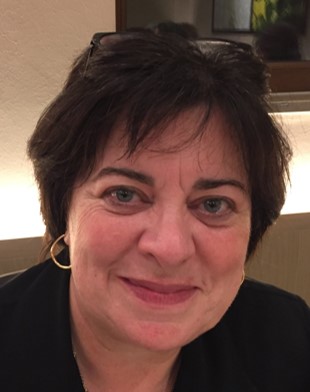
AnneIt was a full day of very high quality presentations and relevant questions and answer sessions.

My first impression was one of surprise as I slowly realized that absolutely every single talk had a patient-centric message:  Ask the patient, involve the patient, get patient reported outcomes, “doctors have to get off their pedestals and patients off their knees”!

The presentation that impressed me most was by Michael Porter, an economist and professor at the Harvard Business School.  He is not in favor of an incremental approach to developing and using patient reported indicators.  “The only definition of a successful health system is one that produces value for patients. We must establish global standard sets of outcomes, condition by condition. There is no excuse for inaction,” he said.

His economist’s approach, quantifying something that we often view as only qualitative, was fascinating.  He is a founder of the ICHOM project, which has as a goal to standardize outcome measures for key medical conditions, and thereby being able to truly show “success rates”.  I learned at this forum that they are just starting work on their first auto-immune disorder: Rheumatoid Arthritis.  For the moment, lupus is not in their plans, and as they are a non-profit organization and accept no funding from industry, they need to have a project funded first before they start work.  Something for the future?

There were many more excellent presentations.  The few patient representatives that were present seemed to be doing a lot of the tweeting, including myself: if you search on #Futureofhealth, you can read the tweets that went out over those days.

And to read a very good account of the day, look at Tessa Richards: Power to the people—via Paris Tessa Richards, British Medical Journal, blog entry here: http://blogs.bmj.com/bmj/2017/01/20/tessa-richards-power-to-the-people-via-paris/

Live Facebook Feed

Comments Box SVG iconsUsed for the like, share, comment, and reaction icons

🇨🇭 Spotlight on Lupus Switzerland!

At our #lupusconvention, Lupus Switzerland presented a powerful poster showing the cover of their latest magazine, highlighting their commitment to diversity and inclusion within the lupus community.

🧑‍🤝‍🧑 Although around 9% of their members are men, this was the first time in more than ten years and 22 issues that the topic had been addressed. A meaningful step towards ensuring everyone feels seen and represented.

🖨️ With more than 600 copies printed and distributed, this initiative helps raise awareness, challenge assumptions and promote inclusion across their community.

👏 Congratulations to Lupus Switzerland!
... See MoreSee Less

🇨🇭 Spotlight oImage attachment

🚨 Have you ever felt that your symptoms or treatment needs were taken less seriously because of your body size?

😪 For many patients, discussions about symptoms, pain, or treatment options are overshadowed by weight. Medication side effects, inflammation, fatigue, and reduced mobility are often ignored, while responsibility is placed on the individual. This can have real consequences for clinical decisions, referrals, and quality of care.

🌈 We are extremely proud of our Chair, Jeanette Andersen, for addressing this reality in her article “More Than a Number: Weight Bias in Rheumatology Care”, published in the special #EMEUNEWS issue on #Obesity and #RheumaticDiseases.

Thank you, Anastasia Madenidou and EMEUNET, for giving space to this important perspective and for inviting Jeanette to contribute.

Read the full article here: emeunews.org/2025/12/10/more-than-a-number-weight-bias-in-rheumatology-care/
... See MoreSee Less

🚨 Have you ever f

📌 Reminder for our Youth Group Webinar!

🚫 Alcohol, recreational drugs & lupus: what are the risks?
🌟 What young people living with lupus need to know to protect their health.

Lupus Europe’s Youth Group invites you to an open, evidence-based discussion with Dr Luca Moroni focused on how alcohol and recreational substances can interact with lupus, treatments, and long-term health.

We will talk clearly about:

🚨 Known risks and current uncertainties
🚨 Interactions with lupus treatments
🚨 Real-life situations often left out of the conversation

😱 Why talk about this?

Because young people sometimes make choices that can carry real health risks, and they don’t always feel able to tell their loved ones or doctors everything.

‼️ Alcohol and recreational substances are part of many social environments. When lupus is involved, lack of reliable information can increase risks.

💁‍♀️ Talking about this before helps:

•⁠ ⁠Reduce avoidable risks.
•⁠ ⁠Encourage safe and informed decisions.
•⁠ ⁠Create a safe space for questions that are often left unasked.

🌈 That’s why this webinar exists: to anticipate real situations, NOT encourage them, and provide clear, evidence-based information for young people living with lupus.

🗓 29 January 2026
⏰ 19:00 CET
💻 Online

📩 Register now by emailing secretariat@lupus-europe.org

⏳ There’s still time to join!
... See MoreSee Less

📌 Reminder for ou

🇳🇴 Spotlight on Lupus Norway!

At our #LupusConvention, Lupus Norway shared how they continue to support people living with lupus through information, education and strong collaboration with healthcare professionals.

🏥 Every year, the University Hospital in Oslo organises a meeting for patients with connective tissue diseases, including lupus. Lupus Norwa has an information stand that offers reliable resources and answers questions from anyone interested in SLE.

📘 They have also published two new brochures to help patients better understand and manage life with lupus.:
“Practical tips for improving your daily life” and “Find out more about SLE”.

📰 To keep their community informed, Lupus Norway publishes a newsletter twice a year, focusing on key lupus-related topics such as research projects, sun protection, and patient stories. They also share updates about their participation in conferences and meetings, including EULAR, helping members stay up to date and engaged.

👏 Congratulations, and thank you, Lupus Norway, for your commitment. You are a great example of how patient organisations can make a difference
... See MoreSee Less

🇳🇴 Spotlight oImage attachment
LUPUS EUROPE Uniting people with Lupus throughout Europe
Send