Monday, September 25th Chair Kirsten Lerstrøm, LUPUS EUROPE, has been invited to address the European Parliament ENVI Committee on “The case of lupus: Prevention and Treatment of Autoimmune Diseases” at the workshop in Parliament on “Autoimmune Diseases – modern diseases”.

_______________

Message is that lupus is complex and complicated both to manage and to live with. Only one new compound in 50+ years has passed Phase III of clinical trials. Cause of disease is still unknown yet a special cocktail of genes and environmental factors can trigger onset of lupus and further direct the course of disease.

Current treatment and practice might keep us out of the hospital bed, but not out the sick bed. Our LEO study1 showed that only about half of us living with lupus maintain connection to the workforce, and the majority of those do so on reduced terms: while diagnosed at the age of 37 (25-45 yrs) and time to diagnosis is 7 years (average); This serious change of life happens at the time of establishing family and career!

There is no vaccine or golden rule of behavior that will prevent disease onset or further development. We have learned though the past few years that treatment plan is a shared decision between you and your treating specialist, so follow this plan. Also considering the typical comorbidities of autoimmune disease are complications from photosensitivity, smoking, level of exercise and dietary adjustment to observe CVDs could improve the general health status.

Current treatment recommendations are anti-malarials (hydroxychloroquine) to provide the long-term lowering general disease symptoms. When this is not enough, further immunosuppresives can be added, like from milder methotrexate to azathioprin, cyclosporine to mycophenolate mofetil. As a fast actor is generally used prednisolone. Only hydroxychloroquine and prednisolone have been approved for managing lupus respectively 1955 and 59.

There is a list of different biologics used in cases where other treatment is not enough or not having the wanted control of disease activity: rituximab, infliximab, etanercept, adalimumab and belimumab – most of which are used/approved for treatment of rheumatic arthritis. It is very difficult to tell when this or that compound has any effect on the individual, which complicates the efficacy assessment. No one set of biomarkers nor treatment  is yet found.

The failing trials of one compound after another is devastating to witness – each time one less option for perhaps better outcomes and improved quality of life.

Lupus is often viewed as the archetype of autoimmune diseases – if the understanding of why and how this disease operates, then perhaps the autoimmune enigma can be solved!

People living with lupus share some further conditions with other rheumatic and/or autoimmune diseases, like serious fatigue, comorbidities, damage accrual not only from autoimmune response but also from treatment and more. Our special lupus aspect is complexity, the early age, the very burden and the mental impact. We need to do better!

Us living with lupus need to get actively involved in the research by not only delivering body fluids and tissue, but also through involvement in the planning and execution of research.

New approaches to find better research tools for classification of symptoms and disease manifestations clinically (ACR/EULAR) and genetically (IMI PRECISEADS), revision of the EULAR Recommendations of Management of SLE and revision of PROs used to capture disease activity – are in the process and with our representation.

Patient representatives have been actively engaged in building of consortia to launch new initiatives to build a better foundation for the lupus advancement in disease understanding, defining trial end-points and improve the patient reported outcome measures. We are part of the newly established ERN ReCONNET. At the moment we have one lupus representative working for EMA, but we also need to be better represented in other regulatory and political settings locally, regionally and nationally as well as internationally.

Live Facebook Feed

Comments Box SVG iconsUsed for the like, share, comment, and reaction icons

🦋 Our final #EULAR2026 recap is here!

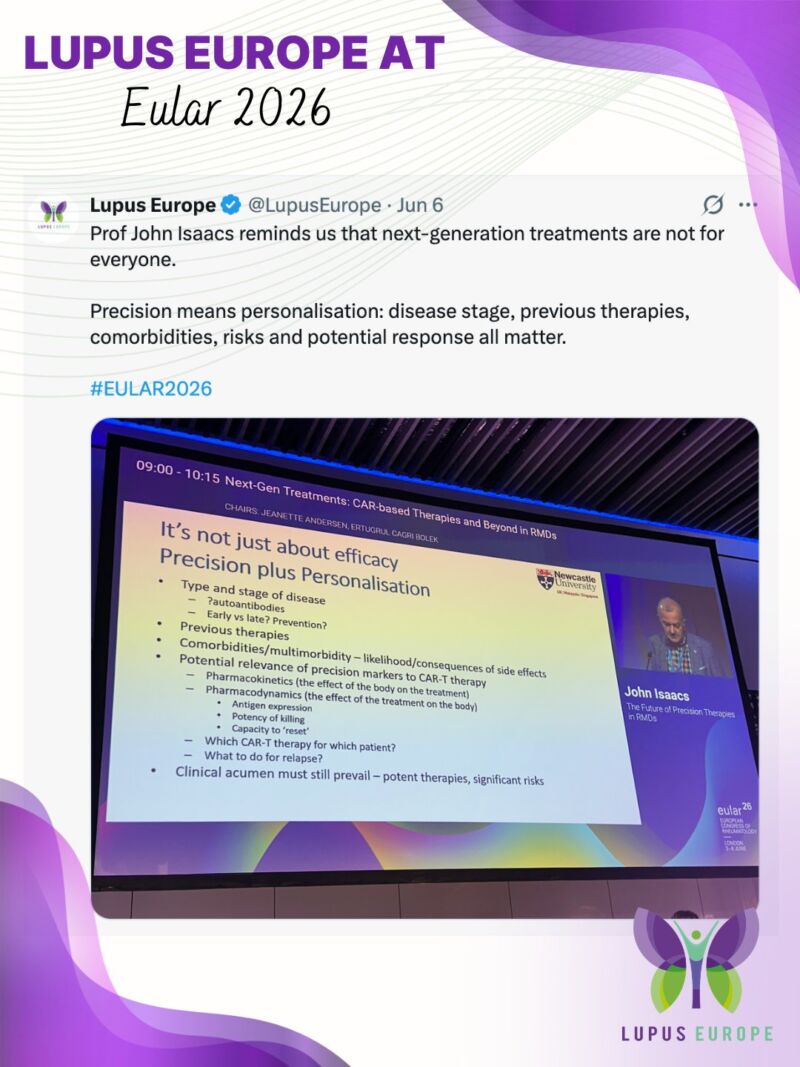
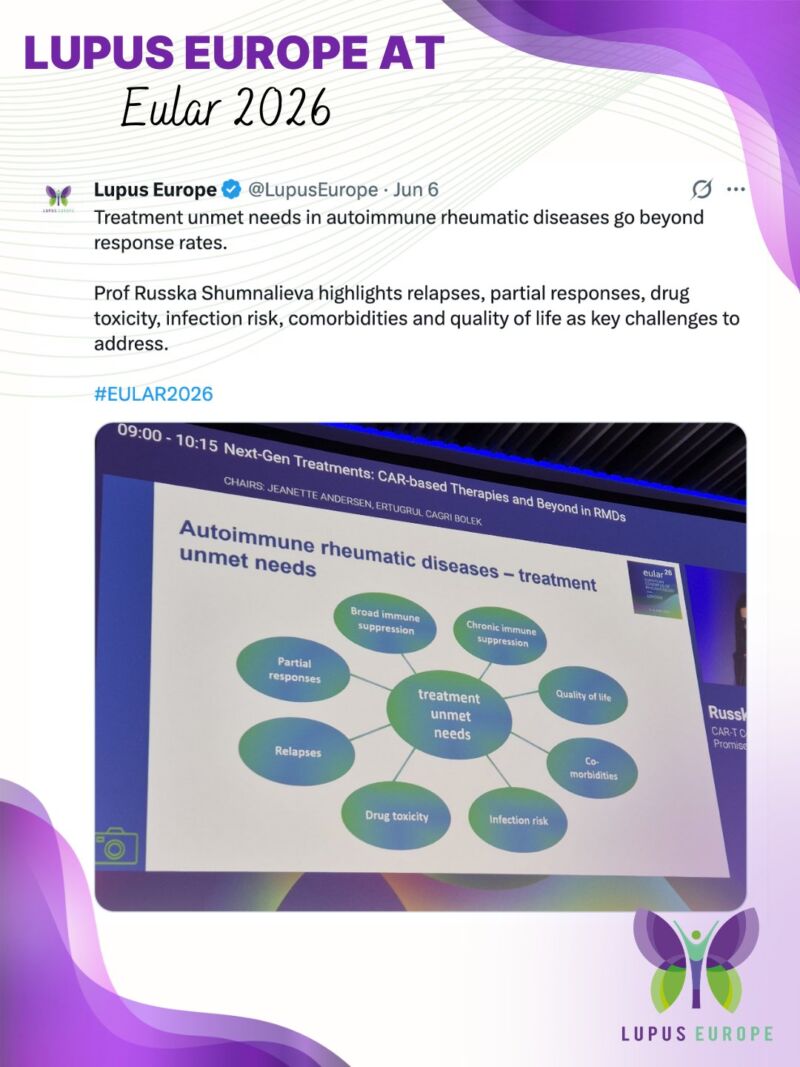
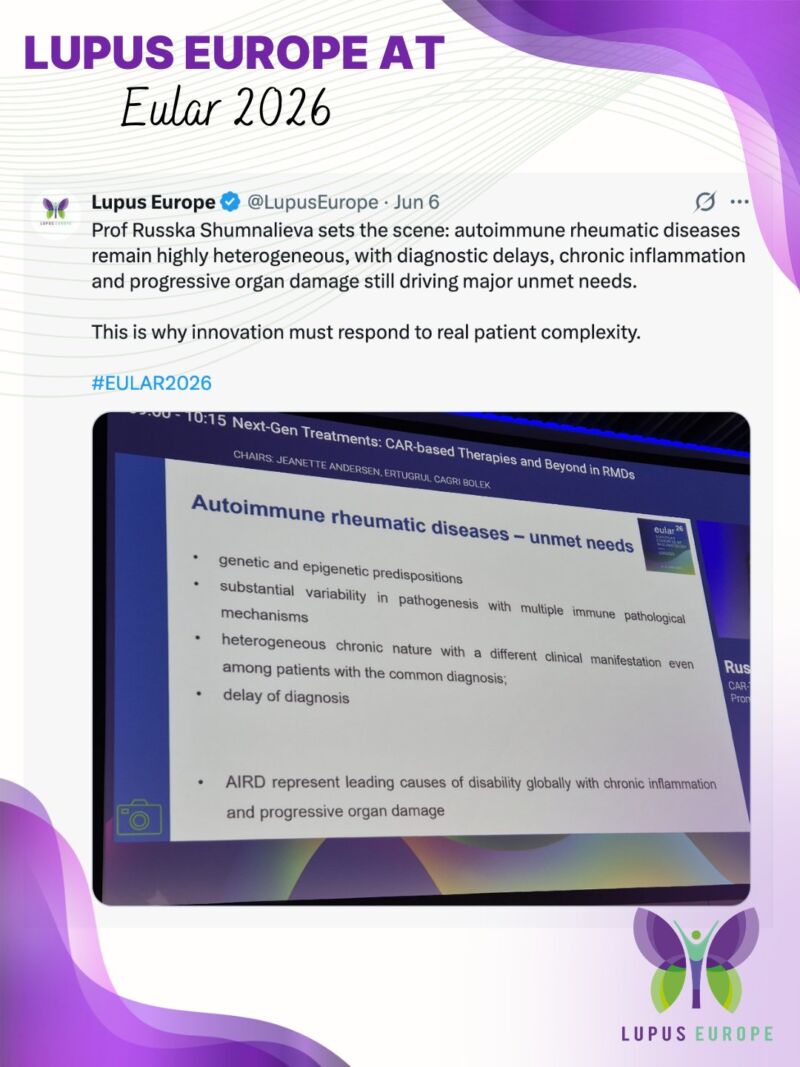
🌍 We started the day in the session “Next-Gen Treatments: CAR-based Therapies and Beyond in RMDs”, chaired by our Chair, Jeanette Andersen.

The session explored new therapeutic frontiers, but also the responsibilities that come with them. For us, one message remains essential: innovation must be developed with patients, not only for patients.

💬 Jeanette also delivered the PARE Meet the EULAR Expert session “AI as a Partner in Care: Empowering the RMD Community with Information”.

The room was packed, showing the strong interest around #LupusGPT and #EasyLupus as powerful patient-led, validated digital tools that help people living with lupus access reliable, understandable information in almost any language.

The many questions from attendees showed how relevant this topic has become for healthcare professionals, researchers, patient representatives and the wider rheumatology community.

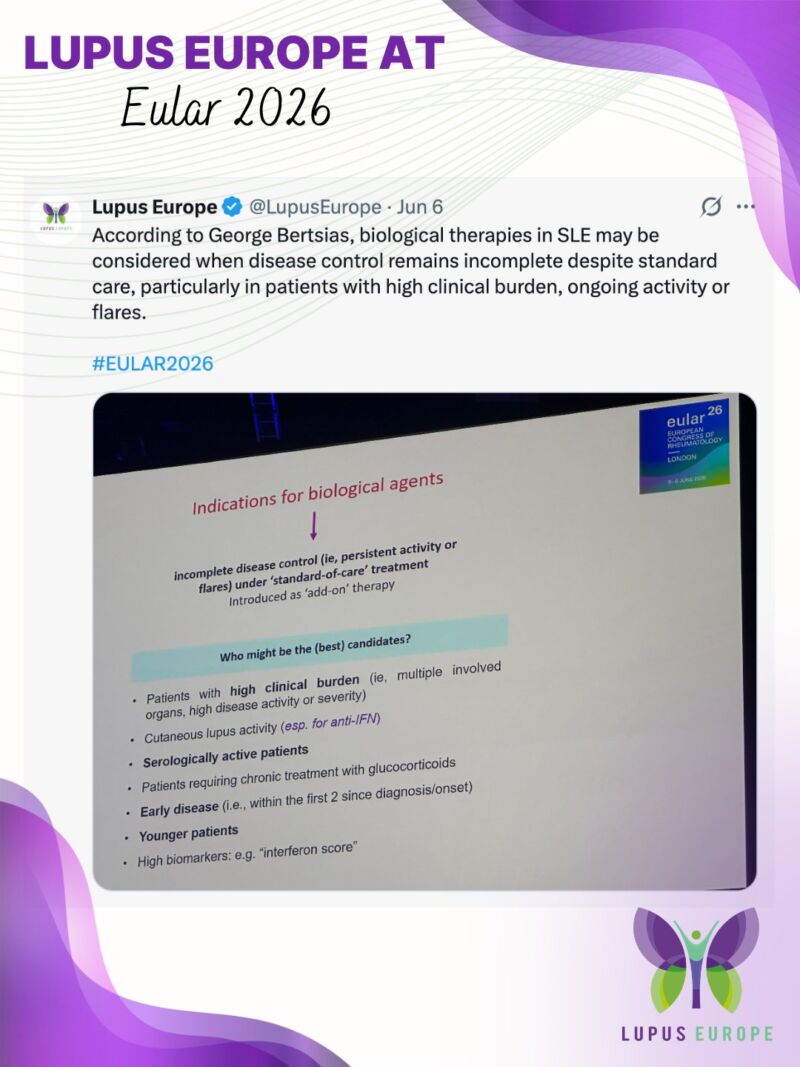
🧬 We also followed the “How to treat SLE” session with George Bertsias, who focused on current and evolving approaches in lupus care, including treat-to-target strategies, remission or low disease activity, and the importance of reducing long-term organ damage.

🦴 Later, Edward Vital led the Meet the EULAR Expert session on “Management of joint involvement in systemic lupus”, a topic that matters deeply to many people living with lupus.

💜 A special highlight of the day was seeing Lupus Europe’s work recognised during the EULAR highlights another year.

These sessions take place at the very end of the Congress and bring together the key takeaways from #EULAR2026. Importantly, there are no parallel sessions at that time, which means there is no competition with other talks, and most of the attendees are in the room.

🙏 Thank you to everyone who followed, shared, visited us, spoke with us and supported us throughout #EULAR2026.
... See MoreSee Less

Image attachment
Image attachment
Image attachment
Image attachment
Image attachment

🦋 We continue bringing you our #EULAR2026 congress recaps!

The third day was another intense day for Lupus Europe, with patient-led research, emerging science and important conversations about lived experience, as well as ongoing and potential projects to improve lupus care.

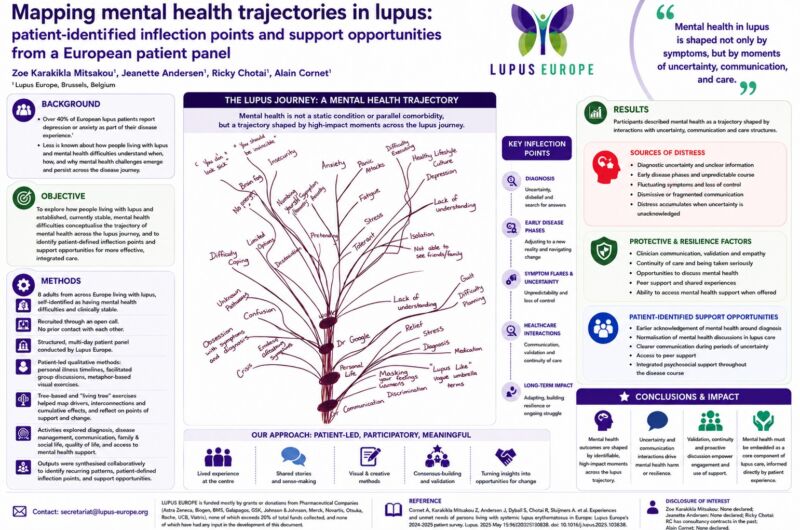
🧠 One of the highlights was Alain Cornet’s poster on mental health trajectories in lupus: “Mapping mental health trajectories in lupus: patient-identified inflection points and support opportunities from a European patient panel”.

Presented by Ricky Chotai on Alain’s behalf, this patient-led work explored how people living with lupus and mental health difficulties understand mental health across the lupus journey.

Yesterday, we already told you more about this poster and its key messages, in case you missed it!

🦠 On 5 June, we followed emerging science on the microbiome, and the Meet the EULAR Expert session “Management of joint involvement in systemic lupus” with Professor Edward M. Vital.

📊 Disease activity measurement in SLE was another important theme, especially how clinical targets can be better aligned with lived experience.

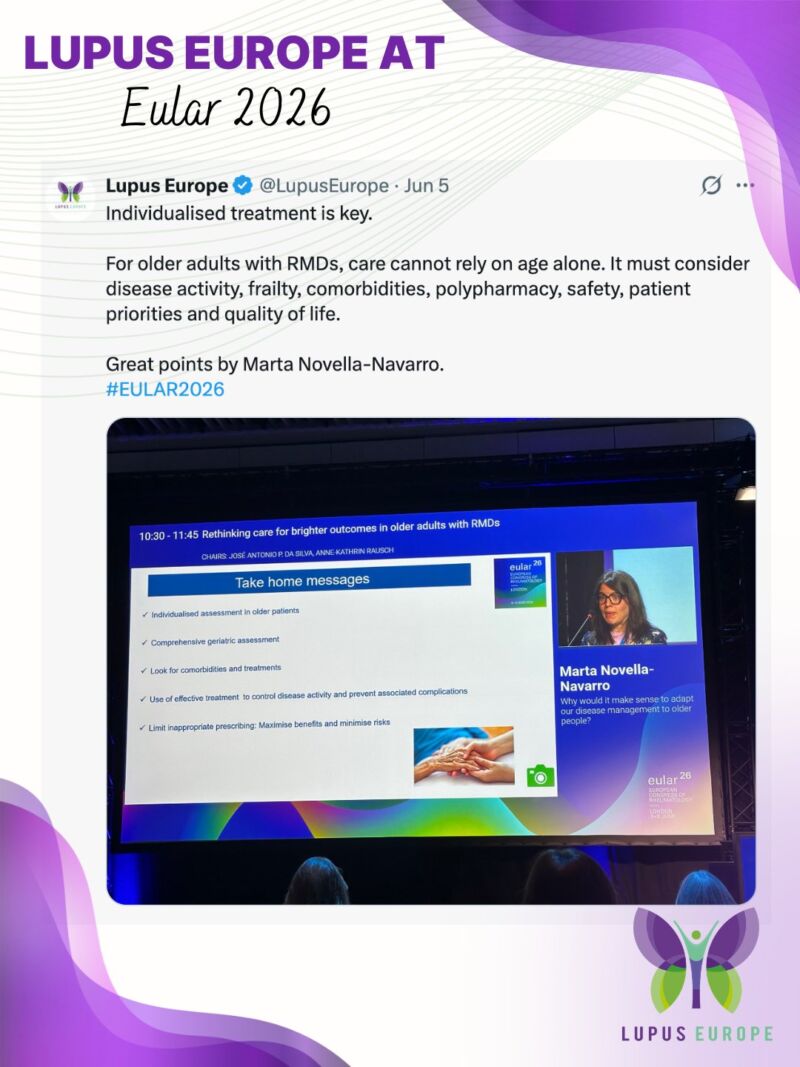
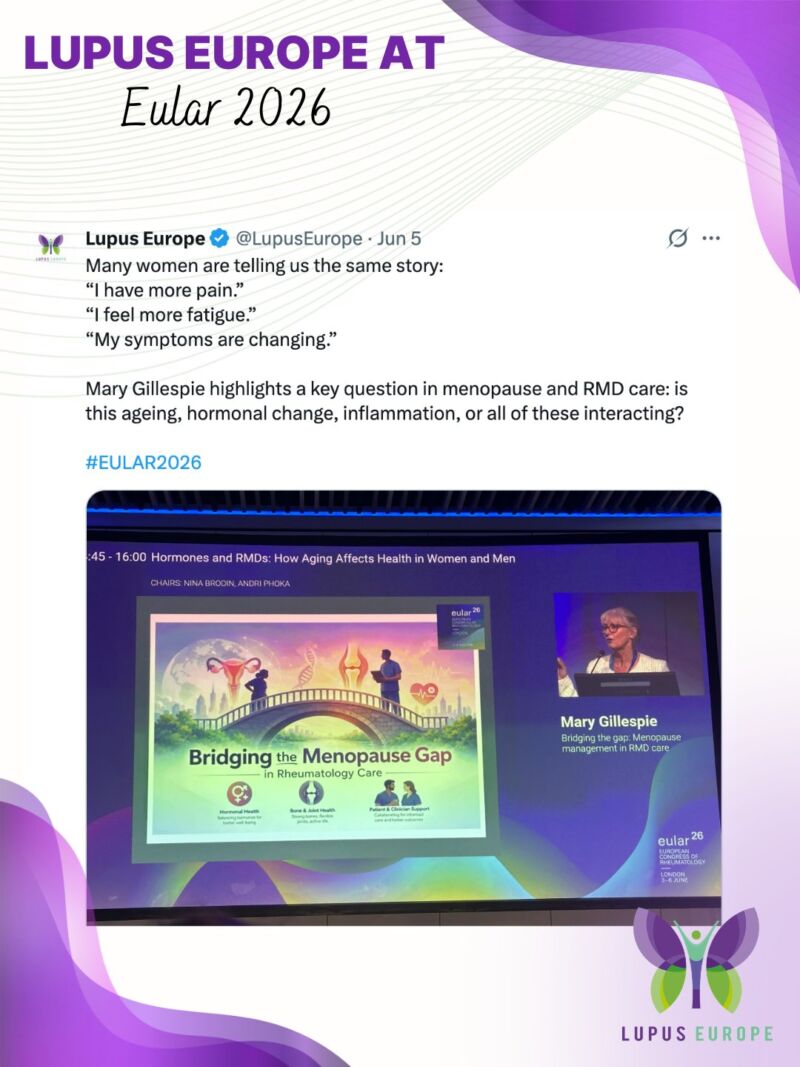
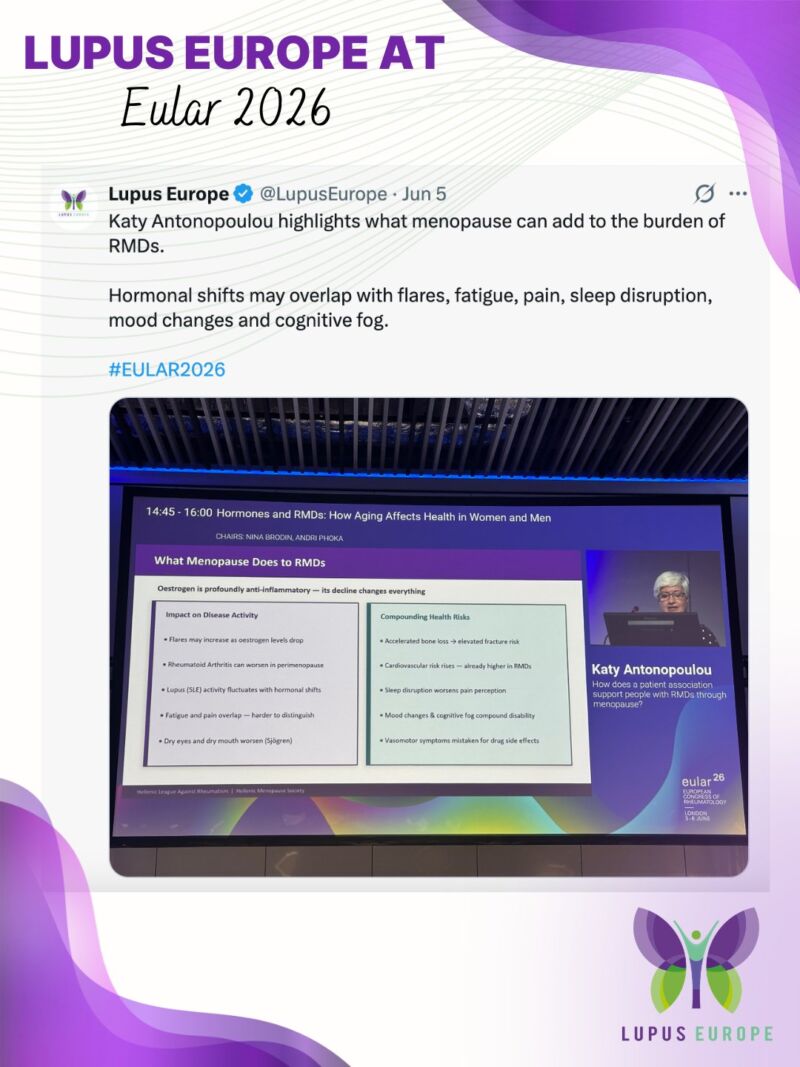
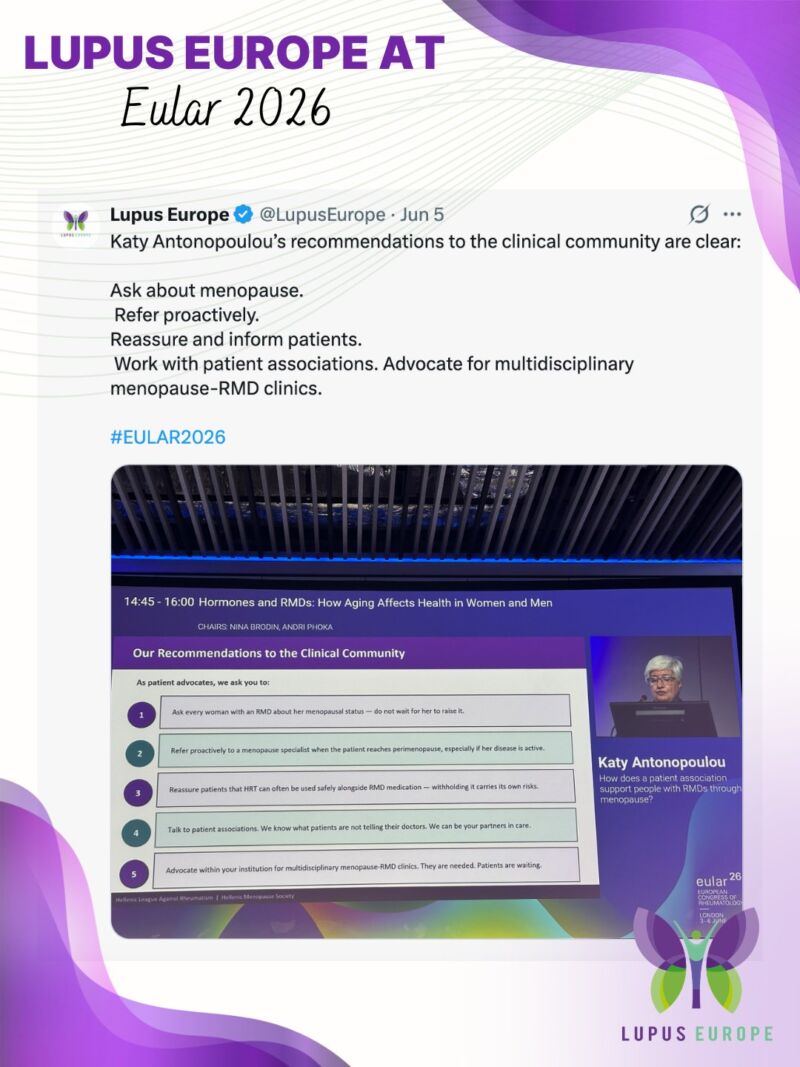
♀️ Menopause was part of the day’s conversations, highlighting the importance of asking about it routinely and recognising how hormonal transitions may shape symptoms and quality of life.

🌍 Across the day, one message kept returning: better lupus care needs science, but also communication, patient priorities and tools that help people say what matters most.

That is exactly why tools such as the Lupus Consultation Cards matter. They are available in 20 languages and help people prepare for their lupus appointments by organising symptoms, concerns and top questions in advance. Check them out here: www.lupus-europe.org/lupus-consultation-cards/

💬 We kept connecting these discussions with #LupusGPT and #EasyLupus, because access to understandable, reliable information before and after consultations is part of helping people take a more active role in their care.

🥳 And we celebrated Jeanette's birthday!

😃 Want to know more? Catch up on the latest insights from the congress in our #EULAR2026 Recap Webinar, which you can watch here: www.facebook.com/LupusEurope/videos/2035644043691260
... See MoreSee Less

Image attachment
Image attachment
Image attachment
Image attachment
Image attachment

😃 Last week at #EULAR2026, we presented POS0246-PARE, “Mapping mental health trajectories in lupus: patient-identified inflexion points and support opportunities from a European patient panel”.

The poster was presented by Ricky Chotai, Lupus Europe Board Member, on behalf of Alain Cornet, Lupus Europe Finance Lead & Organisation Coach, and lead author of this work.

✅ This patient-led qualitative work explored how people living with lupus and established, currently stable mental health difficulties understand the trajectory of mental health across the lupus journey.

‼️ Based on our patient panel conducted in Portugal with 8 adults living with lupus, the work identified key moments when support may matter most: diagnostic uncertainty, early disease phases, fluctuating symptoms, and communication with healthcare professionals.

🔴 One of the key messages is clear: mental health in lupus should not be seen only as an isolated symptom or crisis. It can be shaped over time by interactions with uncertainty, communication, and care structures.

The findings point to practical opportunities for support, including earlier acknowledgement of mental health concerns at diagnosis, normalising mental health discussions in lupus care, clearer communication during periods of uncertainty, peer support, and integrated psychosocial support throughout the disease course.

💫 Congratulations to Alain Cornet for this outstanding poster and to all authors: Zoe Karakikla-Mitsakou, Jeanette Andersen, Ricky Chotai, and Alain Cornet.

Read the abstract:
distribution-congress.eular.org/from.storage?image=15rRXWmdOAJ77zPlkD-rQtl85j9jAymUnt6XfjsO2C9rls...
... See MoreSee Less

😃 Last week at #E

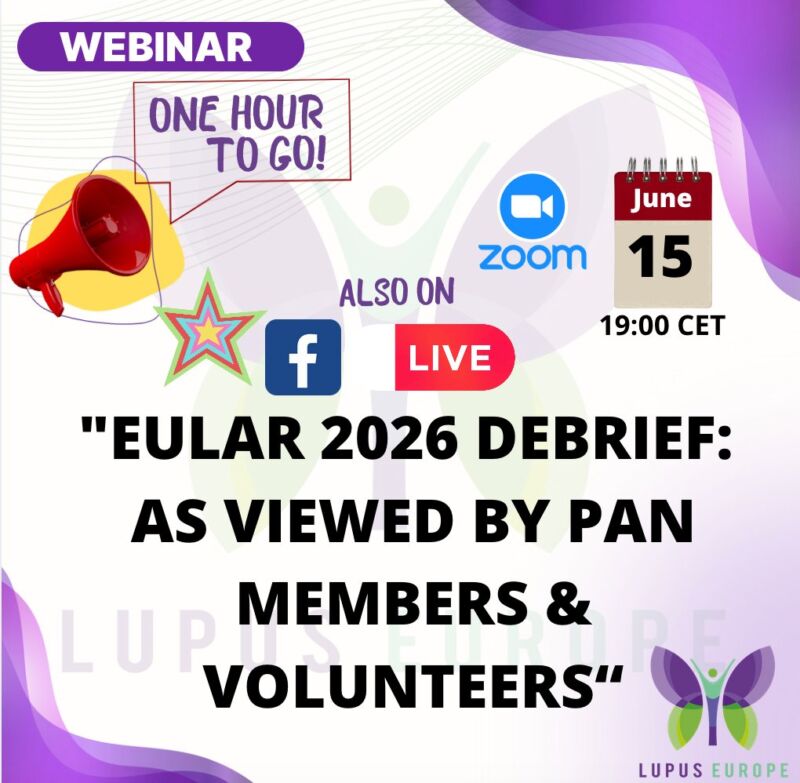
💜 Thank you to everyone who attended our EULAR 2026 Recap Webinar and joined us to look back at one of our most exciting congresses in recent years.

🤩 #Eular2026 has been intense, inspiring and full of moments we will remember.

Over the Congress, Lupus Europe contributed to and followed an incredible amount of work:

✅ 7 presentations as speakers
✅ 3 sessions chaired
✅ 66 sessions attended
✅ 318 presentations followed
✅ All the interviews you have been able to see in this webinar

But it is not only about numbers.

🌟It is also about the people behind them: the commitment, the humour, the hugs, the shared tiredness, the late nights, the conversations between sessions, and the spirit of this amazing Lupus Europe family.

What makes our work possible is not only the support we receive from our community, partners and friends.

🥰 It is also the energy, attitude, and generosity of our volunteers, who give their time, expertise and heart to Lupus Europe.
... See MoreSee Less

LUPUS EUROPE Uniting people with Lupus throughout Europe
Send