 Zoe Karakikla-Mitsakou
Every year, the EULAR Congress stands as a beacon of knowledge, bringing together over 12,000 delegates, including rheumatologists, healthcare professionals, and patients from all walks of life. This year, I had the privilege of being a part of this grand event in the vibrant city of Milan. As a member of the Lupus Europe Patient Advisory Network (PAN) and a Board Member of CYLPER, my journey at EULAR 2023 was both exhilarating and profoundly meaningful.
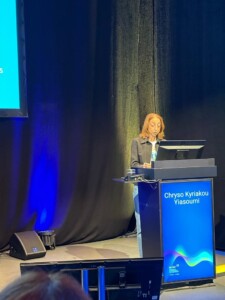
My excitement soared when my abstract was selected for an oral presentation.The abstract highlighted a unique campaign for World Arthritis Day on October 12, 2022, organised successfully by CYLPER. It was an honour to share our achievements and exchange ideas with professionals and patients from around the globe.
Advocating for Lupus Awareness with Lupus Europe:
As a member of the Cyprus League for people with Rheumatism, I have served as the General Secretary for the past five years. Additionally, my affiliation with the Lupus Cyprus group as a volunteer for over 15 years and my role as a PAN member within Lupus Europe have been deeply enriching experiences. Lupus Europe, an umbrella organisation uniting national organisations across Europe for individuals living with Lupus, has become my extended family.
Lupus, an autoimmune rheumatic chronic disease, can affect people of all ages, predominantly women. One of the critical aspects of advocacy work revolves around creating awareness about the seriousness of Lupus, an often “invisible disease.” At EULAR 2023, I had the privilege to engage with stakeholders, politicians, healthcare professionals, and patients. I emphasised the significance of early diagnosis, proper therapy, and effective disease management.
Lupus Europe’s Remarkable Initiatives:
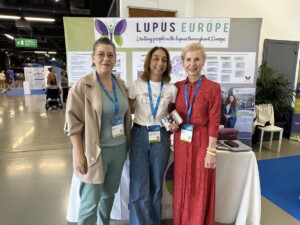
During the congress, I dedicated several hours volunteering at the Lupus Europe booth,promoting the Lupus100 project. This project is a multilingual website that offers clear answers to the 100 questions most commonly asked by patients about lupus. It offers those answers in over 10 languages and in doing so bridges the information gap for both patients and professionals. Being part of this initiative was not just fulfilling, but crucial in disseminating accurate information about Lupus.
The Lupus Europe Patient Advisory Network: A Source of Happiness amid Challenges
Being a PAN member has opened doors to exciting opportunities. Despite the challenges of living with lupus, the support and camaraderie within this group have been invaluable. At the end of each day at EULAR 2023, Lupus Europe PAN members and Board members gathered to discuss our presentations and posters, reflect on our achievements and prepare for the next day. The sense of organisation and unity within Lupus Europe was truly inspiring.
In conclusion, my journey at EULAR 2023 was a testament to the power of collective advocacy and the strength of unity. Lupus Europe’s PAN has provided me with another platform through which to raise my voice, share my experiences, and contribute meaningfully to the lupus community. Together, we are stronger, spreading awareness, and striving for a future where lupus is not just understood but also effectively managed. The journey continues, and I am grateful to be a part of this remarkable endeavour.
By Chryso Yiasoumi, Member of the Lupus Europe Patient Advisory Network (PAN), Board Member of CYLPER (Cyprus League of People with Rheumatism) and its lupus group and Co-Opt to the Lupus Europe Board of Directors.





 ;
;